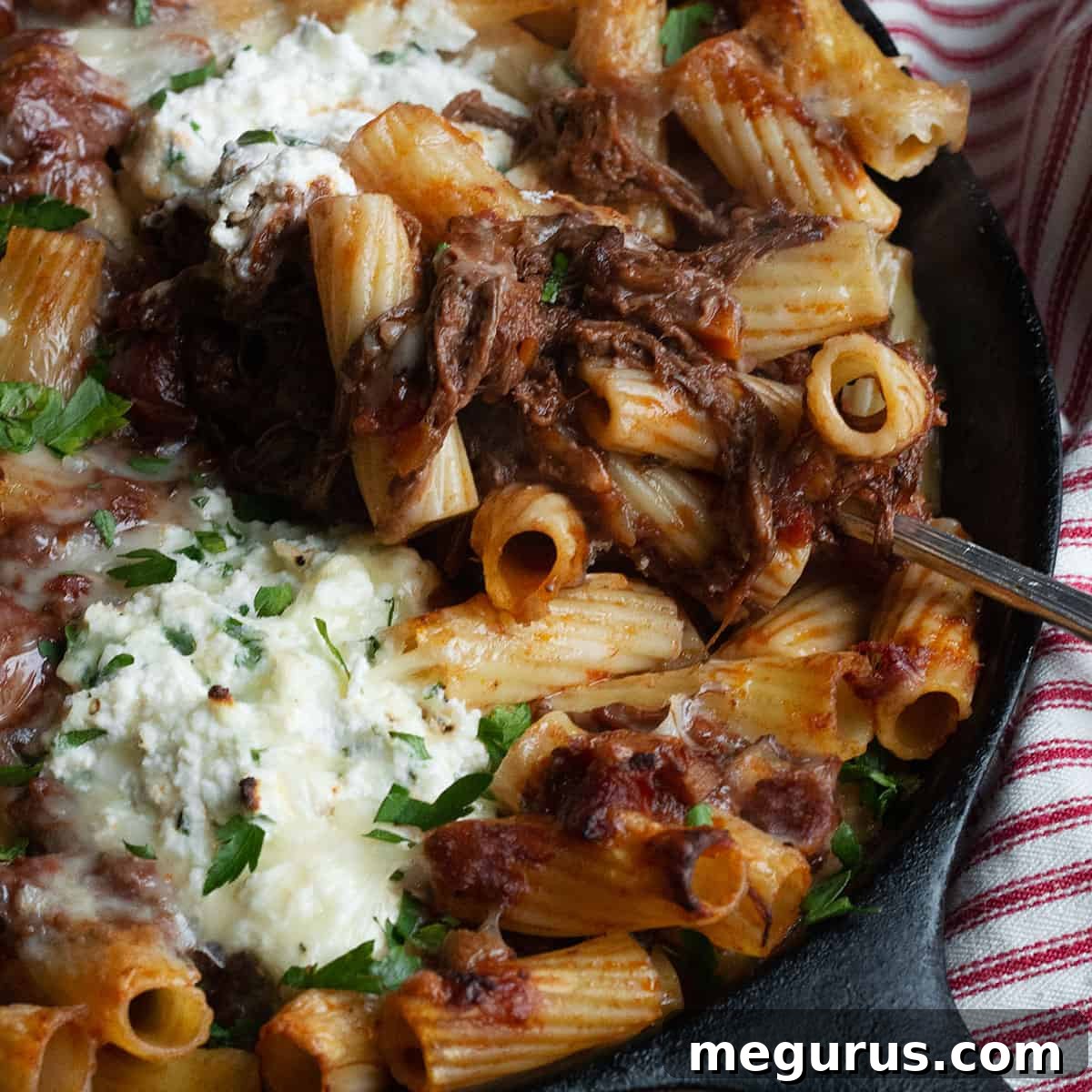
Prepare for the ultimate comfort food experience with this magnificent Brisket Pasta Bake. Featuring incredibly tender, slow-cooked beef brisket ragù layered with perfectly al dente rigatoni pasta and dollops of creamy, seasoned ricotta cheese, this dish is baked until bubbling and golden. It’s a symphony of rich flavors and comforting textures that promises to be a standout meal for any family dinner or special occasion.
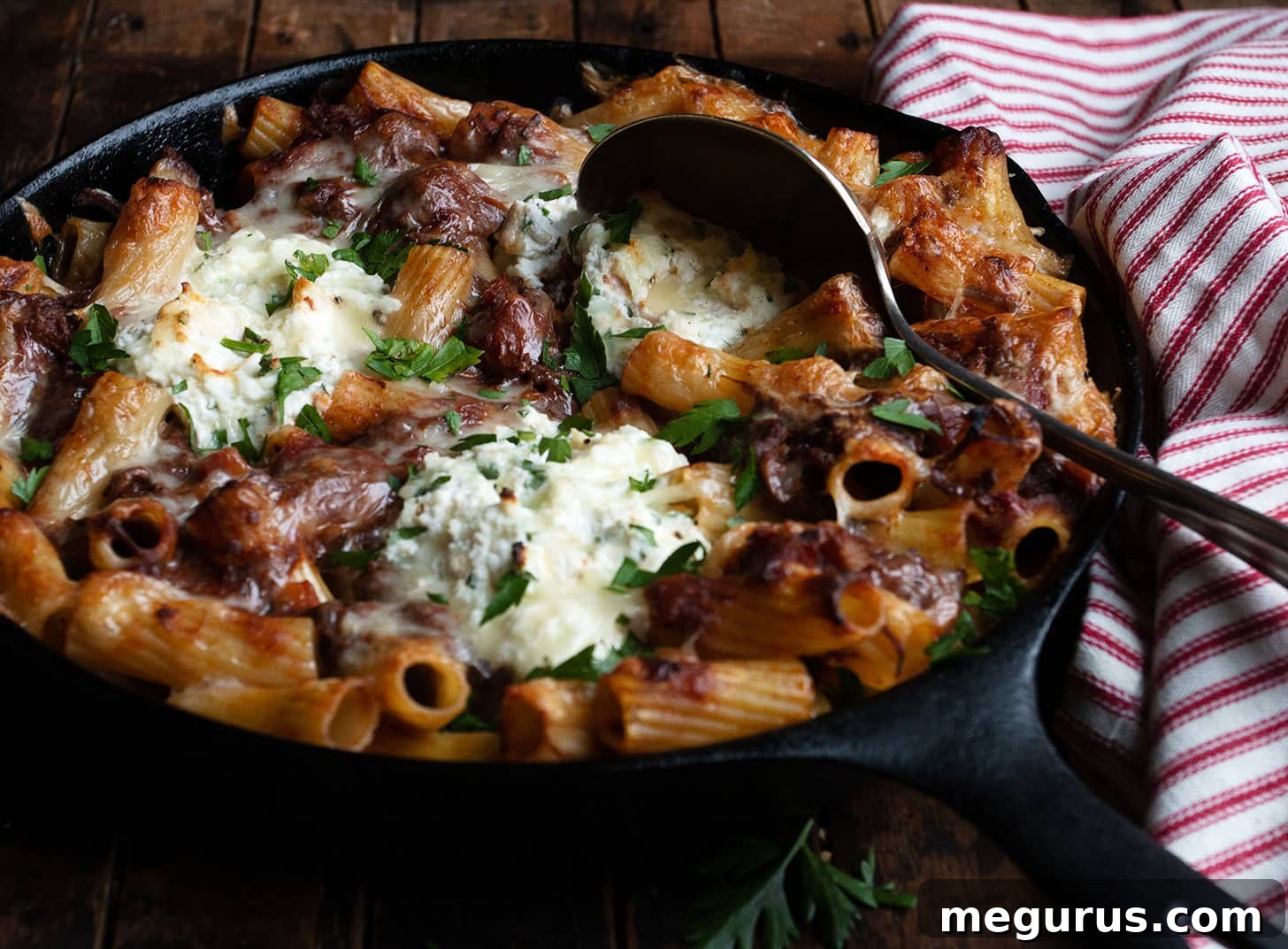
There’s something truly magical about the transformation of beef brisket when subjected to a low and slow cooking process. It breaks down into succulent, fork-tender strands, infusing a rich, deep flavor into every inch of the ragù. When this luscious brisket ragù is combined with hearty pasta, vibrant tomatoes, and then baked under a blanket of creamy ricotta and melted mozzarella, the result is nothing short of culinary perfection. Served alongside a simple green salad and perhaps some crusty bread, it transforms into a complete, satisfying, and utterly unforgettable family meal.
Why This Brisket Pasta Bake Will Be Your New Favorite
In the realm of baked pasta dishes, this Brisket Pasta Bake stands head and shoulders above the rest. The secret lies in the slow-cooked brisket ragù, a labor of love that yields unparalleled depth of flavor. Unlike ground beef, brisket offers a rich, complex taste and a melt-in-your-mouth texture that only hours of simmering can achieve. The collagen in the brisket breaks down into gelatin, thickening the sauce naturally and creating a velvety mouthfeel. This isn’t just a meal; it’s an experience – a warm, hearty embrace that comforts the soul and satisfies even the biggest appetites.
The combination of robust beef, aromatic vegetables, a hint of wine, and savory tomatoes creates a ragù that’s truly exceptional. Then, we elevate it further by pairing it with sturdy rigatoni, which catches all that wonderful sauce in its ridges. The generous dollops of fresh ricotta cheese add a layer of creamy indulgence, cutting through the richness of the meat sauce with a delicate tang. A final sprinkle of mozzarella cheese melts into a golden crust, making each bite an irresistible blend of flavors and textures.
Key Ingredients for a Superb Brisket Ragù
Crafting an outstanding brisket pasta bake begins with selecting the right ingredients. Each component plays a vital role in building the deep, layered flavors that define this dish.
Beef Brisket: The Star of the Show
For this recipe, we recommend a 2 1/2 to 3-pound piece of beef brisket. Brisket, a cut from the lower chest of the cow, is known for its tough muscle fibers and significant fat marbling. These characteristics, while making it less suitable for quick cooking, are precisely what make it perfect for slow-cooking methods like a ragù. As it simmers for hours, the tough fibers break down, and the fat renders, creating an incredibly tender, moist, and flavorful meat that easily shreds. My brisket often comes with a generous fat cap, sometimes over an inch thick. While a good amount of fat is crucial for flavor and moisture, trimming off some excess, leaving about half an inch, helps prevent the ragù from becoming overly greasy without sacrificing the rich taste or tender texture.
Aromatics: The Flavor Foundation
- Onions: A medium onion, finely chopped, provides a sweet and savory base. As it caramelizes, it adds significant depth to the ragù.
- Garlic: Four cloves of finely chopped garlic infuse the sauce with its pungent, aromatic qualities. Don’t skimp on the fresh garlic; it makes a huge difference.
- Carrots: Two medium carrots, peeled and finely chopped, contribute sweetness and body to the sauce. Interestingly, even after hours of slow cooking, carrots tend to retain some of their shape and texture. So, ensure you chop them to a size that you’d enjoy in the finished ragù, as they won’t completely dissolve.
- Celery: Two diced celery stalks complete the classic “mirepoix” (onion, carrot, celery) trio, adding a subtle peppery note and aromatic complexity.
Liquid Components and Flavor Enhancers
- Red Wine: Any good quality dry red wine that you would enjoy drinking will work beautifully in this ragù. Opt for something like a Cabernet Sauvignon, Merlot, or Pinot Noir. The wine adds acidity, depth, and a wonderful richness that is essential to a classic ragù. It deglazes the pan, lifting all the flavorful browned bits from the bottom.
- Balsamic Vinegar: A quarter cup of balsamic vinegar introduces a tangy sweetness and an additional layer of complexity, balancing the richness of the meat and tomatoes.
- San Marzano Tomatoes: Twenty-eight ounces of canned whole San Marzano tomatoes are highly recommended. These Italian plum tomatoes are prized for their sweet, balanced flavor and lower acidity, making them ideal for long-simmered sauces. Crushing them by hand allows you to control their consistency while releasing their natural juices.
- Beef Stock: Two cups of beef stock (low sodium is often preferred to control saltiness) provide the necessary liquid for slow cooking and reinforce the beefy flavor.
- Tomato Paste: Two tablespoons of tomato paste offer concentrated tomato flavor, adding umami and richness to the sauce.
Herbs and Seasoning
- Fresh Herbs: A sprig each of fresh rosemary and oregano, and two sprigs of fresh thyme, provide an aromatic bouquet that complements the beef perfectly. Fresh herbs are always superior for slow-cooked dishes, releasing their essential oils over time.
- Red Pepper Flakes: A pinch of red pepper flakes is optional but highly recommended. It adds a subtle warmth and a touch of excitement without making the dish spicy.
- Salt and Freshly Ground Black Pepper: These are fundamental. Seasoning at various stages of cooking is key to building a flavorful dish. Don’t forget to taste and adjust at the end!
The Creamy Ricotta Layer
- Ricotta Cheese: One cup of good quality ricotta cheese is essential for the creamy dollops. Whole milk ricotta will give you the best texture and flavor.
- Mozzarella Cheese: Half a cup of grated mozzarella mixed with the ricotta, plus another half cup for the top, ensures a gooey, cheesy layer.
- Fresh Parsley: Two to three tablespoons of finely chopped fresh parsley add a fresh, herbaceous note to the ricotta mixture.
Pasta and Garnish
- Rigatoni Pasta: Three cups of dried rigatoni pasta are ideal for this bake. Its tubular shape and ridged surface are perfect for capturing and holding the thick, rich ragù. Cooking it al dente is crucial as it will continue to cook in the oven.
- Fresh Parsley and Shaved Parmesan: For serving, a sprinkle of fresh chopped parsley and generous shavings of fresh Parmesan cheese add a final flourish of flavor and visual appeal.
Cook’s Notes and Expert Tips for Success
Achieving a truly spectacular Brisket Pasta Bake is easier with a few insider tips:
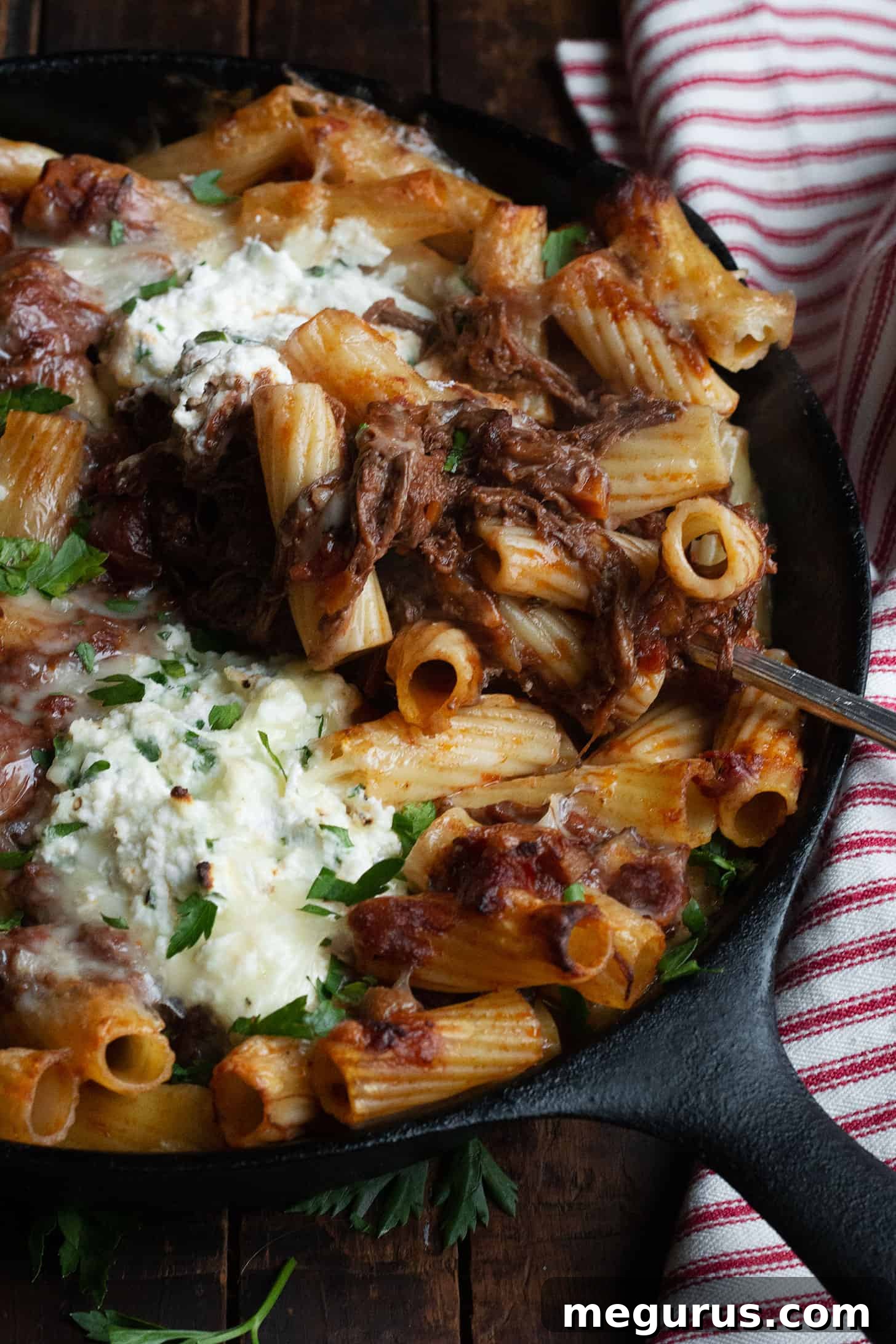
- Embrace Batch Cooking: The beef brisket ragù recipe yields a generous amount, often more than you’ll need for a single 10-inch skillet dinner. This is by design! Given the approximately 4 hours of slow-cooking required, it’s highly efficient to make a large batch. The extra ragù is a godsend for future quick meals. It can be refrigerated in an airtight container for several days or frozen for several months. Imagine having a ready-made gourmet sauce for pasta, polenta, or even sandwiches on a busy weeknight!
- Feeding a Crowd? No Problem!: If you’re hosting a larger gathering or simply want to maximize your efforts, you can easily double the remaining ingredients (pasta, ricotta mixture, extra mozzarella) and use all the prepared ragù to fill a larger 9×13-inch casserole dish. Adjust baking time slightly if needed, ensuring it’s bubbling hot throughout.
- The Art of Seasoning: Don’t underestimate the power of salt and pepper. The secret to the most flavorful dishes often lies in seasoning “as needed.” This means tasting your ragù towards the end of the simmering process and adjusting the salt and pepper. Flavors can become muted during long cooking, and a final adjustment can awaken them, ensuring a perfectly balanced and delicious sauce.
- Choosing Your Dutch Oven: A heavy-bottomed, oven-safe Dutch oven with a tight-fitting lid is indispensable for this recipe. It ensures even heat distribution on the stovetop and in the oven, leading to perfectly seared meat and a consistent, slow simmer for the ragù.
- Al Dente Pasta is Key: When cooking the rigatoni, aim for al dente. The pasta will absorb more liquid and soften further during the baking process. If you overcook it initially, you’ll end up with mushy pasta in the final bake.
- Rest Before Serving: After removing the pasta bake from the oven, allow it to rest for 5-10 minutes. This helps the sauce set slightly, preventing it from being too runny, and allows the flavors to meld beautifully.
Brisket Pasta Bake: The Full Recipe
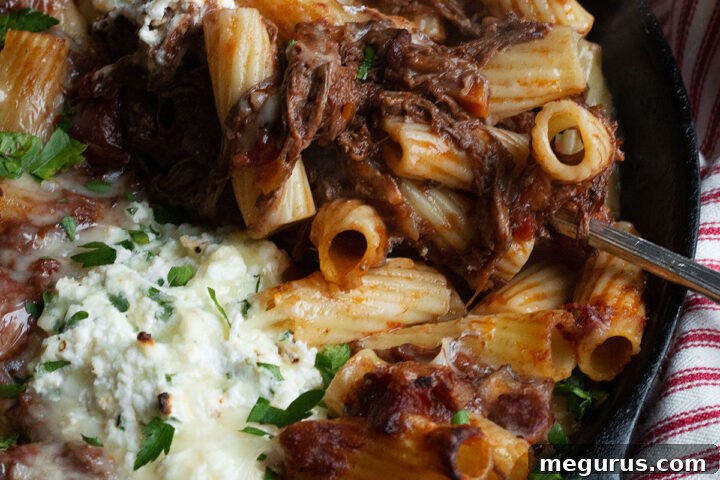
Indulge in this comforting Brisket Pasta Bake featuring tender, slow-cooked beef brisket ragù tossed with rigatoni pasta and finished with dollops of creamy ricotta cheese, baked to golden perfection.
Yields: 6 servings
Prep Time: Approximately 30 minutes (active prep) + 4 hours (passive cooking for Brisket Ragù)
Cook Time: 30 minutes (bake time)
Total Time: Approximately 4 hours 30 minutes
Cuisine: American, Canadian
Course: Main Course
Author: Jennifer Maloney
Rating: 5 out of 5 stars (based on 6 reviews)
Ingredients for the Beef Brisket Ragù:
- 2 1/2 – 3 lb. beef brisket, kept whole, trimmed of a bit of excess fat if necessary
- Salt and freshly ground black pepper, to taste
- 2-3 Tablespoons olive oil
- 1 medium onion, finely chopped
- 4 cloves garlic, finely chopped
- 2 medium carrots, peeled and finely chopped
- 2 celery stalks, diced
- 1 Tablespoon all-purpose flour
- 2 Tablespoons tomato paste
- 1/4 cup balsamic vinegar
- 2 cups dry red wine (like a Cabernet Sauvignon or Merlot)
- 28 oz. canned whole San Marzano tomatoes, hand-crushed
- 2 cups beef stock (preferably low sodium)
- 1 sprig fresh Rosemary
- 1 sprig fresh oregano
- 2 sprigs fresh thyme
- Pinch of red pepper flakes (optional, for a hint of warmth)
- Additional Salt and freshly ground pepper, as needed
Ingredients for the Creamy Ricotta Mixture:
- 1 cup ricotta cheese (whole milk for best results)
- 1/2 cup mozzarella cheese, grated
- 2-3 Tablespoons finely chopped fresh parsley
- Salt and pepper, to taste
To Assemble the 10-inch Skillet Bake:
- 3 cups dried rigatoni pasta, cooked to al dente according to package instructions and drained
- 3 cups prepared beef brisket ragù (from above)
- All of the prepared ricotta mixture
- 1/2 cup mozzarella cheese, grated (for topping)
For Serving:
- Chopped fresh parsley, for garnish
- Freshly shaved Parmesan cheese
Instructions:
- Prepare Oven: Preheat your oven to 325°F (160°C).
- Trim and Season Brisket: Trim any excessive fat from the beef brisket, leaving about 1/2 inch to ensure moisture and flavor. If the brisket is too large for your Dutch oven, cut it into two pieces; otherwise, keep it whole. Season generously with salt and freshly ground black pepper on all sides.
- Sear Brisket: Heat 2-3 tablespoons of olive oil in a large, oven-proof Dutch oven (with a lid) over medium-high heat. Once the oil is shimmering, carefully add the brisket and brown it on both sides, about 5 minutes per side, creating a beautiful crust. This step adds immense flavor. Remove the seared brisket to a plate and set aside.
- Sauté Aromatics: Reduce the heat to medium. Add the finely chopped onion, garlic, carrots, and celery to the same pot. Cook, stirring occasionally, until they are fragrant and begin to soften and lightly brown, which typically takes about 3-4 minutes.
- Build Flavor Base: Stir in the all-purpose flour and tomato paste, cooking for another minute to deepen their flavor and remove any raw taste from the flour. Pour in the balsamic vinegar, stirring constantly and scraping up any browned bits from the bottom of the pot. Cook until the balsamic vinegar has almost completely evaporated, about 3 minutes, leaving behind a concentrated sweet and tangy glaze.
- Deglaze with Wine: Add the red wine and increase the heat to medium-high. Bring the mixture to a boil, then reduce the heat to medium and simmer until the wine has reduced by half, concentrating its rich flavors (approximately 5 minutes). This step is crucial for developing depth in the ragù.
- Slow Cook Ragu: Once the wine has reduced, add the hand-crushed San Marzano tomatoes and beef stock, stirring well to combine. Return the seared beef brisket to the pot. Add the fresh rosemary, oregano, thyme sprigs, and a pinch of red pepper flakes. Gently stir to incorporate the herbs into the sauce. Season with a bit more salt and pepper to taste. Bring the sauce to a gentle simmer over medium-high heat, then cover the Dutch oven tightly and transfer it to your preheated 325°F (160°C) oven. Cook for 3 hours, or until the beef is incredibly tender and easily shredded with a fork.
- Shred Brisket and Thicken Ragu: Remove the pot from the oven and place it on the stovetop over medium-high heat. Carefully transfer the cooked brisket to a cutting board. Allow it to cool for a few minutes, then use two forks to shred the meat, discarding any large pieces of fat or gristle. Return the shredded beef to the pot with the sauce. Bring the sauce to a boil, then reduce the heat to medium-low and let it simmer uncovered for 30-45 minutes, or until the ragu has reduced and thickened to your desired consistency. Taste and adjust seasoning with additional salt and pepper as needed.
- Prepare for Baking: While the ragu simmers, preheat your oven to 425°F (220°C). Cook the rigatoni pasta according to package directions until it is al dente. Drain the pasta and transfer it to a large mixing bowl. When the ragu is ready, add approximately 3 cups of the cooked ragu to the pasta and toss to combine thoroughly. (Any leftover ragu can be refrigerated for several days or frozen for future meals).
- Assemble the Bake: Lightly grease a 10-inch cast-iron skillet or a similar-sized oven-safe baking dish. Spoon the pasta and ragu mixture evenly into the prepared dish. In a separate small bowl, combine the ricotta cheese, 1/2 cup of grated mozzarella cheese, chopped fresh parsley, and a pinch of salt and pepper. Spoon dollops of this creamy ricotta mixture evenly over the pasta and ragu, then sprinkle with the remaining 1/2 cup of grated mozzarella cheese.
- Bake to Perfection: Bake in the preheated 425°F (220°C) oven for 20-25 minutes, or until the pasta bake is bubbling around the edges and the cheese on top is beautifully golden brown and melted.
- Serve: Let the dish rest for a few minutes before serving to allow the flavors to meld and the sauce to settle. Garnish generously with fresh chopped parsley and freshly shaved Parmesan cheese. Enjoy this hearty and comforting meal!
Notes:
The Beef Brisket Ragù recipe will typically yield much more than you need for one 10-inch skillet dinner. This is fantastic for meal planning! The remaining ragù can be easily refrigerated for several days or frozen for up to 3 months, offering a delicious shortcut for another meal later. Alternatively, if you are feeding a larger crowd, you can double the pasta and cheese components and use the entire batch of ragù in a 9×13-inch casserole dish for an impressive feast.
Nutrition Information:
(Per serving, approximate)
- Serving: 1 serving
- Calories: 618 kcal
- Carbohydrates: 72g
- Protein: 23g
- Fat: 18g
- Saturated Fat: 8g
- Cholesterol: 42mg
- Sodium: 699mg
- Potassium: 1058mg
- Fiber: 5g
- Sugar: 12g
- Vitamin A: 4810 IU
- Vitamin C: 20.3mg
- Calcium: 321mg
- Iron: 3.9mg
Nutritional information is an estimate and may vary based on specific ingredients and preparation methods.
Frequently Asked Questions
Can I make the brisket ragù ahead of time?
Absolutely! The brisket ragù is an excellent candidate for meal prep. In fact, many chefs argue that slow-cooked sauces taste even better the next day as the flavors have more time to meld and deepen. You can prepare the ragù entirely, refrigerate it for up to 3-4 days, or freeze it for up to 3 months. When you’re ready to make the pasta bake, simply thaw the ragù (if frozen), reheat it gently, cook the pasta, and assemble as directed.
What kind of pasta is best for this bake?
Rigatoni is ideal for this Brisket Pasta Bake because its large, ridged tubes are perfect for capturing the thick, hearty ragù. Other sturdy pasta shapes like penne, ziti, or cavatappi would also work well. Avoid delicate pasta shapes that might get lost or become mushy during baking.
Can I substitute another meat for brisket?
While brisket truly shines in this recipe, if you’re looking for an alternative, chuck roast or even pork shoulder could be used for a similar slow-cooked, shreddable meat texture. However, the flavor profile will change, as brisket has a unique richness that’s hard to replicate.
How do I store leftovers, and can I freeze the baked pasta?
Leftovers of the Brisket Pasta Bake can be stored in an airtight container in the refrigerator for 3-4 days. To reheat, you can microwave individual portions or warm larger amounts in the oven at 350°F (175°C) until heated through. While you can freeze the assembled and baked pasta, the texture of the pasta and ricotta may become slightly softer upon thawing and reheating. If freezing, cool completely, cover tightly, and freeze for up to 1 month. Thaw in the refrigerator overnight before reheating.