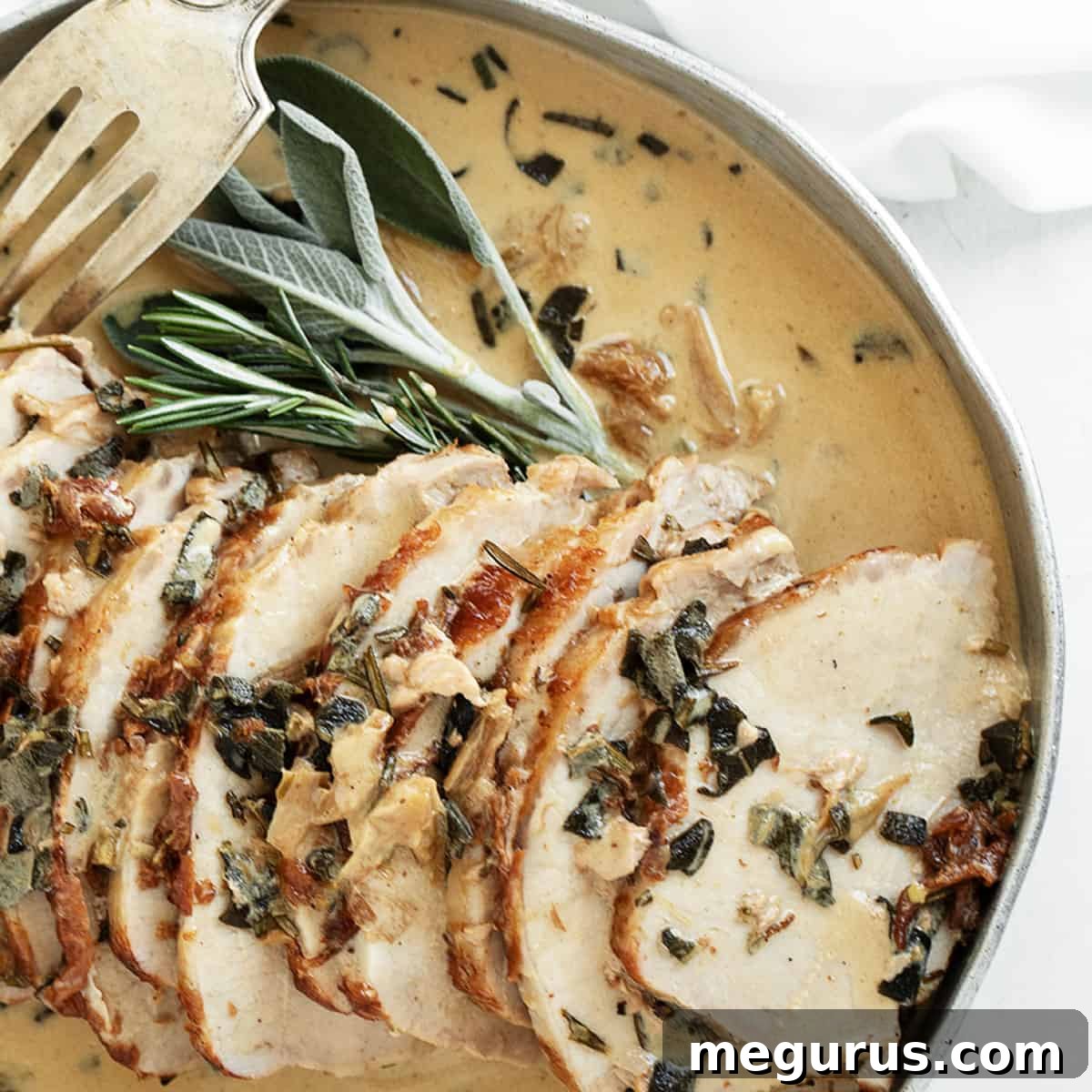
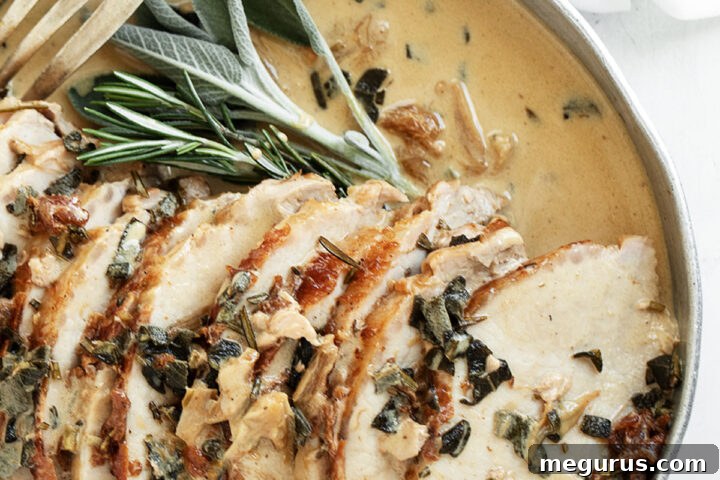
Prepare to redefine your expectations of pork with this exquisite recipe for **Pan-Seared Pork Loin with Creamy Wine and Herb Gravy**. This isn’t just another pork dinner; it’s a culinary revelation designed to transform even the most skeptical diner into a fervent pork loin enthusiast. Imagine succulent, juicy pork that melts in your mouth, perfectly complemented by a rich, velvety white wine sauce infused with fragrant fresh herbs and aromatic garlic. The result is an elegant, special occasion-worthy meal that’s surprisingly straightforward to create, bringing gourmet flavors right to your home kitchen.
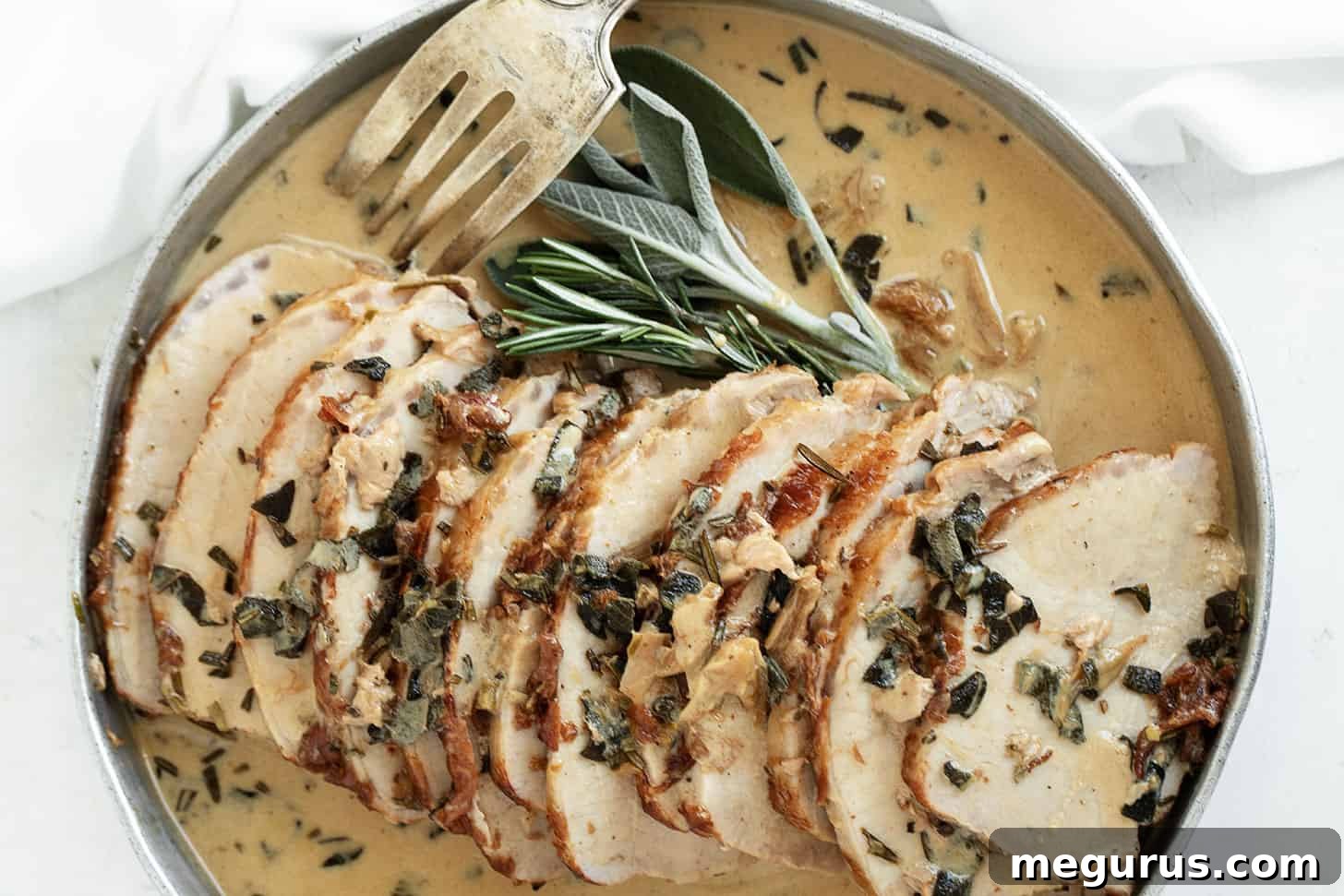
This wine and herb pork loin stands out as a true masterpiece in our collection of favorite meals. What makes it so exceptional? It’s the ingenious stove-top cooking method that ensures an utterly moist and tender pork loin, cooked to perfection without ever touching the oven. This unique approach locks in moisture and develops incredible flavor, creating a dish that feels undeniably special with its irresistible, melt-in-your-mouth texture and the most delicious, savory gravy you’ll ever taste.
Whether you’re planning a romantic date night, hosting a special dinner party, or simply treating your family to an extraordinary meal, this stove-top pork loin recipe rises to the occasion. Its sophisticated flavor profile and elegant presentation make it an ideal choice for company, while its ease of preparation means you can enjoy it without stress.
Rave Reviews for This Pork Loin Recipe
“I absolutely agree with your very first comment on this recipe ….this truly is the best pork loin recipe I have ever made. I am cooking it for the second time tonight for dinner. I have an overwhelming desire to make tons of extra sauce and put it on everything. Thanks so much!” – Alex
Alex’s enthusiastic feedback echoes the sentiments of many who have discovered the magic of this particular pork loin. The craving for extra sauce is a common side effect, a testament to the gravy’s incredible depth and versatility. This dish isn’t just a recipe; it’s an experience that leaves a lasting impression.
Essential Ingredients and Smart Substitutions
Achieving the perfect pork loin with a rich, flavorful gravy starts with understanding your ingredients. Here are some key notes to guide you:
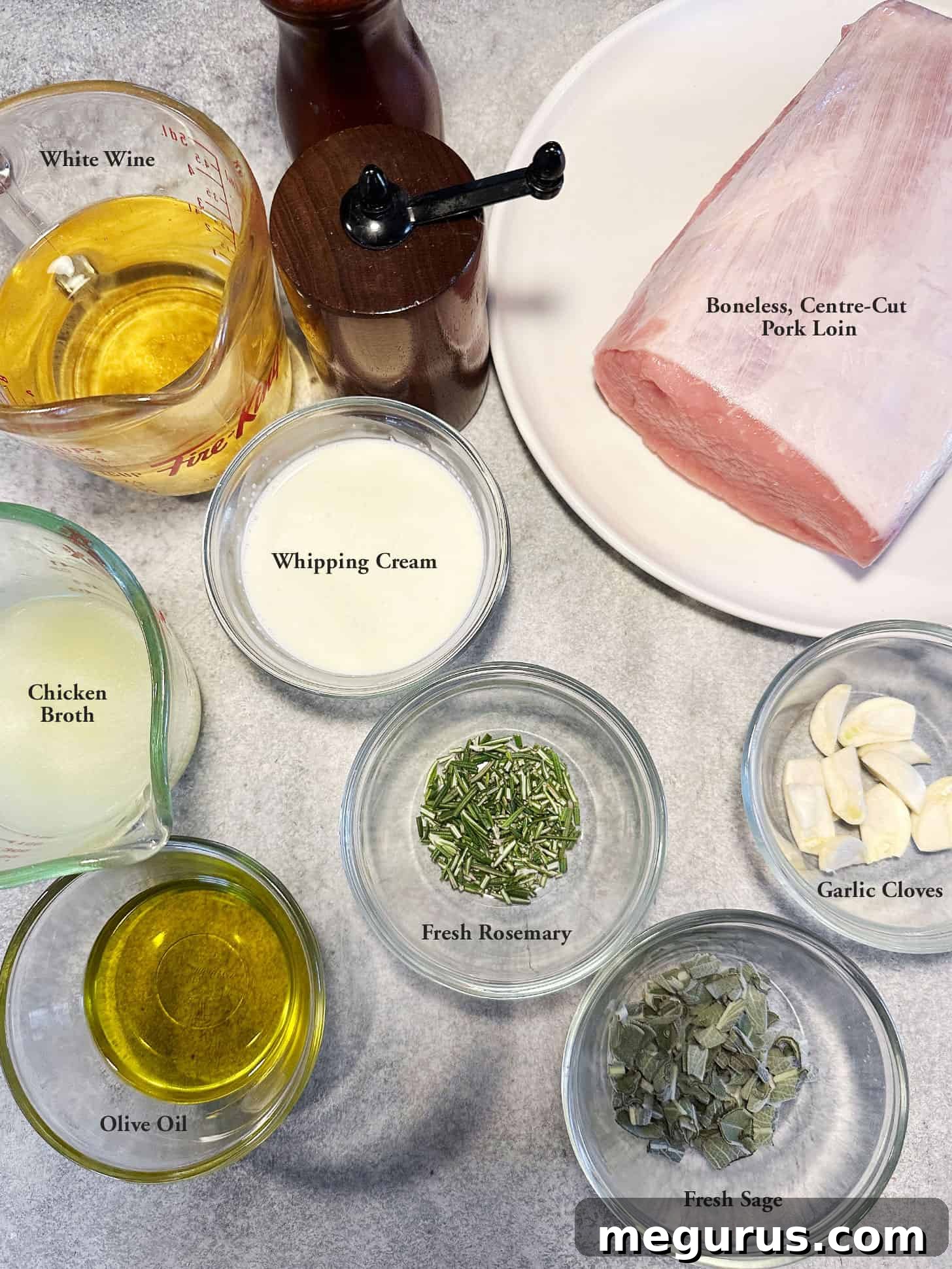
Pork Loin Roast: The Star of Your Meal
Choosing the correct cut of pork is crucial for the success of this recipe. We are specifically looking for a **pork loin roast**, which is a thick, lean cut of pork. It’s often sold as a boneless roast and may have a thin layer of fat (the “fat cap”) on one side. This is distinctly different from a **pork tenderloin**, which is a much thinner, longer, and more delicate cut. While both are delicious, a pork tenderloin cooks much faster and has an uneven thickness that tapers towards the ends, making it unsuitable as a direct substitute for this particular recipe. Using tenderloin here would likely lead to an overcooked, dry result, as it cannot withstand the longer cooking time designed for the thicker loin roast.
For the finest outcome, seek a **centre-cut pork loin**. This is the prime section from the middle of the loin, characterized by its consistent thickness which ensures even cooking and allows for beautifully uniform slices. The lean nature of pork loin means that proper cooking methods, like our stove-top technique, are essential to maintain its moisture and tenderness.
White Wine: The Flavor Foundation
The white wine forms the aromatic base of our incredible gravy, adding depth and complexity. The best rule of thumb is to use any dry white wine that you genuinely enjoy drinking. There’s no need for an expensive bottle; a good, affordable option will work perfectly. Popular choices include **Chardonnay** (unoaked or lightly oaked for best results) or **Sauvignon Blanc**, both of which offer a crisp, bright acidity that complements the pork beautifully. Feel free to open a fresh bottle – you can always enjoy the remainder with your dinner! If you prefer to avoid alcohol, a good quality chicken broth or even a non-alcoholic white wine substitute can be used, though the flavor profile will be slightly different.
Sage and Rosemary: The Aromatic Duo
Fresh herbs are truly transformative in this recipe, infusing the pork and gravy with an unparalleled fragrance and flavor. **Fresh sage** and **fresh rosemary** are highly recommended for their robust, earthy notes that pair exceptionally well with pork. The volatile oils in fresh herbs release their essence more effectively during cooking, creating a more vibrant and nuanced taste. However, if fresh herbs are unavailable, you can substitute with dried versions. As a general guideline, use about one-third to one-half the amount of dried herbs compared to fresh, as dried herbs are more concentrated. Crush them lightly between your fingers before adding to release their aroma.
Cream: For a Silky, Rich Gravy
The addition of cream at the end transforms the pan drippings into a luxurious, silky gravy. **Heavy whipping cream** (typically 35% butterfat) is highly recommended for its richness and ability to create the best texture and body in the sauce. Its higher fat content prevents it from curdling easily and contributes to a smooth, velvety consistency. If you only have a lighter cream, such as half-and-half or light cream, you might find the sauce needs a little help to thicken. In this case, prepare a simple cornstarch slurry by mixing 2 tablespoons of cornstarch with 2 tablespoons of cold water until smooth. Stir this mixture into the simmering gravy gradually, a little at a time, until your desired thickness is achieved. Remember, the gravy doesn’t need to be extremely thick; a gentle reduction to a slightly viscous consistency is ideal.
Other Key Ingredients:
- Garlic: Freshly minced or sliced garlic is essential for its aromatic punch.
- Olive or Vegetable Oil: For searing the pork and sautéing the aromatics.
- Chicken Broth: Adds savory depth to the gravy, balancing the wine.
- Salt and Freshly Ground Black Pepper: Crucial for seasoning the pork and adjusting the gravy’s flavor. Don’t be shy – proper seasoning elevates every component of the dish.
Mastering the Stove-Top Pork Loin with Wine and Herb Gravy
This recipe employs an innovative stove-top method that ensures a perfectly cooked pork loin every time. While this section offers a visual and textual summary, always refer to the detailed instructions and precise measurements in the full recipe card below for the best results.
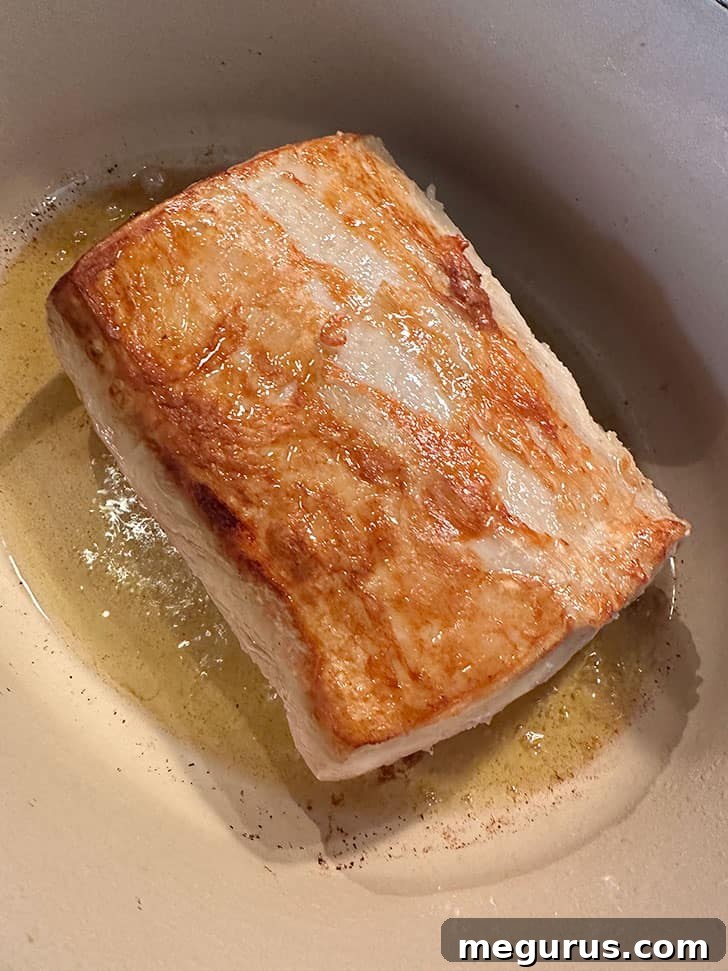
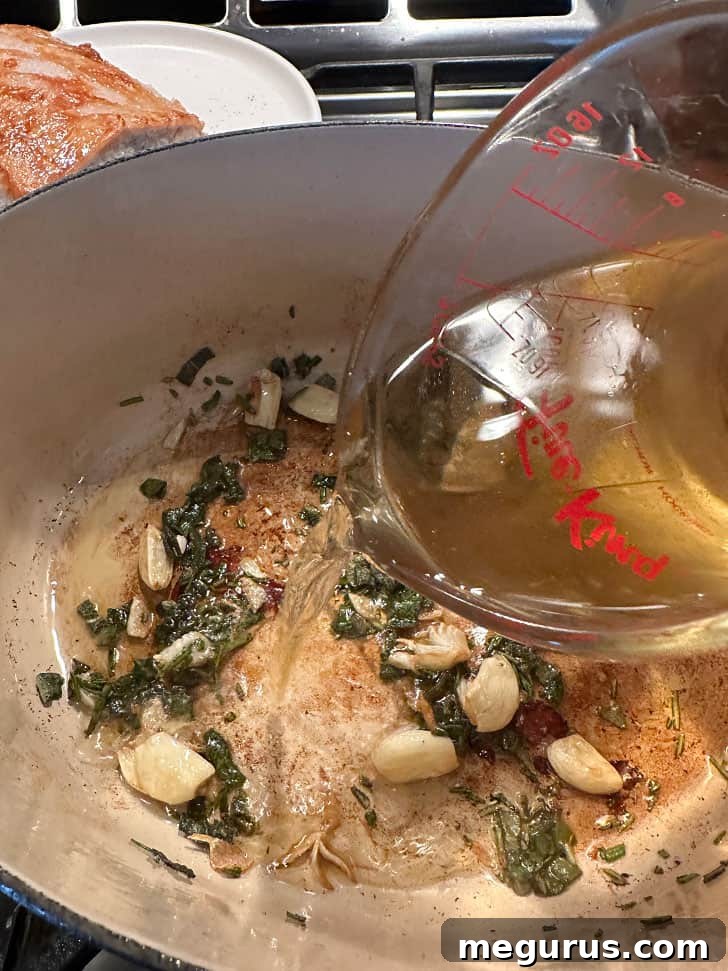
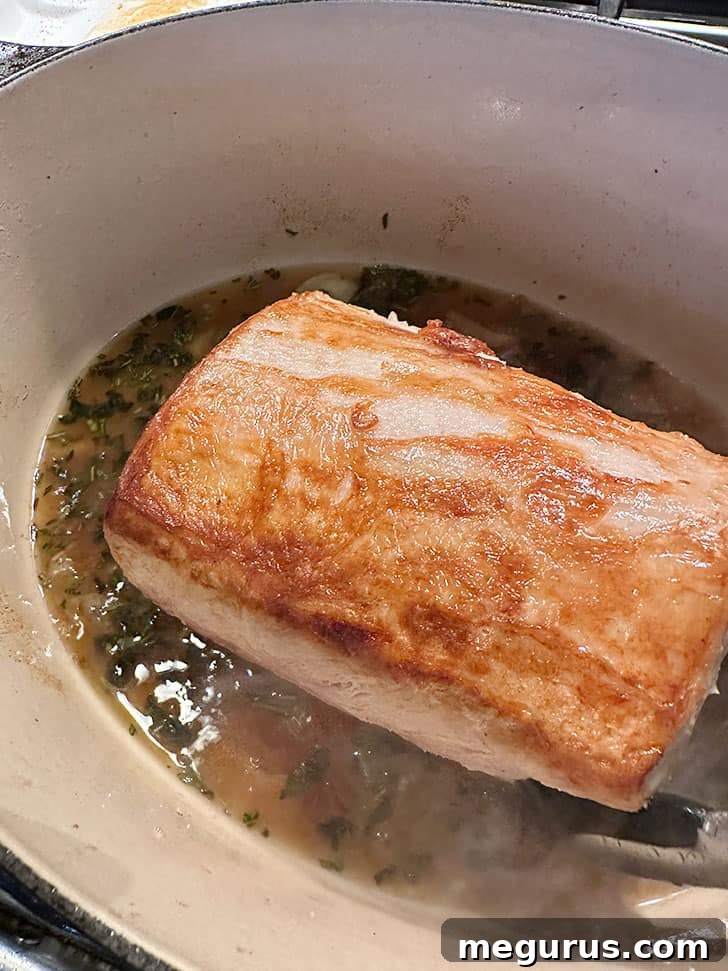
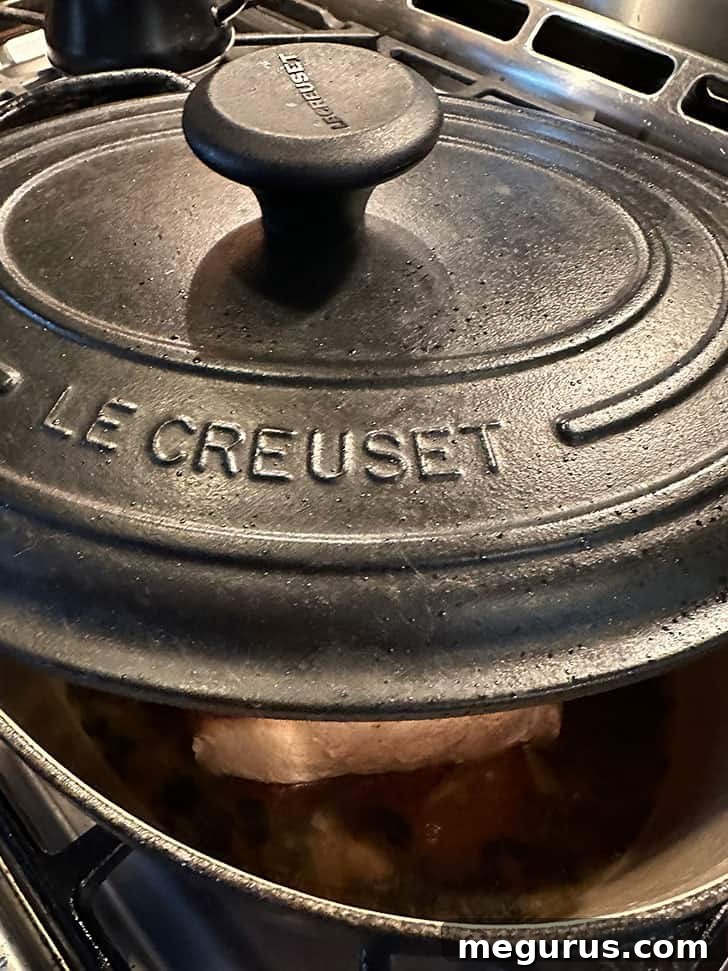
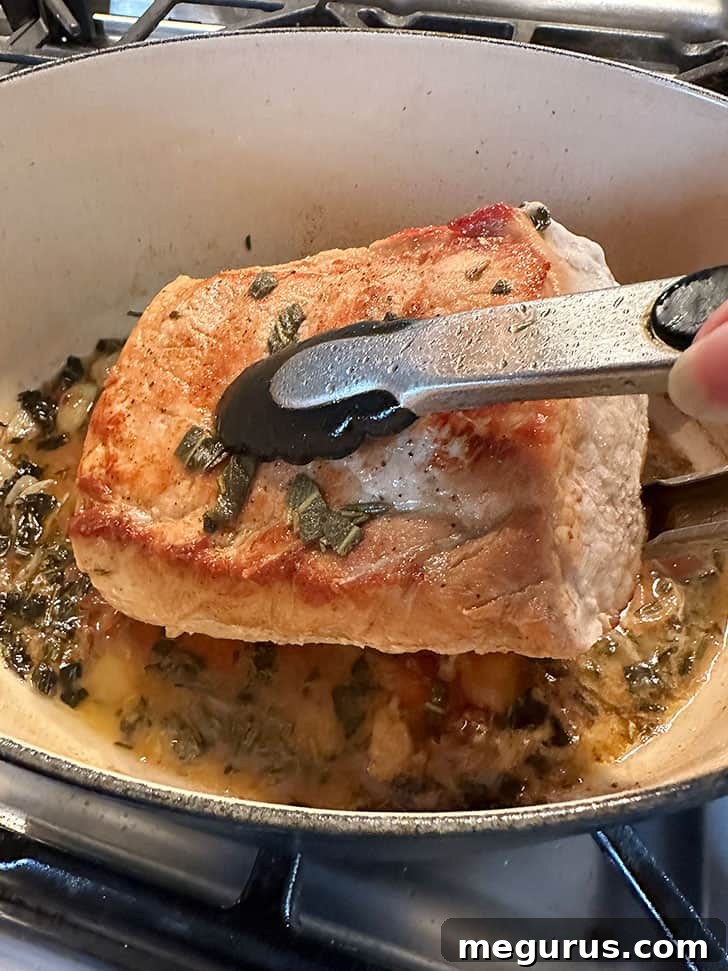
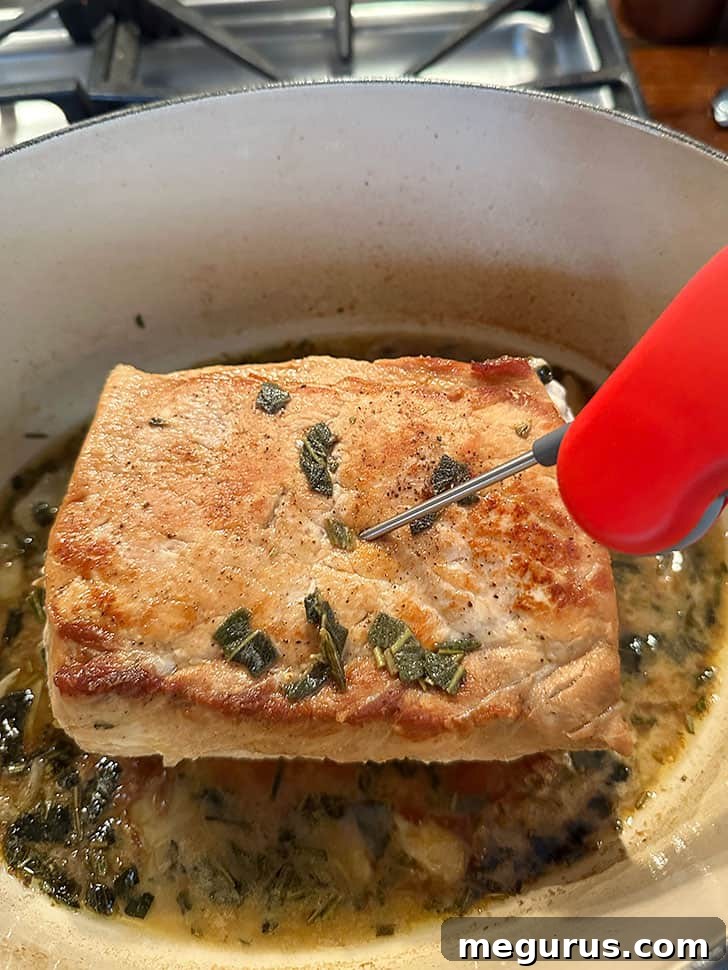
- Sear the Pork: Begin by heating olive or vegetable oil in a large Dutch oven or a heavy-bottomed, oven-safe pan over medium-high heat. Ensure the pan is large enough for the pork loin to lie flat. Generously season your pork loin roast with salt and freshly ground black pepper on all sides. Once the oil is shimmering hot, carefully add the pork to the pan, fat side down first if it has one. Sear aggressively for about 4-5 minutes per side until a beautiful golden-brown crust forms. This crucial step develops incredible flavor. Remove the browned pork to a plate.
- Build the Aromatic Base: Reduce the heat to medium. To the same pan (with all those delicious browned bits, known as ‘fond’), add the sliced garlic, chopped rosemary, and sage. Sauté, stirring constantly, for about 45-60 seconds until fragrant. Be careful not to burn the garlic or herbs, as this will impart a bitter taste.
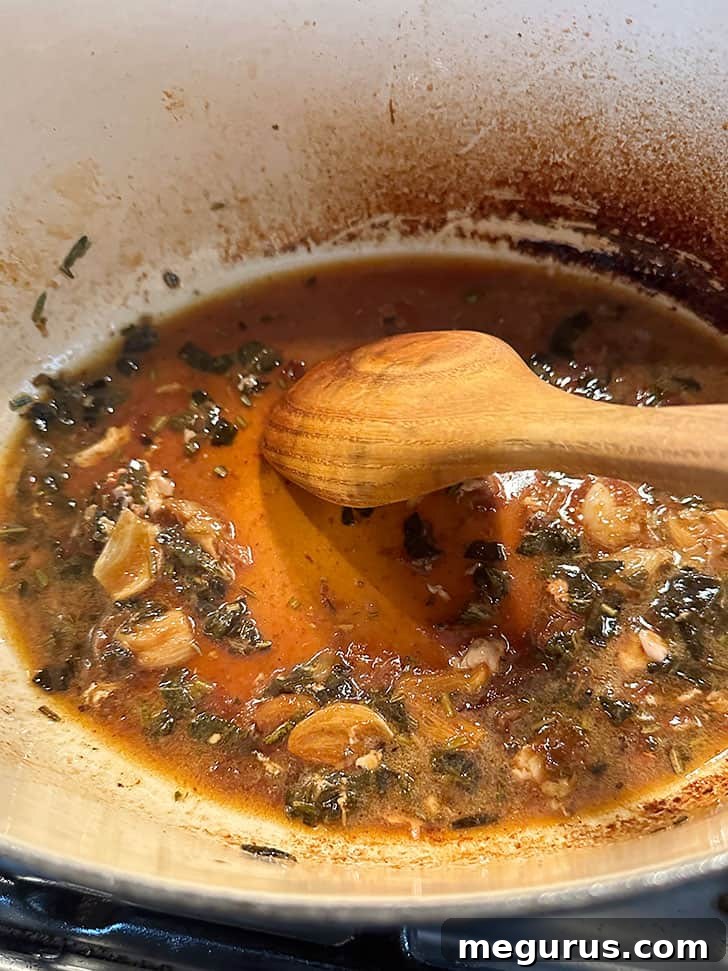
- Deglaze and Introduce Wine: Pour in the white wine. Use a wooden spoon to vigorously scrape up all the flavorful browned bits from the bottom of the pan. This ‘deglazing’ process is key to building a rich gravy. Cook the wine for 1-2 minutes, allowing the alcohol to evaporate, leaving behind its deep flavor.
- Slow Cook on the Stove-Top: Return the browned pork loin to the pan, nestling it amidst the herbs and wine. Season with a touch more salt and pepper. Reduce the heat to low-medium. Partially cover the pan with a lid, leaving a small gap for steam to escape. This partial cover helps retain moisture while still allowing for some evaporation and concentration of flavors. Cook for 20 minutes.
- Flip and Continue Cooking: After 20 minutes, carefully flip the pork loin. Gently stir the bottom of the pot to ensure nothing is sticking and all the flavors are mingling. Check the liquid level; if the pan seems dry, add about 1/4 cup of water or chicken broth. Return the lid, partially covering the pan, and continue cooking for another 15 minutes.
- Monitor Temperature and Progress: Flip the pork again. From this point, you’ll want to regularly check the internal temperature of the pork loin with an instant-read meat thermometer, aiming for 140-145°F (60-63°C) for medium-rare to medium, which will become a perfect 145°F-150°F after resting due to carryover cooking. Continue flipping, stirring the bottom of the pan, and adding small splashes of water if needed, in 5-10 minute intervals, until the target temperature is reached. For an average 2 lb. pork loin, the total stove-top cooking time usually ranges from 55-60 minutes.
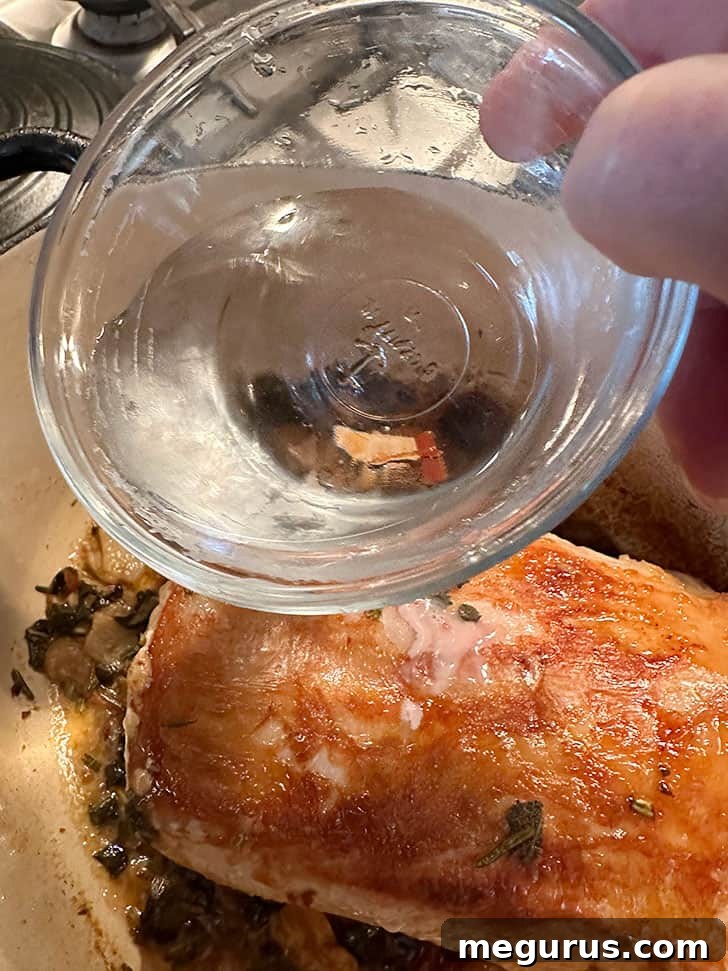
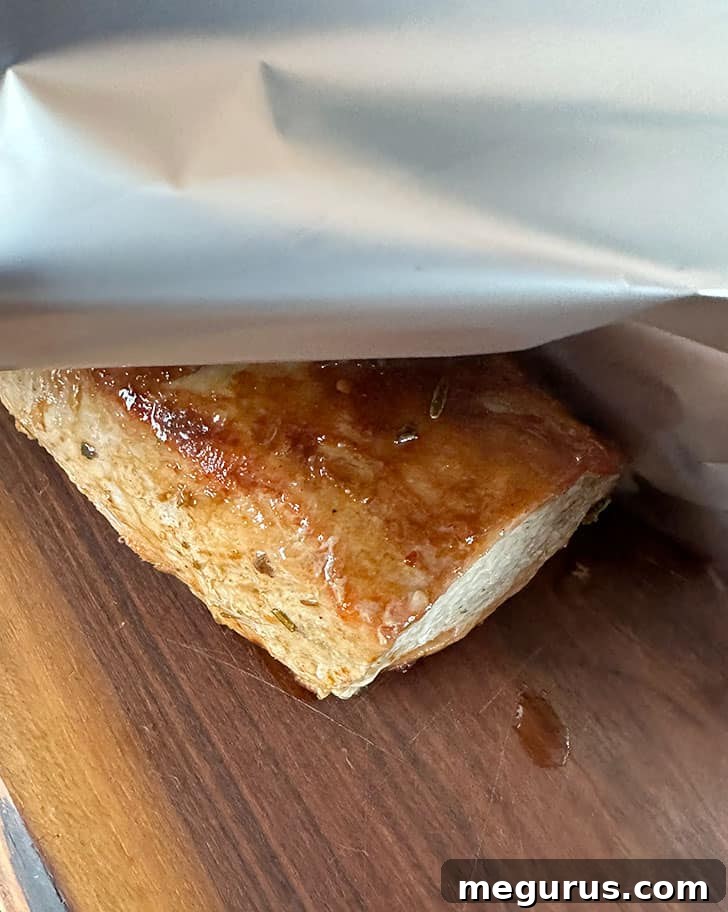
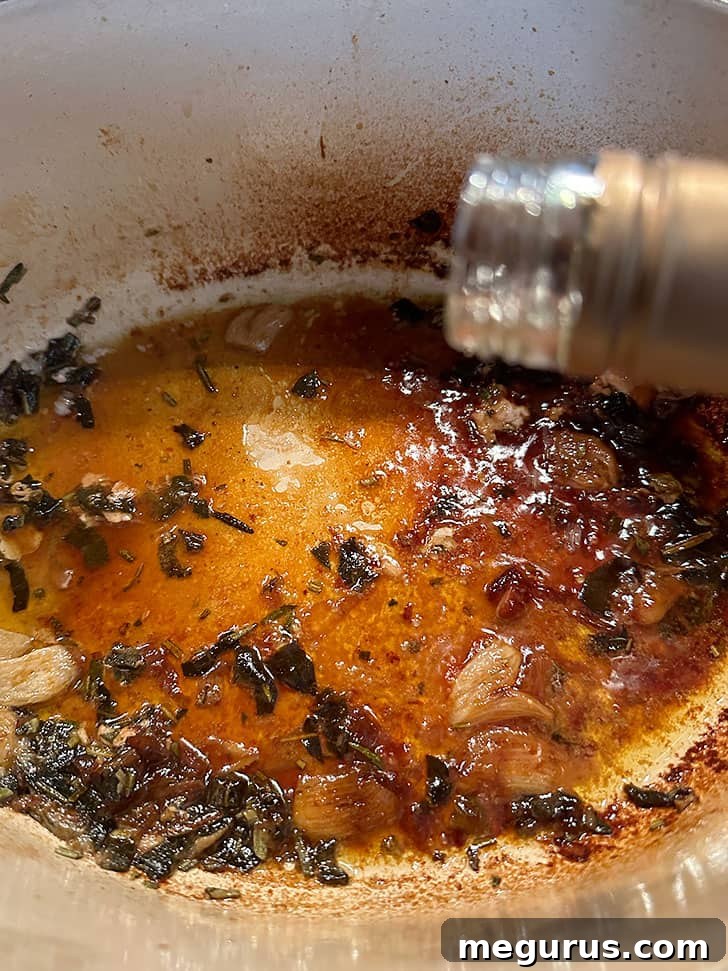
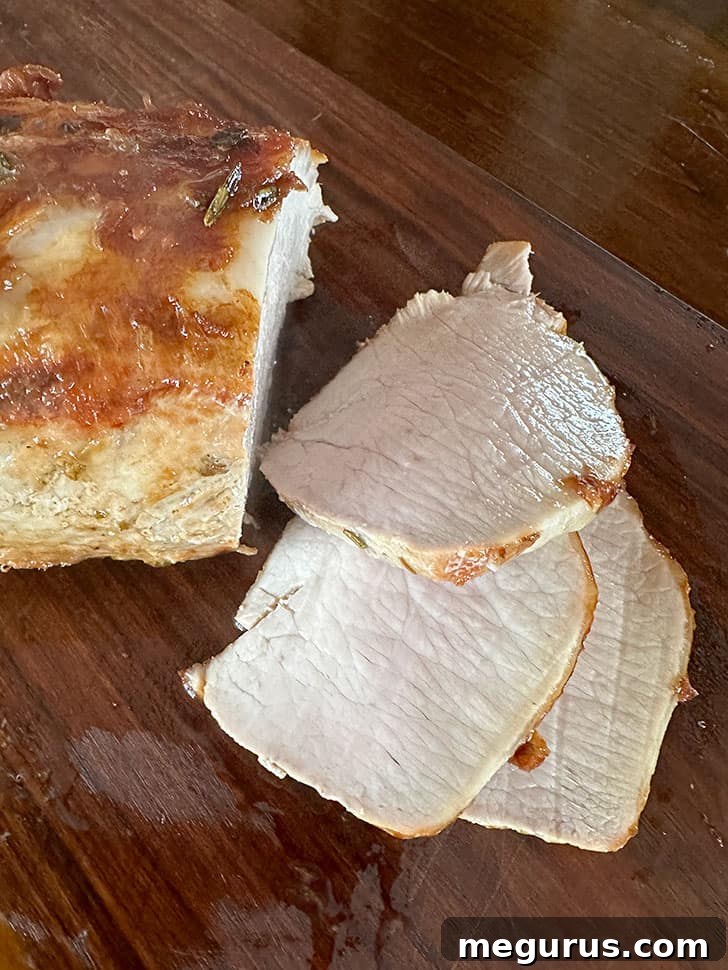
- Rest the Pork: Once the pork loin reaches its ideal internal temperature (140-145°F), immediately remove it from the pan and transfer it to a clean cutting board. Tent it loosely with aluminum foil. Allowing the pork to rest for at least 10-15 minutes is critical. This process allows the juices to redistribute throughout the meat, resulting in an exceptionally tender and moist final product. Skipping this step often leads to dry meat.
- Craft the Velvety Gravy: While the pork rests, turn your attention to the pan. Increase the heat under the pan drippings to medium. If there’s very little liquid remaining, add a splash of white wine to deglaze again, scraping up any remaining browned bits. Then, pour in the chicken broth and stir well to incorporate all the savory fond from the bottom of the pan. Let it simmer gently for a few minutes to heat through and allow flavors to meld. Reduce the heat to medium-low.
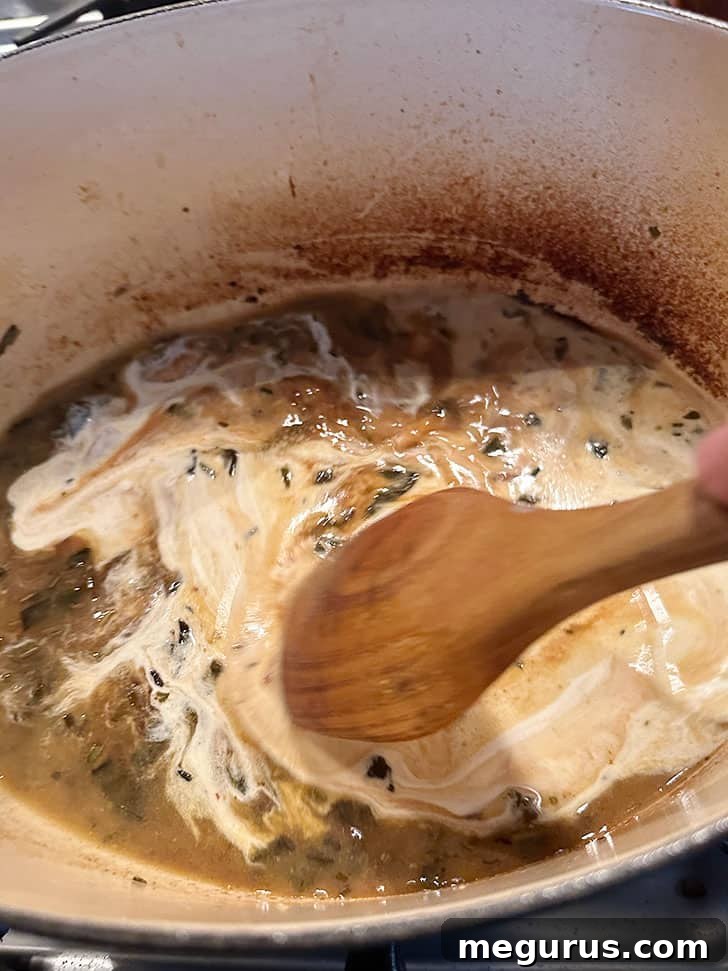
- Add the Cream and Thicken: Stir in the heavy cream. Continue to heat gently over medium-low heat, stirring frequently, until the sauce reduces slightly and thickens to a lovely, pourable consistency. Avoid a vigorous boil, as this can cause the cream to separate. A gentle simmer is perfect. The gravy doesn’t need to be extremely thick; a slightly reduced, creamy texture is ideal. Taste the sauce and adjust seasoning with salt and freshly ground black pepper as needed. If the sauce tastes a little acidic from the wine, a pinch more salt can help to balance the flavors beautifully. If you desire a thicker gravy, slowly whisk in a cornstarch slurry (2 Tbsp cornstarch mixed with 2 Tbsp cold water) until your preferred consistency is reached.
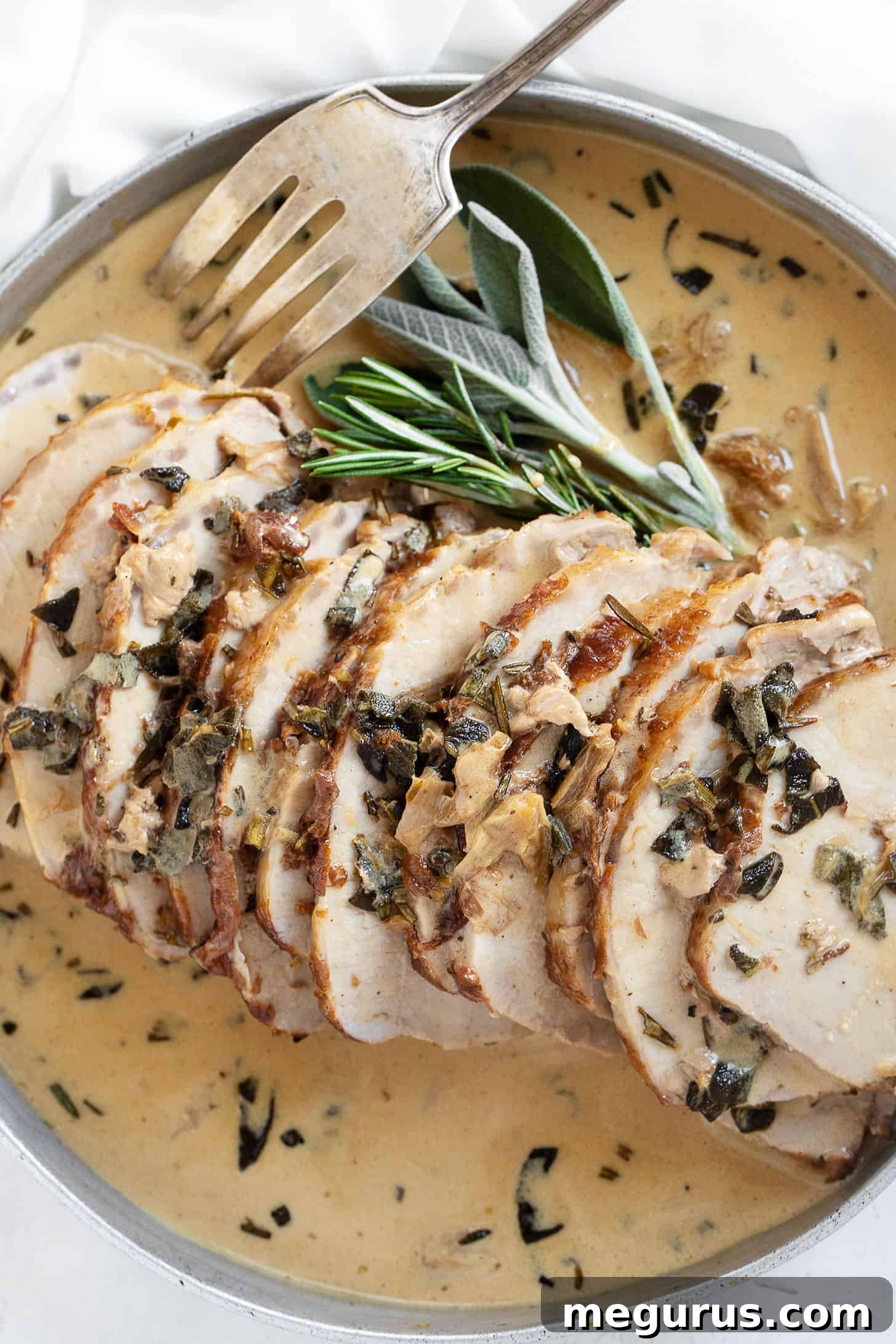
- Slice and Serve: Once the pork has rested, slice it thinly against the grain. Arrange the slices elegantly on a shallow serving platter or individual plates. Spoon a generous amount of the warm, creamy wine and herb gravy over the sliced pork. Serve immediately and prepare for compliments!
Serving Suggestions: What to Pair with Your Elegant Pork Loin Dinner
This exquisite pork loin with wine and herb gravy is a truly versatile main course, pairing beautifully with a variety of side dishes that can elevate your meal. The rich, savory gravy calls for something equally comforting and capable of soaking up every last drop.
- Creamy Mashed Potatoes: A classic and undeniably perfect pairing! Creamy mashed potatoes, whether traditional or infused with roasted garlic, provide a luxurious bed for the gravy. The potato’s mild flavor and smooth texture create a delightful contrast with the tender pork and robust sauce. Consider a celeriac mash for a lower-carb alternative that still delivers on creaminess.
- Buttered Noodles or Wild Rice: For a different textural experience, consider buttered egg noodles. Their soft, supple strands are wonderful for mingling with the gravy. Alternatively, a wild rice pilaf offers a nutty flavor and a pleasing chew that complements the dish’s earthy notes. Even fluffy quinoa could be a surprisingly delicious and wholesome option.
- Gnocchi or Polenta: While not yet widely tried with this specific recipe, the idea of pillowy soft potato gnocchi or creamy polenta suggests a delightful culinary adventure. Both would provide a fantastic vehicle for the rich sauce.
- Fresh Green Vegetables: To balance the richness of the pork and gravy, a vibrant green vegetable is a must. Sautéed broccolini or tender steamed broccoli florets are excellent choices, offering a slight bitterness and satisfying crunch. Crisp green beans, perhaps lightly sautéed with toasted almonds, or roasted asparagus with a squeeze of lemon, would also be ideal, adding a refreshing element to the plate.
- Crusty Bread: Don’t forget a crusty baguette or artisanal bread for mopping up any leftover gravy – it’s too good to leave behind!
Tips for Success: Ensuring a Perfect Pork Loin Every Time
- Room Temperature Pork: Before searing, allow your pork loin to sit at room temperature for 20-30 minutes. This helps the meat cook more evenly, preventing a cold center and overcooked exterior.
- Hot Pan is Key: Ensure your oil is shimmering and hot before adding the pork loin. A proper sear creates a beautiful brown crust, locking in juices and developing deep, caramelized flavors.
- Don’t Overcrowd the Pan: If cooking multiple pork loins, work in batches to avoid lowering the pan temperature. Overcrowding can steam the meat instead of searing it.
- Invest in a Meat Thermometer: This is your best friend for perfectly cooked pork. Visual cues can be deceiving. Aim for 140-145°F (60-63°C) internal temperature, knowing it will rise to 145-150°F (63-65°C) as it rests.
- The Importance of Resting: Never skip resting the pork. This crucial step, often overlooked, allows the muscle fibers to relax and reabsorb their juices, resulting in a significantly more tender and moist outcome.
- Taste and Adjust: Always taste your gravy before serving. Adjust salt, pepper, and even a tiny pinch of sugar if it tastes too acidic, to achieve a perfectly balanced flavor.
Storage and Reheating Recommendations
Should you be lucky enough to have leftovers of this delectable pork loin, storing and reheating it properly will ensure you can enjoy its flavors for days to come.
- Storage: Allow the cooked pork loin and gravy to cool completely before transferring them to airtight containers. Store the sliced pork separately from the gravy if possible, or together submerged in the gravy to keep it moist. Refrigerate for up to 3-4 days. For longer storage, you can freeze both the pork and gravy in freezer-safe containers for up to 2-3 months. Thaw frozen components overnight in the refrigerator before reheating.
- Reheating: To reheat, gently warm the gravy in a saucepan over low-medium heat, stirring occasionally, until simmering. For the pork, thinly sliced pieces can be added directly to the warm gravy and heated through for just a few minutes, taking care not to overcook. Alternatively, you can reheat sliced pork gently in a covered skillet with a splash of broth or water, or in a microwave on low power, until just warmed through. Avoid high heat, which can dry out the pork.
Frequently Asked Questions (FAQ)
Here are answers to some common questions about making this delightful pork loin recipe:
Q: Can I use pork tenderloin instead of pork loin roast?
A: While both are pork cuts, they are not interchangeable for this recipe. Pork tenderloin is much thinner and cooks significantly faster, and would likely become dry and tough with the cooking times specified for a pork loin roast. This recipe is specifically designed for the thicker pork loin roast to achieve its juicy, tender results.
Q: What if I don’t want to use white wine?
A: If you prefer to avoid alcohol, you can substitute the white wine with an equal amount of good quality chicken broth. The flavor profile will be slightly different, less acidic perhaps, but still delicious and savory. You could also explore non-alcoholic white wine alternatives if available.
Q: How do I know when the pork is truly done?
A: The most accurate way is to use an instant-read meat thermometer. Insert it into the thickest part of the pork loin, avoiding any bones. For medium-rare to medium, aim for an internal temperature of 140-145°F (60-63°C) when you remove it from the heat. The temperature will rise a few degrees as it rests.
Q: My gravy isn’t thickening. What can I do?
A: There are a few options. Ensure you’ve allowed it to simmer gently for long enough; reduction helps thicken. If it’s still too thin, mix 2 tablespoons of cornstarch with 2 tablespoons of cold water to create a smooth slurry. Gradually whisk this into the simmering gravy, a little at a time, until it reaches your desired consistency. You can also simmer it a bit longer, allowing more liquid to evaporate.
Q: Can I prepare parts of this dish ahead of time?
A: You can chop your herbs and slice your garlic in advance. While the pork is best cooked fresh, you could brown it slightly ahead of time and finish cooking just before serving, but for the juiciest results, cooking it all at once and resting it properly is ideal. The gravy can be made a day ahead and gently reheated, adding a splash of broth or cream if it’s too thick.
Get the Recipe: Pork Loin with Wine and Herb Gravy
This is the pork loin recipe that will turn you into a pork loin lover! The pork loin cooks together with wine, garlic, and fresh herbs to a juicy and never dry texture, and is served with a creamy pan sauce.
Average Rating: 4.95 stars from 113 ratings
Print Recipe |
Pin This |
Leave a Review
Prep Time: 15 mins
Cook Time: 1 hr 30 mins
Total Time: 1 hr 45 mins
Yield: 8 people
Adjust Servings: ½ | 1x | 2x | 3X
Ingredients
- 1/4 cup olive or vegetable oil
- 5 cloves garlic, peeled and sliced in half lengthwise
- 2 Tablespoons fresh rosemary leaves, chopped
- 1/4 cup fresh sage leaves, roughly chopped
- 2 lb. boneless, centre-cut, pork loin roast
- 1 1/4 cups dry white wine, plus a bit more to deglaze pan
- Salt and freshly ground black pepper
- 1/2 cup chicken broth
- 1/2 cup heavy whipping cream, 35% b.f.
Instructions
- Heat the oil in a large Dutch oven (or similar, heavy-bottomed pan) over medium-high heat. Be sure to use a pot big enough to allow the pork loin to sit flat on the bottom of the pot. Season the pork with a little salt and pepper. Add the pork to the pot, fat side down. Make sure the oil is hot enough to brown the pork well, as this makes for the best flavor. It may splatter a bit, but it’s worth it! Brown the pork for about 4-5 minutes on each side, then remove it to a plate. In the same pan, lower the heat to medium heat and add the garlic, rosemary and sage. Cook, stirring constantly, for about 45-60 seconds. Don’t allow to burn. Add the wine to the pan and use a wooden spoon to scrape the bottom of the pan. Cook the wine until the smell of the alcohol has disappeared, about 1 to 2 minutes.
- Lower the heat under the pan to low-medium heat. Return the pork to the pan and season with a bit more salt and pepper. Partially cover with a lid (Do not cover completely!) and cook for 20 minutes. Flip pork and stir the bottom of the pan. Make sure there is still some liquid in the pan. Return the lid partially covered and cook for 15 minutes, then flip again. Stir bottom and if getting dry, add 1/4 cup of water. Check the temperature of the pork. Return the lid to partially covered and check again in 5-10 minute intervals, flipping, stirring and adding a bit of water, if needed, until the pork registers 140-145F. internal temperature. For a 2 lb. pork loin, the total cooking time is usually 55-60 minutes.
- When the pork is cooked to the recommended temperature, remove pork to a cutting board to rest and cover loosely with a sheet of aluminum foil to help retain the heat while it rests.
- Meanwhile, increase the heat under the liquid in the pan to medium. If your pan has little liquid, deglaze with a splash of white wine. Stir well to loosen the browned bits on the bottom of the pan. Allow to cook until the alcohol smell disappears (about 1-2 minutes). Add the chicken stock and stir to combine. Heat over medium heat a few minutes, to allow the chicken stock to heat through a bit. Reduce heat to medium-low. Add the cream. Heat gently over medium-low heat, stirring the sauce regularly, until it thickens a bit and is warmed through. Avoid vigorously boiling. A gentle simmer is fine. (The sauce doesn’t need to be super thick, just reduced somewhat. If you’d like the sauce thicker, mix 2 Tbsp. cornstarch with 2 Tbsp. water and add a little bit at a time to your sauce until it thickens to your liking.) Taste sauce and add salt and freshly ground pepper, to taste. If the sauce tastes acidic (wine-y), add more salt to balance the flavor.
- When the sauce is ready, slice the pork very thinly and place on to a rimmed or shallow serving platter. Pour the warm gravy over-top to serve.
Notes
A pork loin roast is different than a pork tenderloin. Pork loin roast is thicker and evenly thick, very lean and usually has a bit of a fat-cap on it. Refer to the Ingredient Notes above for a picture of a pork loin. The timings in the recipe assume the larger pork loin and other cuts or bone-in pork may cook at a different rate and risk being under or overcooked using the timing outlined in the Recipe Card.
Be sure to read the information detailed above this Recipe Card, for more tips, step-by-step photos, and more!
Cuisine: American
Course: Main Course
Author: Jennifer Maloney
Nutrition Information (Approximate per serving)
Serving: 1 serving, Calories: 303kcal, Carbohydrates: 3g, Protein: 26g, Fat: 17g, Saturated Fat: 5g, Cholesterol: 92mg, Sodium: 85mg, Potassium: 495mg, Vitamin A: 290IU, Vitamin C: 0.9mg, Calcium: 40mg, Iron: 1.1mg
Tried this recipe? If you enjoyed this recipe, please leave a star rating and comment. It helps others to find it!