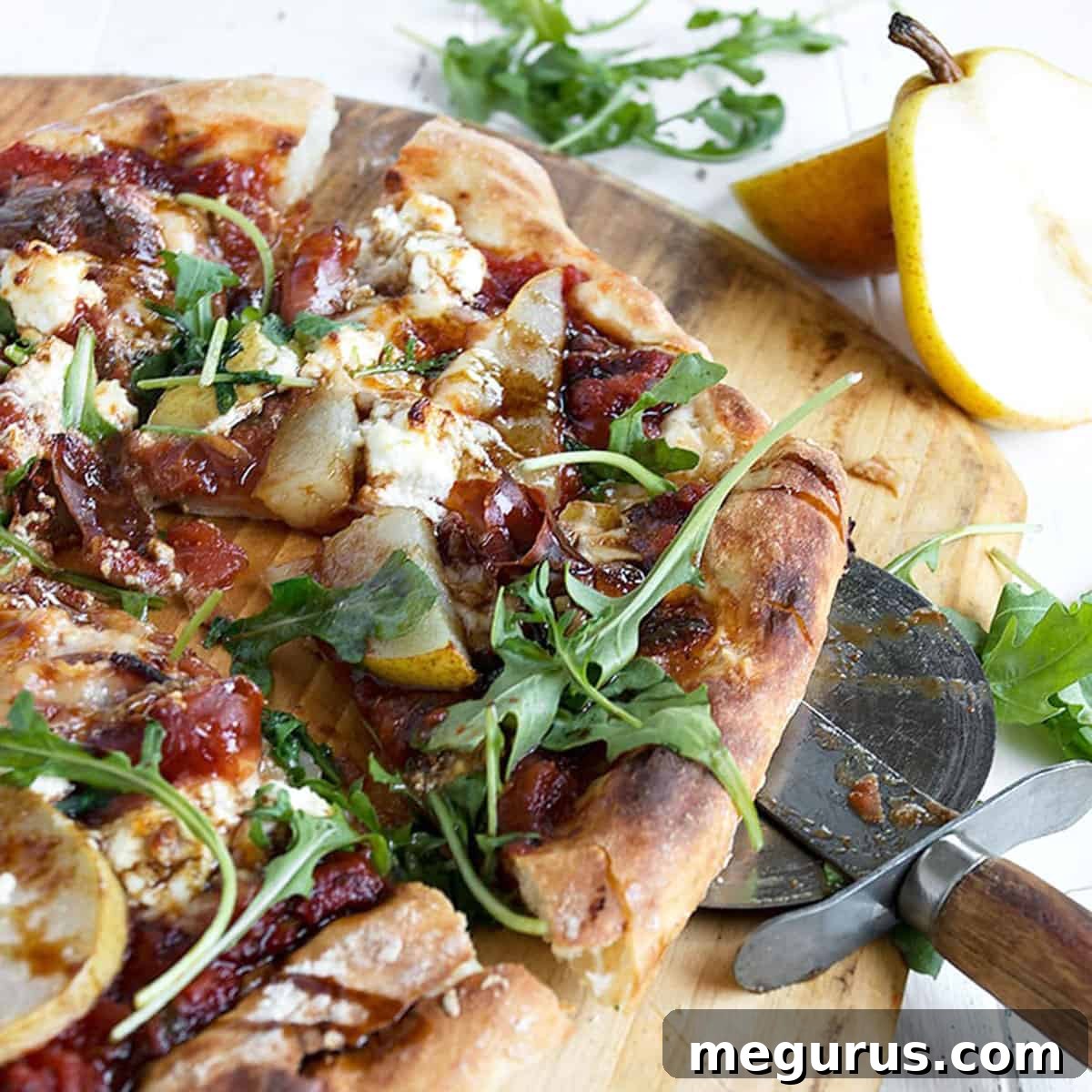
Discover the ultimate culinary delight with our homemade pear prosciutto pizza, a symphony of sweet and savory flavors. This gourmet pizza features succulent prosciutto, tangy goat cheese, and creamy mozzarella, all brought together with a luscious red wine balsamic glaze and fresh arugula for a vibrant finish.
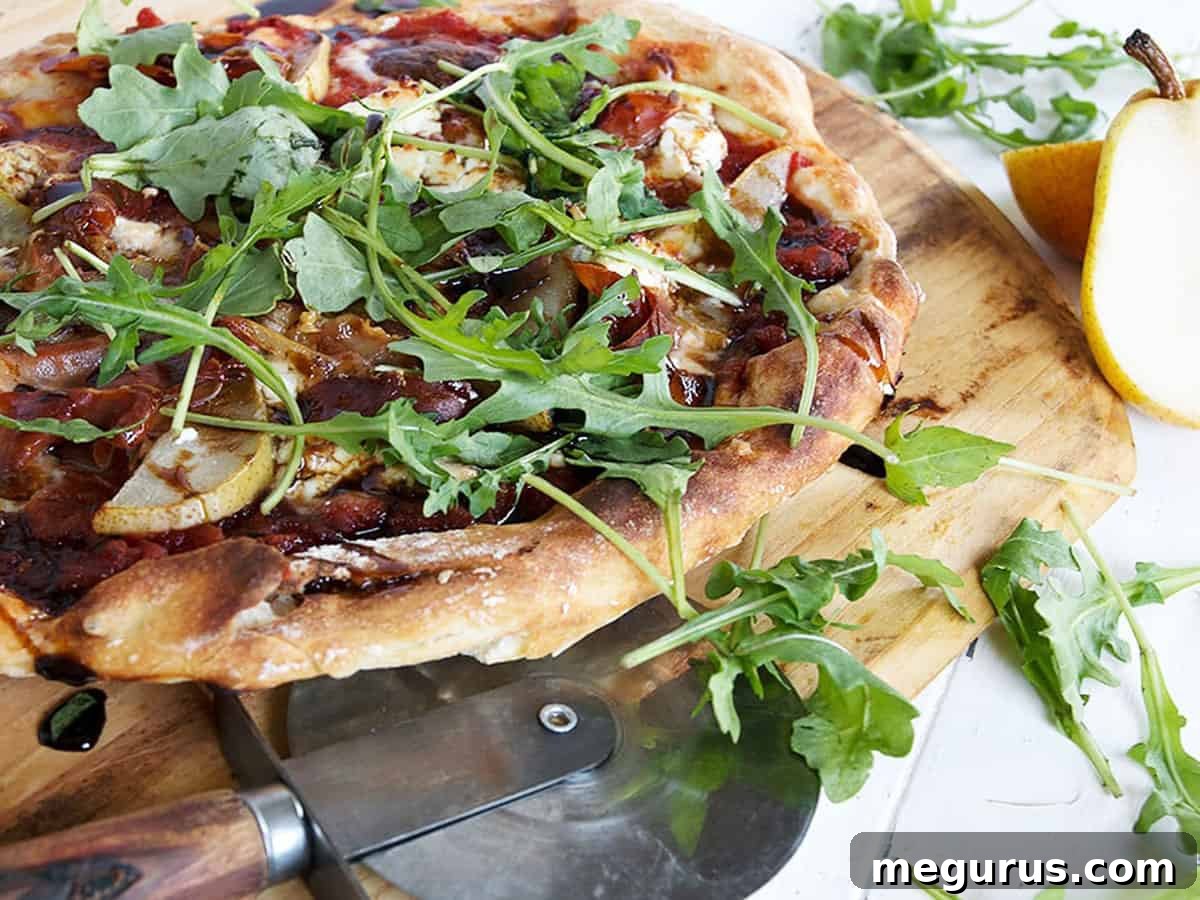
There’s a special joy in recreating cherished restaurant dishes in the comfort of your own kitchen. For me, it’s an ongoing culinary adventure, and this exquisite Pear Prosciutto Pizza is my latest and most satisfying triumph. Inspired by a memorable meal in Buffalo, New York, this pizza perfectly captures the delightful contrast between sweet, juicy pears and the salty, delicate notes of prosciutto. With pear season in full swing, there’s no better time to indulge in this unique and surprisingly harmonious flavor combination.
Beyond the star ingredients of pears and prosciutto, this pizza is generously adorned with creamy goat cheese, which provides a lovely tang, and just the right amount of shredded mozzarella for that classic cheesy stretch. Once baked to golden perfection, the pizza receives a lavish drizzle of homemade red wine balsamic glaze, adding a layer of sophisticated sweetness and acidity. A final scattering of fresh, peppery arugula completes the masterpiece, introducing a refreshing lightness that cuts through the richness of the other toppings.
For the truly dedicated home chef, this recipe offers the opportunity to craft every element from scratch. I poured my passion into making both the homemade pizza dough and a vibrant pizza sauce. However, convenience is key for many busy cooks, so feel free to use high-quality store-bought alternatives for the dough, sauce, or even the red wine balsamic glaze. I’ve included a quick and easy recipe for the glaze below, ensuring you can whip it up even if a ready-made option isn’t available in your local store. Whether you go fully homemade or opt for clever shortcuts, the result will be a delicious, restaurant-worthy pizza that will impress your family and friends.
Key Ingredients and Flavor Harmony
Understanding the role of each ingredient is crucial to achieving the perfect Pear Prosciutto Pizza. Here’s a deeper look into the components that create this remarkable dish:
Pizza Dough: The Foundation of Flavor
The base of any great pizza is its dough, and I highly recommend Jim Lahey’s No-Knead Pizza Dough recipe, which is included later in this article. Its incredible texture and flavor develop over a long, slow fermentation, yielding a crust that’s both chewy and crisp. Keep in mind that this dough requires an overnight start, so plan accordingly. If time is a constraint, a quality store-bought pizza dough is a perfectly acceptable substitute and will still result in a fantastic pizza. The key is to choose a dough that can achieve a good crispness without being too dense.
Pizza Sauce: A Touch of Homemade Goodness
While I’ve provided a simple yet flavorful recipe for homemade pizza sauce, your favorite store-bought marinara or pizza sauce can easily step in. The aim is a balanced, not-too-sweet sauce that complements rather than overpowers the unique toppings. A classic San Marzano tomato base with hints of garlic, oregano, and basil is always a winner.
Pears: The Sweet Star
I typically use Packham pears for this recipe due to their firm yet ripe texture, which holds up beautifully during baking. Any pear variety that is firm but yields slightly to pressure will work well. There’s no need to peel the pears; their thin skin helps maintain their shape and adds a subtle textural element. To prepare, simply halve the pear from top to bottom, then quarter each half. Carefully remove the core and any tough central fibers with a sharp knife, then slice them into even, medium-thick pieces. Avoid slicing too thinly, as they can become mushy.
Goat Cheese: The Tangy Counterpoint
Goat cheese is an indispensable ingredient in this recipe. Its bright, tangy, and slightly earthy flavor provides a wonderful contrast to the sweetness of the pears and the saltiness of the prosciutto. It crumbles beautifully over the pizza, melting into pockets of creamy delight. For those who enjoy a more adventurous flavor, blue cheese could be an intriguing alternative, offering a bolder, pungent note that would also pair well with the other ingredients.
Mozzarella Cheese: The Melty Embrace
While goat cheese brings the primary cheesy flavor, a small amount of shredded mozzarella is added for that classic, gooey pizza experience. The goal is just enough mozzarella to provide a lovely melt and bind the toppings, without overwhelming the distinctive flavors of the pear, prosciutto, and goat cheese. Distribute it sparingly, allowing the other ingredients to shine.
Red Wine Balsamic Glaze: The Secret Weapon
This glaze is truly a game-changer. If you already love balsamic glaze, you’ll be enchanted by the depth and complexity that a hint of red wine adds. It’s incredibly versatile, fantastic on this pizza, and equally delicious drizzled over grilled meats or roasted vegetables. Store-bought options like Nonna Pia’s brand are excellent and often found alongside other balsamic glazes in supermarkets. However, crafting your own is surprisingly simple with the recipe provided, allowing you to control the sweetness and reduction. It’s a pantry staple worth investing in or making regularly.
Arugula: The Fresh Finish
A generous scattering of fresh baby arugula after baking is, for me, a non-negotiable step. Its peppery, slightly bitter notes provide a refreshing balance to the rich, sweet, and salty components of the pizza. It adds a vibrant burst of color and a delightful textural contrast. While you can certainly omit it if you prefer, I highly recommend including it for the full sensory experience.
Pro Tips for Pizza Perfection
- Preparation is Key: If you’re going the homemade route for dough, sauce, and glaze, prepare them in advance. Making the dough the night before is essential, and having your sauce and glaze ready means less stress on pizza night. This streamlined approach makes assembling and baking your pizza much more enjoyable and efficient.
- Handle Dough with Care: When shaping homemade pizza dough, resist the urge to use a rolling pin aggressively. Instead, gently press and stretch the dough with your fingertips. This method preserves the delicate air bubbles that developed during fermentation, resulting in a lighter, airier crust.
- Preheat Thoroughly: A scorching hot oven is your best friend for a crispy pizza crust. Always preheat your oven to 500°F (260°C) with your pizza stone or steel inside for at least 30-60 minutes. This ensures the stone or steel reaches an optimal temperature for immediate heat transfer, preventing a soggy bottom.
- Don’t Overload: While tempting to pile on the toppings, remember that a thinner layer allows the crust to cook evenly and ensures each flavor can shine. Too many toppings can lead to a doughy crust and an unbalanced taste.
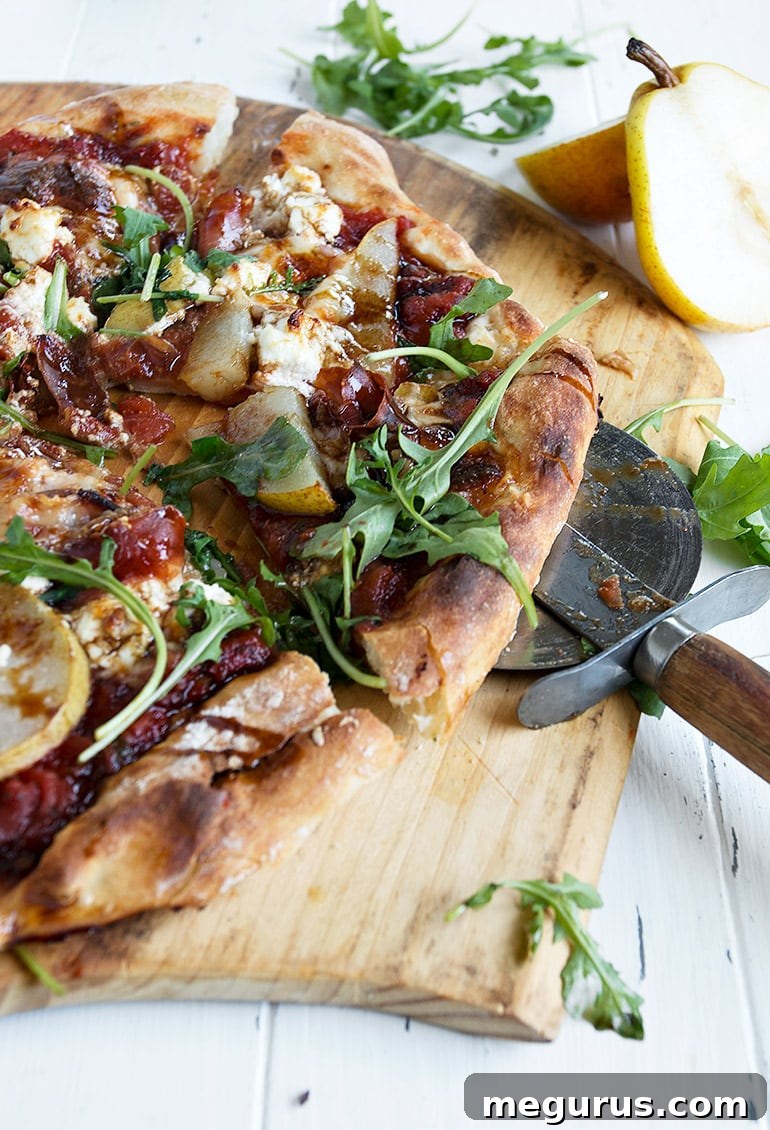
Mastering Homemade Pizza with Parchment Paper
One of the most frustrating moments for a home pizza maker is when your perfectly topped pizza sticks to the peel, creating a chaotic mess in your hot oven. I’ve been there, and I’ve found the ultimate solution: parchment paper. This simple trick revolutionizes the pizza-making process, ensuring a smooth transfer from peel to oven every time.
My method involves preparing the pizza directly on a sheet of parchment paper that I’ve lightly dusted with flour. Once the dough is shaped and topped with all the delicious ingredients, I trim the parchment paper close to the edge of the pizza, leaving just a small “tab” sticking out. Trimming the excess parchment prevents it from scorching or interfering with air circulation in the extremely hot oven. The small tab is crucial for the next step.
Next, I slide my pizza peel confidently under the parchment-lined pizza. With a swift, decisive motion, I transfer the pizza, parchment and all, onto the preheated pizza stone or steel in the oven. After about 5 minutes, when the pizza crust has begun to set and firm up, I carefully use a pair of tongs to grasp that convenient parchment tab. With a gentle pull, the parchment slides out from under the pizza, allowing the crust to finish cooking directly on the intense heat of the stone or steel. This ensures maximum crispness and a perfectly cooked base, all while completely eliminating the dreaded sticking scenario.
Jim Lahey’s No-Knead Pizza Dough: A Game Changer
For me, Jim Lahey’s No-Knead Pizza Dough isn’t just a recipe; it’s a revelation. This method consistently produces the most flavorful, airy, and delightfully chewy pizza crust I’ve ever made at home. The secret lies in its simplicity and patience. While it requires minimal active effort, it does need a significant head start – ideally, you’ll mix it the night before you plan to bake. This extended fermentation time is what develops its deep, complex flavor and perfect texture.
The process is incredibly straightforward: a quick minute to combine the ingredients in a large bowl, then it rests, covered, on your counter for 16-18 hours. This long rest allows the yeast to work its magic slowly, building strength and flavor without the need for intensive kneading. About an hour before you’re ready to bake, the moist dough is gently turned out onto a well-floured surface. With a little extra flour to manage its stickiness, it’s formed into a ball, divided into two, and then shaped into individual balls for a one-hour “bench rest.” During this time, the dough relaxes and becomes easier to shape. This is also the perfect moment to start preheating your oven to a blistering 500°F (260°C) with your pizza stone or steel inside.
Here are the simple ingredients for this remarkable dough:
3 3/4 cups all-purpose flour (500g)
1/4 tsp active dry yeast
2 tsp fine salt
1 1/2 cups water, at room temperature (350g)
To prepare: Stir all the ingredients together in a large bowl until just combined. The dough will be shaggy. Cover the bowl tightly with plastic wrap and let it stand at room temperature for 16-18 hours. One hour before baking, turn the dough out onto a generously floured work surface. Because the dough is quite moist, use additional flour as needed to handle it and gently form it into a loose ball. Divide the dough ball into two equal pieces, then gently form each piece into a separate ball. Lightly dust the tops with flour, cover with a clean tea towel, and allow to rest on the counter for one hour. While the dough rests, ensure your oven is preheating to 500°F (260°C) with your pizza stone or steel inside. Once rested, gently shape each dough ball into a round or square using only your fingertips to press and stretch. Top and bake immediately.
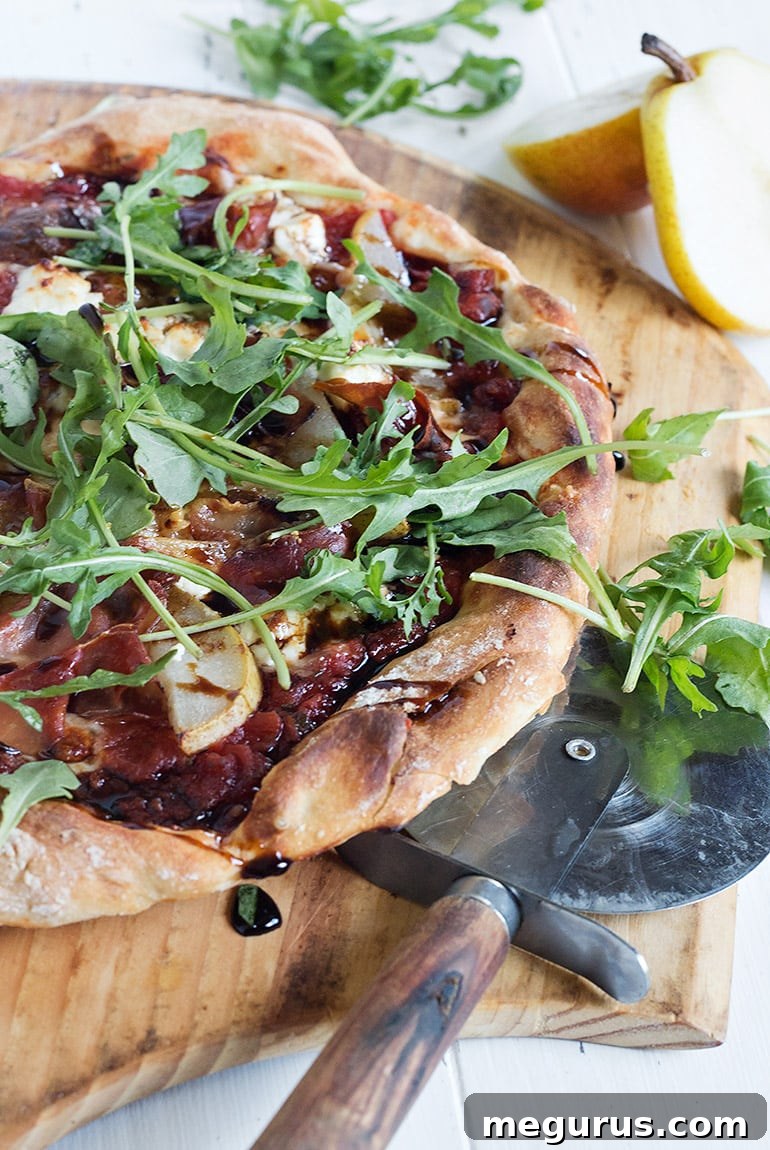
The Baking Steel Advantage for Crispy Pizza
For years, I relied on a traditional pizza stone for my homemade pizzas, and it served me well. However, receiving a Baking Steel as a gift revolutionized my pizza-making experience. A baking steel is significantly more conductive than a stone, which means it transfers heat to the pizza dough much more efficiently and effectively. This results in an incredibly crispier crust, often achieving that sought-after leopard-spotted char on the bottom that rivals professional pizzeria ovens.
The instructions typically suggest preheating the baking steel for at least an hour at maximum oven temperature (often 500-550°F / 260-290°C). While I follow their pre-heating recommendations for optimal heat saturation, I’ve found that my pizzas sometimes require a minute or two longer to bake than the steel manufacturer suggests, likely due to variations in oven calibration or desired crispness. If you’re considering investing in a baking steel, be aware that while it’s a fantastic tool, it is notably heavy. This might be a consideration for some, but for the unparalleled crust it produces, it’s a weight I’m happy to lift.
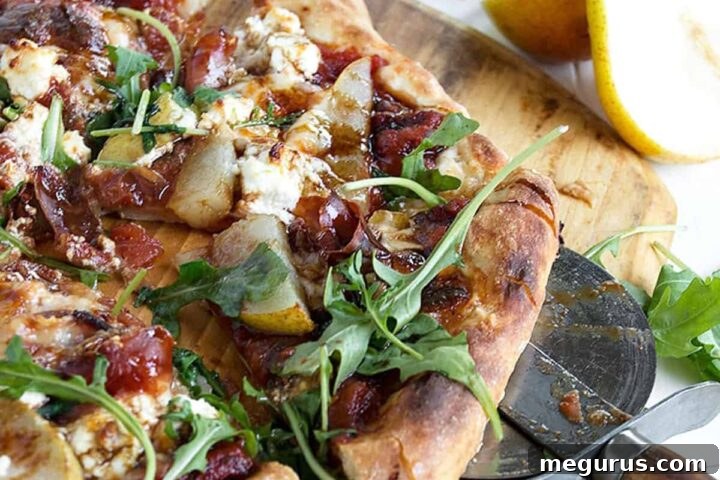
Pear Prosciutto Pizza
Homemade pizza featuring fresh pear, savory prosciutto, tangy goat cheese, and creamy mozzarella, finished with a red wine balsamic glaze and fresh baby arugula. This recipe yields two 12-14 inch pizzas.
Prep Time: 20 mins
Cook Time: 10 mins
Total Time: 30 mins
Yield: 12 servings (for two pizzas)
Ingredients
- 1 lb Pizza dough (homemade* or store-bought, enough for two 12-14 inch pizzas)
Pizza Sauce (or use store-bought):
- 1 teaspoon extra virgin olive oil
- 1 clove garlic, chopped
- 28 oz canned whole tomatoes (San Marzano recommended, hand crushed)
- 1 teaspoon dried oregano leaves
- 1 teaspoon dried basil leaves
- Salt and freshly ground pepper, to taste
Red Wine Balsamic Glaze (or use store-bought):
- 1/4 cup red wine (Cabernet Merlot recommended)
- 1/4 cup balsamic vinegar
- 1 Tablespoon brown sugar
Pizza Toppings:
- 1 large pear, ripe but firm, unpeeled, cored and cut into slices
- 3 slices prosciutto, torn into pieces
- 1/2 cup goat cheese, crumbled
- 1/2 cup mozzarella cheese, shredded
For topping after baking:
- Fresh baby arugula, generous amount
- Red Wine Balsamic Glaze, from above (to drizzle)
Instructions
- Make the Pizza Sauce (if using homemade): Heat olive oil in a large saucepan over medium heat. Add the chopped garlic and cook, stirring for about 45 seconds until fragrant. Add the hand-crushed tomatoes, dried oregano, dried basil, a healthy sprinkling of salt, and some freshly ground pepper. Bring the mixture to a boil, then reduce heat to medium-low and simmer until the sauce has thickened, approximately 30-45 minutes. Allow the sauce to cool completely before using. If making ahead, cover and refrigerate.
- Make the Red Wine Balsamic Glaze (if making your own): Combine the balsamic vinegar, red wine, and 1 tablespoon of brown sugar in a small saucepan. Bring the mixture to a boil over medium-high heat. Immediately reduce the heat to low and simmer gently, stirring occasionally, until the liquid has reduced by about half and thickened to a syrupy consistency. This usually takes 10-15 minutes. Remove from heat and transfer to a small jar. Set aside to cool. Refrigerate any leftover glaze.
- Place your pizza stone or baking steel in a cold oven. Preheat the oven to 500°F (260°C) for at least 30 minutes (ideally 45-60 minutes for steel) to ensure it is thoroughly heated.
- Prepare the pizza: On a lightly floured piece of parchment paper, gently shape your pizza dough into a 12-14 inch round or square. Spoon your prepared pizza sauce evenly over the dough, leaving a 3/4-inch border uncovered around the edge for the crust. Arrange the pear slices over the sauce. Tear the prosciutto into large chunks and scatter them over the pears. Sprinkle the crumbled goat cheese, then fill in any gaps with a bit of shredded mozzarella.
- Carefully transfer the pizza (still on the parchment paper) onto your preheated pizza stone or baking steel in the oven. Bake for 10-12 minutes, or until the crust is golden brown and the cheese is melted and bubbly. Baking time may vary depending on the thickness of your dough and oven. Gently lift the edge of the pizza to check if the bottom crust is cooked and golden.
- Once baked, remove the pizza from the oven. Drizzle generously with the red wine balsamic glaze and scatter fresh baby arugula overtop before slicing and serving immediately.
Notes
- *The detailed recipe for Jim Lahey’s No-Knead Pizza Dough is provided above in the main article body.
- The timing specified in this recipe (Prep/Cook/Total Time) refers only to the assembly and baking of the pizza, and does not include the preparation time for homemade pizza dough, sauce, or glaze if you choose to make them from scratch.
- For more detailed tips, ingredient variations, and substitution suggestions, please refer to the sections above this recipe card.
Cuisine: American, Canadian
Course: Main Course
Author: Jennifer Maloney