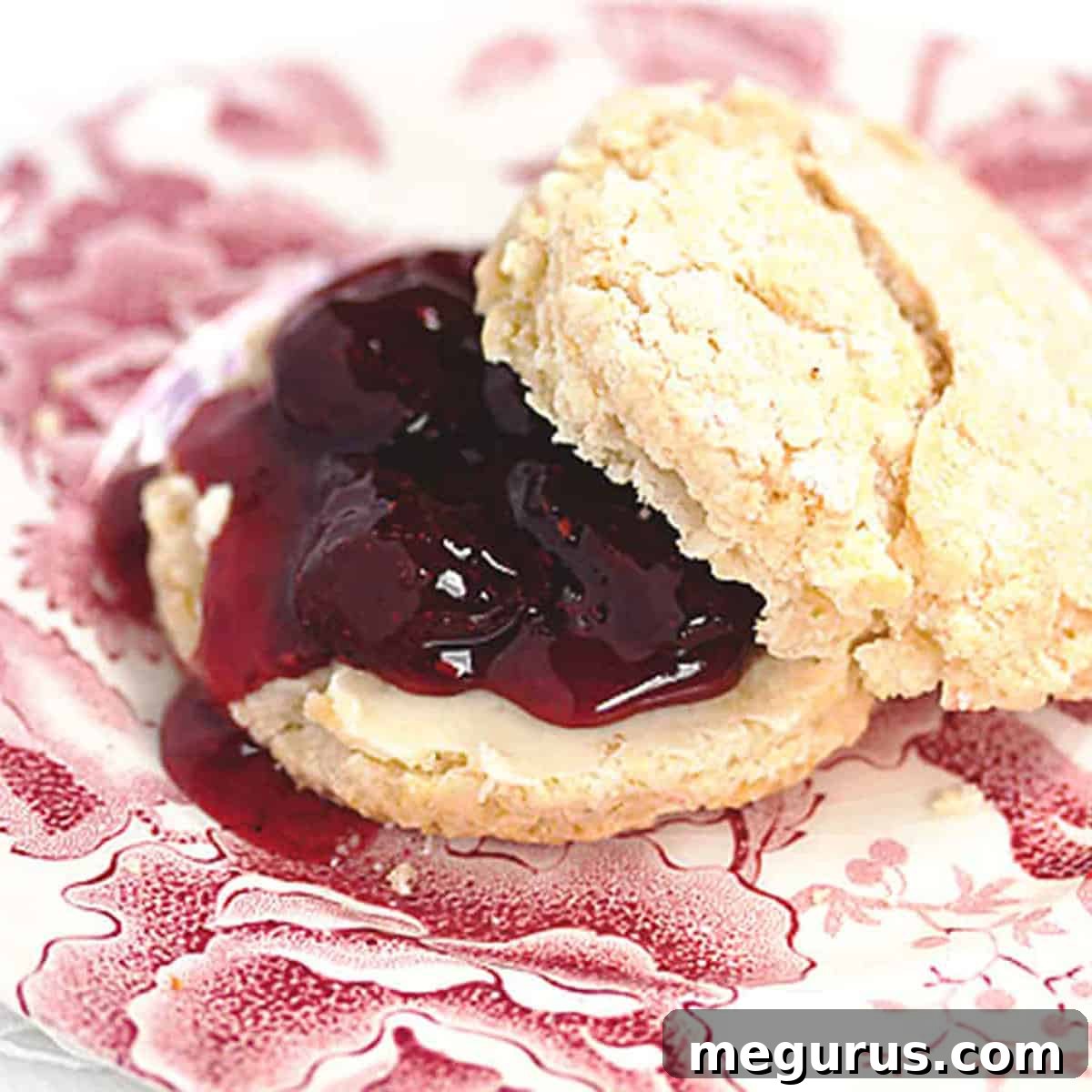
Forget complicated canning! This incredibly easy no-pectin strawberry jam recipe is a game-changer for anyone craving homemade goodness without the fuss. Infused with a unique touch of balsamic vinegar and a whisper of freshly ground black pepper, it elevates the natural sweetness of ripe strawberries to new, sophisticated heights. The result is a vibrant, ruby-red, and intensely flavorful small-batch jam with a delightful loose texture, perfect for enjoying fresh from the refrigerator. Experience gourmet taste with simple steps – no special canning equipment needed!
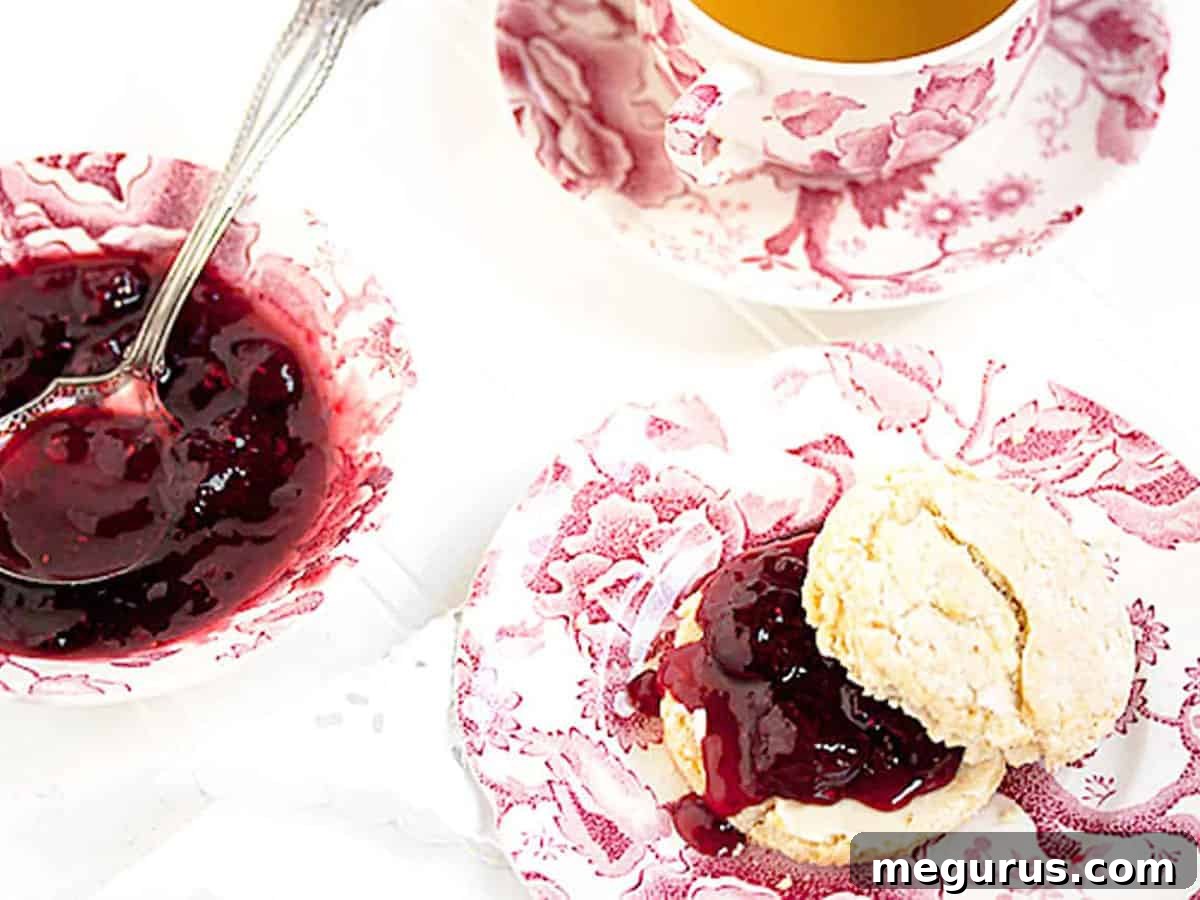
Mastering Homemade Strawberry Jam: A No-Pectin Delight
Welcome to my absolute favorite homemade strawberry jam recipe! What makes this preserve truly special is its inherent simplicity and the fantastic fact that it requires no added pectin. This means you can easily whip up a batch anytime fresh, peak-season strawberries are available, without needing to stock up on special setting agents. I particularly adore the inherently looser, more spreadable texture of a no-pectin jam. It’s less like a firm, jiggly jelly and more akin to a luscious fruit compote or a rich sauce, allowing the pure, unadulterated essence of the strawberries to shine through with every spoonful.
The secret to this jam’s extraordinary depth of flavor lies in two unexpected, yet perfectly harmonizing, additions: a splash of high-quality balsamic vinegar and a few generous grinds of fresh black pepper. The balsamic vinegar doesn’t make the jam taste vinegary; instead, it acts as a phenomenal natural flavor enhancer. It works to draw out and intensify the sweet-tart notes of the strawberries, adding a subtle complexity and brightness that truly elevates the fruit. Beyond flavor, it also contributes to the jam’s stunning, deep ruby-red hue, making it as visually appealing as it is delicious. The black pepper, though used sparingly, introduces an intriguing counterpoint. Its warm, slightly pungent note beautifully contrasts and complements the sweet berry flavors, adding a gourmet twist that will surprise and delight your palate. This combination transforms a simple strawberry jam into something truly memorable and unique.
The Essential Role of Sugar in Jam Making
If you’re embarking on your first homemade jam adventure, the amount of sugar specified in recipes might seem surprising, even a little daunting. It’s a common temptation for many to reduce the sugar content, but I cannot stress enough why this is not advisable, especially for no-pectin jams like this strawberry and balsamic creation. Sugar plays several critical roles that are absolutely fundamental to the success, texture, and safety of your jam:
- Setting Agent: In jams where no commercial pectin is added, sugar is the primary component that allows the jam to “set” or thicken properly. As the fruit and sugar mixture boils, water evaporates, progressively increasing the sugar concentration within the pot. This high sugar concentration, combined with the natural pectin present in the fruit (even if in low amounts for strawberries) and acidity from lemon juice, creates the perfect conditions necessary for the jam to firm up and achieve that beloved spreadable consistency upon cooling. Significantly reducing the sugar content often results in a jam that simply won’t set, remaining a runny syrup instead of a luscious preserve.
- Preservative: Sugar is a powerful natural preservative. The high sugar content creates an osmotic environment that inhibits the growth of bacteria, yeasts, and molds, which are responsible for spoilage. While this recipe is designed as a refrigerator jam and not for shelf-stable traditional canning, the sugar content is crucial for ensuring it keeps beautifully and safely in your fridge for several months. It’s what allows you to enjoy your homemade creation long after the berries are out of season.
- Sweetener and Flavor Enhancer: Of course, sugar sweetens the jam! Jam is, by its very nature, a sweet condiment meant to be enjoyed in small, flavorful quantities. The sweetness balances the fruit’s natural tartness, bringing out its best qualities and enhancing its overall flavor profile. It’s a concentrated burst of fruit flavor, intended to complement rather than overpower. Think of it as a culinary accent, perfect for brightening your breakfast or elevating a dessert.
Therefore, for the best texture, optimal preservation, and delightful flavor, it is highly recommended to stick to the sugar ratios provided in tested jam recipes. It is a crucial ingredient that ensures a successful, safe, and truly enjoyable homemade product.
Step-by-Step Visual Guide to Your Best Strawberry Jam
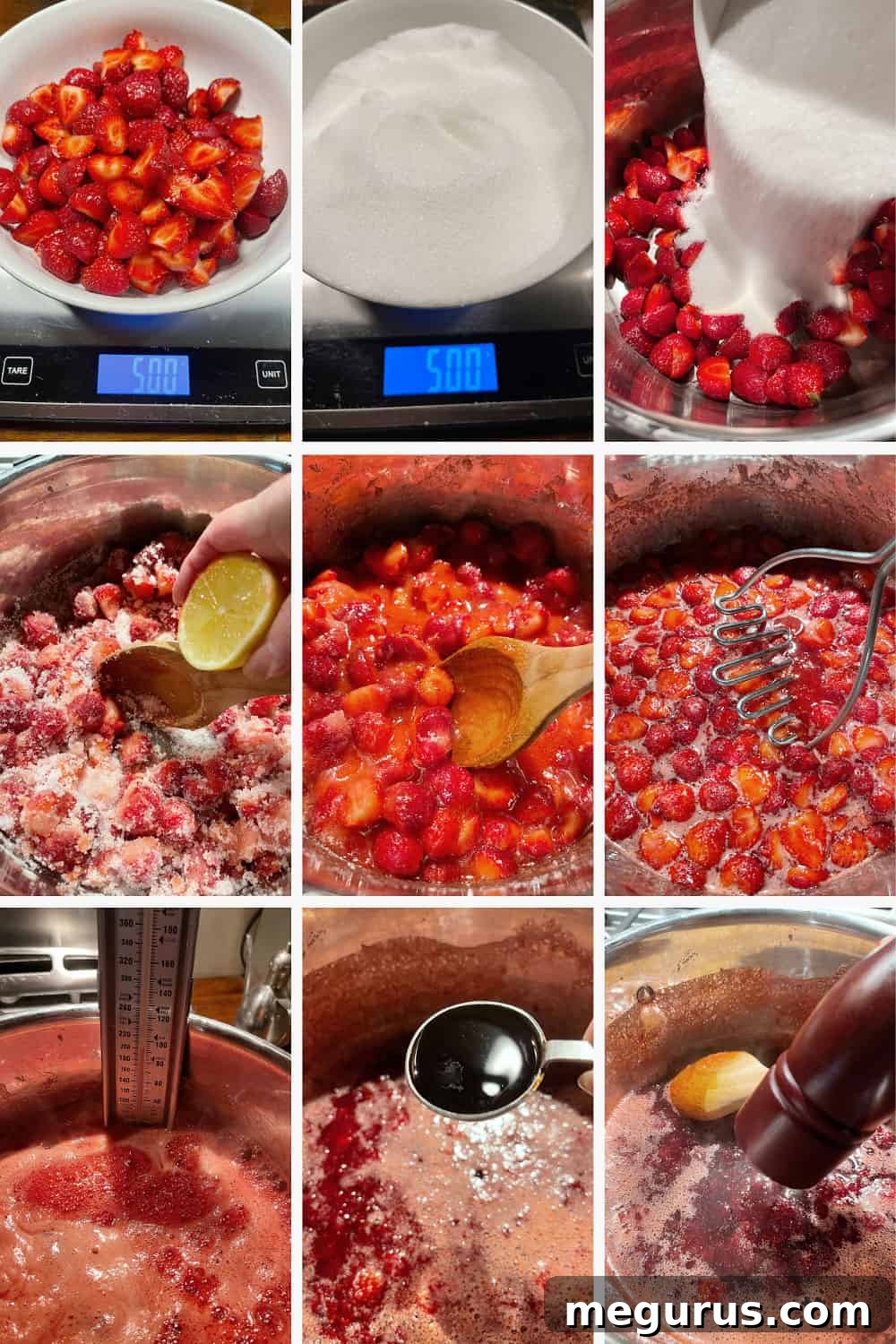
Creating this extraordinary strawberry jam is a surprisingly simple process. Follow these detailed steps to ensure a perfect batch every time, even if you’re a beginner jam maker.
- Prepare Your Workspace and Tools: Before you even hull your first strawberry, ensure your kitchen is ready. Gather all your ingredients and have your equipment within reach. Crucially, if you plan to use the “Cold Plate Test” (a reliable method for checking the jam’s set point, detailed further below in the recipe card), place a small, heat-proof ceramic plate or saucer in your freezer now to chill thoroughly. This will be an essential tool later in the cooking process.
- Strawberry Preparation: Begin with the freshest, ripest strawberries you can find. Wash them gently under cool running water and then thoroughly hull them, removing the green leafy tops and any white core. For larger strawberries, halving or quartering them will help them break down more easily and cook more uniformly. Precision is key in jam making: weigh your prepared strawberries and make an exact note of their weight. This measurement will directly determine the amount of sugar you need, ensuring the correct fruit-to-sugar ratio for proper setting and preservation.
- Combine Ingredients in a Large Pot: Transfer the prepared strawberries to a large, heavy-bottomed, non-reactive pot. A Dutch oven or a sturdy stainless steel stockpot is ideal. Avoid aluminum pots, as the fruit’s natural acidity can react with the metal, potentially imparting an off-flavor to your jam. Now, weigh out an equal amount of granulated white sugar to the weight of your prepared strawberries. For instance, if you have 1 pound (approximately 500g) of prepared strawberries, you will need 1 pound (or about 2 cups) of sugar. Add the measured sugar to the pot with the strawberries, along with the fresh juice of half a lemon. Stir gently but thoroughly to combine all the ingredients.
- Initial Cooking and Mashing: Place the pot over medium heat. Stir the mixture regularly until all the sugar has completely dissolved. This step is crucial for preventing sugar crystals from forming in your finished jam. Once the sugar is dissolved and the mixture is warm, increase the heat to medium-high and bring the mixture to a full, rolling boil. Pay close attention, as the jam mixture will bubble up considerably; using a large pot with plenty of headspace is vital to prevent messy boil-overs. Once boiling, use a potato masher or a sturdy wooden spoon to gently break down the strawberries to your desired consistency. Some prefer a jam with larger fruit chunks, while others opt for a smoother texture.
-
Boiling to the Setting Point: Continue to boil the jam vigorously, stirring occasionally to prevent it from sticking to the bottom of the pot and ensuring even cooking. The goal is to reach the precise setting point. There are two highly reliable methods for checking this:
- Candy Thermometer Method: For the most precise measurement, use a candy thermometer. Insert the thermometer so its bulb is submerged in the jam but not touching the bottom of the pot. The jam is ready when it consistently reaches 221°F (105°C).
- Cold Plate Test Method: If you don’t have a candy thermometer, retrieve your chilled plate from the freezer. Drop a small spoonful of hot jam onto the cold plate. Let it sit for a few seconds to cool, then push your finger through the center of the jam puddle. If the jam wrinkles slightly and your finger leaves a clear path that does not immediately fill back in, your jam is set. If it’s still runny, continue boiling for a few more minutes and retest with a fresh cold plate. This boiling stage usually takes about 10-15 minutes of active, rolling boil after the sugar has dissolved.
*During the cooking process, you might notice some foam forming on the surface of the jam. While some purists prefer to skim this off for a perfectly clear jam, much of it often dissipates on its own as the jam cooks and thickens. If it consistently bothers you, a tiny knob of unsalted butter (about half a teaspoon) added to the jam mixture at the very beginning of the cooking process can significantly help to reduce foam formation, though it is entirely optional.*
- Finishing Touches and Jarring: Once the jam confidently reaches its set point, immediately remove the pot from the heat. This prevents overcooking and ensures the freshest flavor. Stir in the balsamic vinegar and the freshly ground black pepper. These additions are best stirred in at the end to preserve their delicate aromatic qualities and prevent them from cooking away. Carefully spoon the hot jam into clean, dry jars, leaving about 1/2-inch headspace from the top. Secure the lids loosely at first, then tighten them once the jam cools slightly. For simple refrigerator storage, you can briefly invert the jars (for about 5 minutes) on a clean tea towel, then turn them upright and allow them to cool completely at room temperature. This helps create a better seal for fridge storage, though it is not a substitute for traditional water bath canning. Once fully cooled, transfer the jars to the refrigerator.
Expert Cook’s Notes & Tips for Perfect Jam
This small-batch jam recipe is thoughtfully designed for ease and immediate enjoyment, making it absolutely perfect for when you have an abundance of fresh, ripe strawberries but wish to bypass the intensive process of full-scale canning.
- Yield and Expected Texture: This recipe typically yields approximately 2 cups of finished jam, which conveniently fills about 2 to 3 small jars, making it ideal for personal consumption or thoughtful homemade gifts. It is crucial to remember that as a no-pectin added jam, its texture will naturally be a “loose-set.” This means it will be wonderfully spreadable and spoonable, possessing a consistency more akin to a rich fruit sauce or a thick preserve rather than a firm, gelatinous jelly. Embrace this luscious, natural texture – it’s part of its charm and allows the vibrant strawberry flavor to truly shine.
- Managing Foam: As noted in the instructions, foam can appear on the surface of your jam during the vigorous boiling process. If you prefer a perfectly clear and aesthetically pristine jam, you can easily skim off this foam with a clean spoon and discard it. However, in my experience, much of this foam often dissipates on its own as the jam continues to cook and thickens. For those who find foam particularly bothersome, a simple trick is to add a tiny knob of unsalted butter (about half a teaspoon) to the jam mixture at the very beginning of the cooking process. This small addition can significantly reduce foam formation.
- Storage and Shelf Life: This delightful homemade no-pectin strawberry jam is specifically intended as a refrigerator-friendly preserve. It will maintain its exquisite flavor and quality beautifully when stored in the refrigerator for several months, typically between 4 to 6 months. For an even longer storage solution, you can freeze the jam in freezer-safe containers or jars for up to a year. If freezing in jars, ensure you leave adequate headspace (at least an inch) to allow for expansion, preventing the jars from cracking.
- Importance of Setting Tests: While a candy thermometer offers unparalleled precision in determining the jam’s setting point, the Cold Plate Test is an equally excellent and highly reliable alternative. Whichever method you choose, it is absolutely crucial to perform the test correctly and patiently to achieve the desired consistency. Do not rush this critical step, as it dictates the final texture of your jam.
- Beyond the Jar: Versatile Serving Suggestions: This versatile jam is far too delicious to be confined solely to toast! Consider swirling it into your morning yogurt or oatmeal, spooning it generously over fluffy pancakes or crispy waffles, dolloping it atop creamy vanilla ice cream or rich cheesecake, or even incorporating it into glazes for roasted meats or chicken for a surprising and delightful sweet and savory kick. Its unique flavor profile makes it an incredibly adaptable condiment.
Troubleshooting: “Help! My Jam Didn’t Set!”
It’s a common worry for many new jam makers, and it can be disheartening if your freshly made jam seems too runny. But don’t panic! It’s important to first remember that this is a no-pectin jam, which means it will naturally have a looser consistency than typical store-bought, pectin-laden jams. It is designed to be a delightful “loose-set” preserve, more like a spreadable fruit sauce than a firm, gelatinous block. However, if it’s truly liquid and shows no signs of thickening, here’s what you can do:
- Embrace It as a Delicious Sauce: The easiest and often most enjoyable solution is to simply embrace your “unset” jam as an incredibly delicious strawberry sauce! Its flavor will still be fantastic, making it perfect over ice cream, cheesecake, yogurt parfaits, oatmeal, or as a luscious topping for pancakes and waffles. Sometimes, culinary “accidents” lead to wonderful, unexpected discoveries that become new favorites!
-
Re-boil for an Improved Set: If you are determined to achieve a more traditional jam-like consistency, you can often correct a runny batch by re-processing it.
- Carefully pour the unset jam back into your large, heavy-bottomed saucepan.
- Bring the jam back to a vigorous rolling boil over medium-high heat.
- Boil for an additional 3 to 5 minutes, stirring frequently to prevent scorching.
- Perform the Cold Plate Test again. If it passes, remove from heat, stir in a fresh splash of balsamic and a few grinds of pepper if desired (as much of the original might have cooked off during the re-boil), and then carefully re-jar.
- Allow it to cool completely and then refrigerate. In the vast majority of cases, this extra boiling time will significantly improve the set and yield the texture you desire.
-
Common Causes for Unset Jam: Understanding why your jam didn’t set can help prevent future issues:
- **Undercooking:** This is the most frequent culprit. The jam simply hasn’t reached the correct temperature or sugar concentration for gelling.
- **Incorrect Fruit-to-Sugar Ratio:** Deviating from the recommended fruit-to-sugar ratio, particularly by significantly reducing the sugar content, can prevent the jam from setting properly.
- **Too Much Liquid:** If your strawberries were particularly watery, or if extra liquid (beyond the lemon juice) was added, it might take a longer boiling time for the excess water to evaporate.
With a little patience and these helpful tips, you’ll soon be enjoying a perfectly delicious batch of your homemade strawberry jam!
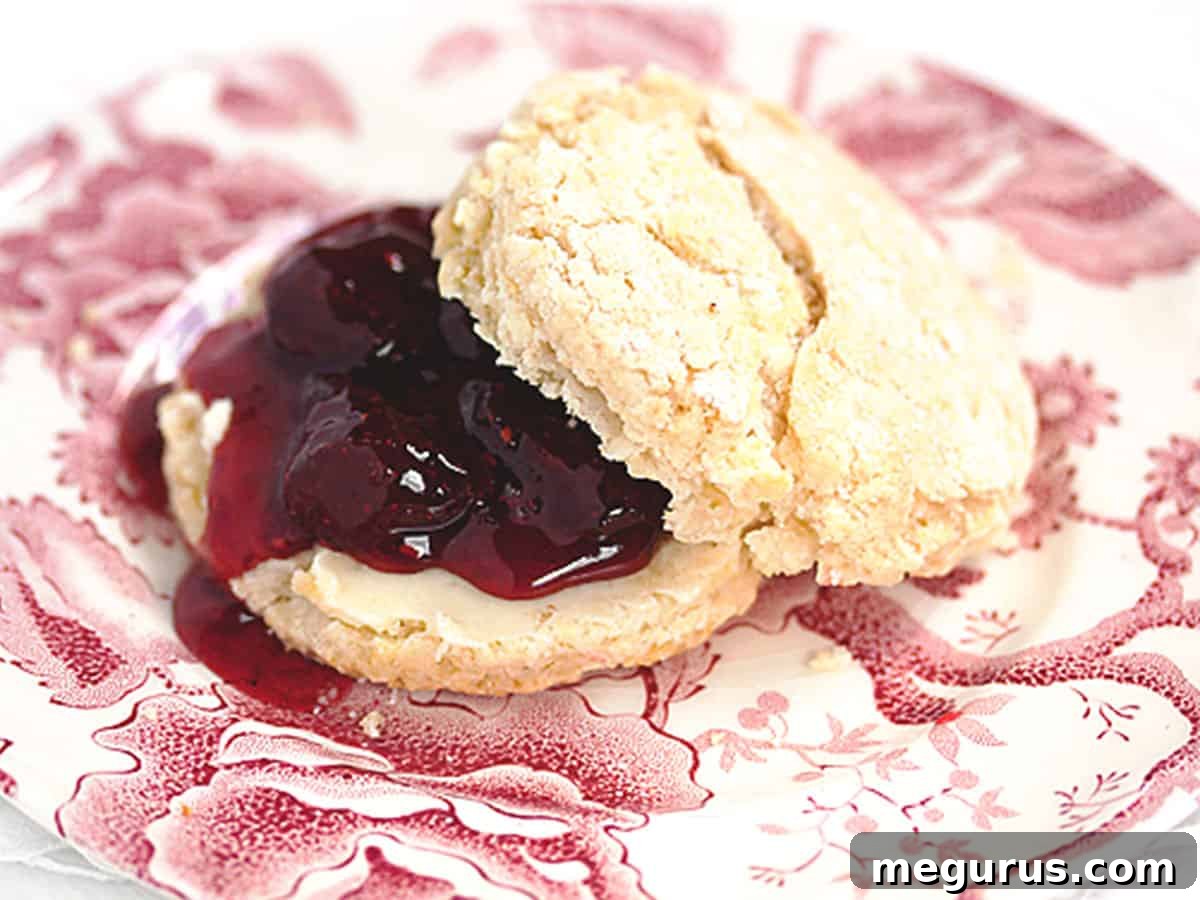
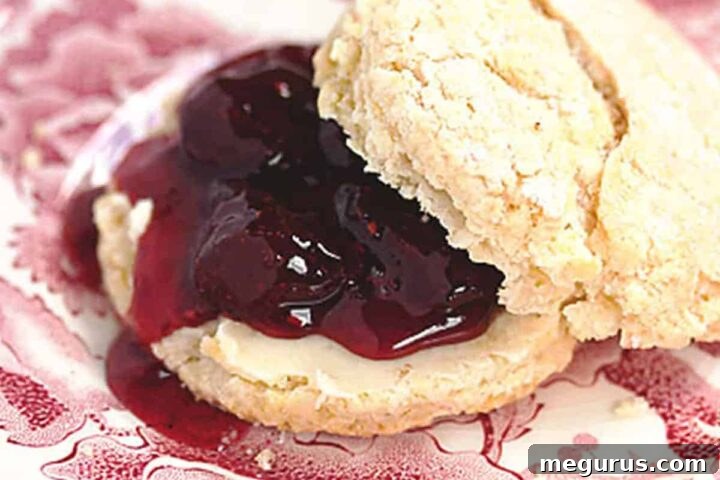
Get the Recipe: Strawberry, Balsamic and Black Pepper Jam
Easy and delicious, this no-pectin, small-batch strawberry jam features a delightful touch of balsamic vinegar and a hint of black pepper for an unforgettable flavor experience. Perfect for a quick, gourmet homemade treat.
Pin This
Leave a Review
Ingredients
- 1 lb. (approx. 450-500g) fresh strawberries, washed, hulled and halved or quartered, if large
- Equal weight to prepared strawberries granulated white sugar, approximately 2 cups for 1 lb. strawberries *see Notes below for scale-free measurement
- Juice of 1/2 a lemon
- 1 Tbsp balsamic vinegar
- 3-4 grinds freshly ground black pepper
- Optional: 1/2 tsp unsalted butter (to reduce foam during cooking)
Instructions
-
1. Prepare Cold Plate (Optional): If you plan to use the Cold Plate Test to check for jam set, place a small ceramic plate or saucer in your freezer before you begin cooking your jam.
-
2. Prepare Strawberries: Wash, hull, and thoroughly drain the strawberries. Halve or quarter any large berries. Weigh the prepared strawberries and record the exact weight. Place the strawberries in a large, heavy-bottomed, non-reactive saucepan (such as a Dutch oven or stainless steel pot).
-
3. Combine Sugar and Lemon: Weigh out an equal amount of granulated white sugar to the exact weight of your prepared strawberries. Add the sugar to the saucepan with the strawberries. Squeeze in the juice of half a lemon. Stir well to combine all ingredients until the sugar is moist.
-
4. Cook Jam: Place the saucepan over medium heat. Stir continuously until all the sugar has completely dissolved. Once the sugar is dissolved, increase the heat to medium-high and bring the mixture to a vigorous, rolling boil. (The mixture will bubble up significantly, so ensure you’re using a sufficiently large pot to prevent boil-overs). If using, add the optional 1/2 tsp of butter now to help reduce foaming. Use a potato masher or sturdy spoon to gently break down the strawberries to your preferred consistency.
-
5. Boil to Setting Point: Continue to boil the jam vigorously, stirring occasionally to prevent sticking and ensure even cooking, until it reaches its setting point. This typically takes about 10-15 minutes of active boiling. Use either a candy thermometer (aim for 221°F / 105°C) or the Cold Plate Test method (described in detail below). You may skim off any foam that forms on the surface if desired.
-
6. Finish and Jar: Once the jam reaches its set point, immediately remove the pot from the heat. Stir in the balsamic vinegar and the freshly ground black pepper until well combined. Carefully spoon the hot jam into clean, dry jars, leaving about 1/2-inch headspace. Place lids on the jars. For refrigerator storage, you can briefly invert the jars (for approximately 5 minutes) on a clean tea towel, then turn them upright and allow them to cool completely at room temperature. Once cooled, store the jam in the refrigerator. It will keep well for 4-6 months.
*Note on Canning: To store this jam at room temperature for extended periods (shelf-stable), you would need to follow proper safe canning procedures, including sterilizing jars and lids, and processing the filled jars in a hot water bath. Refer to a reputable canning guide (e.g., USDA guidelines) for detailed instructions on safe water bath canning. This recipe is intended for refrigerator or freezer storage.
-
*Testing for set with a cold plate: Take your chilled plate from the freezer. Drop a small puddle of hot jam onto the plate. Let it stand for a few seconds to cool slightly. Then, gently push your finger through the middle of the jam puddle. If the jam wrinkles or your finger leaves a clear path that does not immediately run back together, your jam is done. If it’s still liquid and the path fills back in, continue boiling for a few more minutes and retest with a fresh cold plate.
Notes
Sugar Measurement without a Scale: If you don’t have a kitchen scale to weigh your berries and sugar, a good approximation is that 2 cups of granulated white sugar equals about 1 pound. So, for roughly 1 pound of prepared strawberries, you’ll need approximately 2 cups of sugar. Adjust slightly if your strawberries yield a bit less than a pound after hulling.
Further Tips & Variations: For more detailed tips, variations, and substitution suggestions for this recipe, please refer to the “Expert Cook’s Notes & Tips” section earlier in this post.
Nutritional Information: The nutritional information provided is an estimated value for the entire 1X batch of jam and may vary based on ingredients and preparation.
Nutrition Information (per batch)
Calories: 854kcal,
Carbohydrates: 219g,
Protein: 2g,
Fat: 1g,
Saturated Fat: 1g,
Polyunsaturated Fat: 1g,
Monounsaturated Fat: 1g,
Sodium: 6mg,
Potassium: 360mg,
Fiber: 5g,
Sugar: 212g,
Vitamin A: 27IU,
Vitamin C: 133mg,
Calcium: 40mg,
Iron: 1mg
Tried this recipe? If you enjoyed this homemade jam, please leave a star rating and comment below. Your feedback helps others discover and enjoy this delicious recipe!