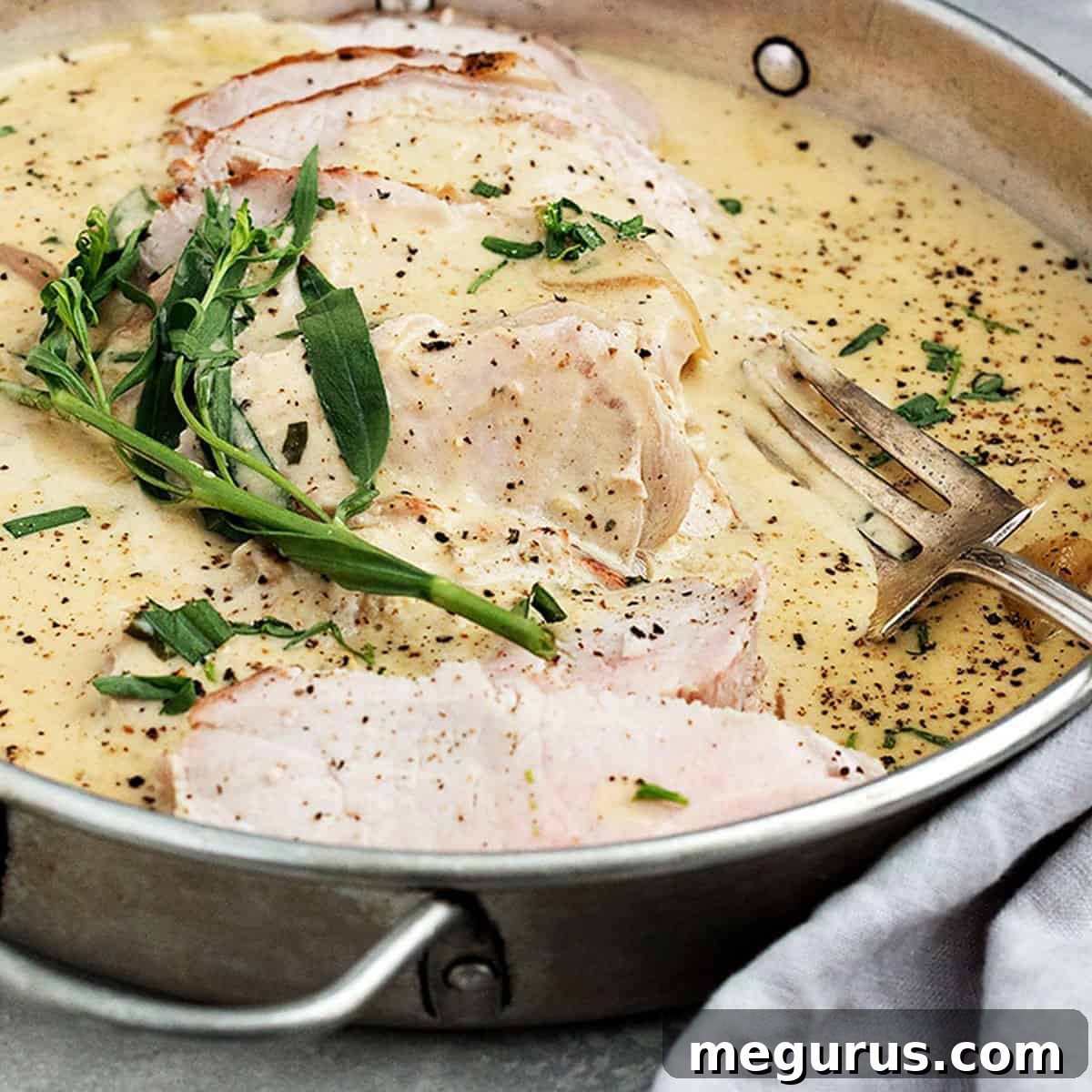
Savory Tarragon Pork Loin Roast with Creamy Mustard Gravy
Discover the ultimate comfort food with this exquisite Tarragon Pork Loin Roast. Starting with a succulent bone-in pork loin, slow-cooked on the stovetop, this recipe features an incredible wine-infused gravy elevated by the distinctive flavors of mustard and fresh tarragon. It’s a dish designed to impress, yet simple enough for any home cook.
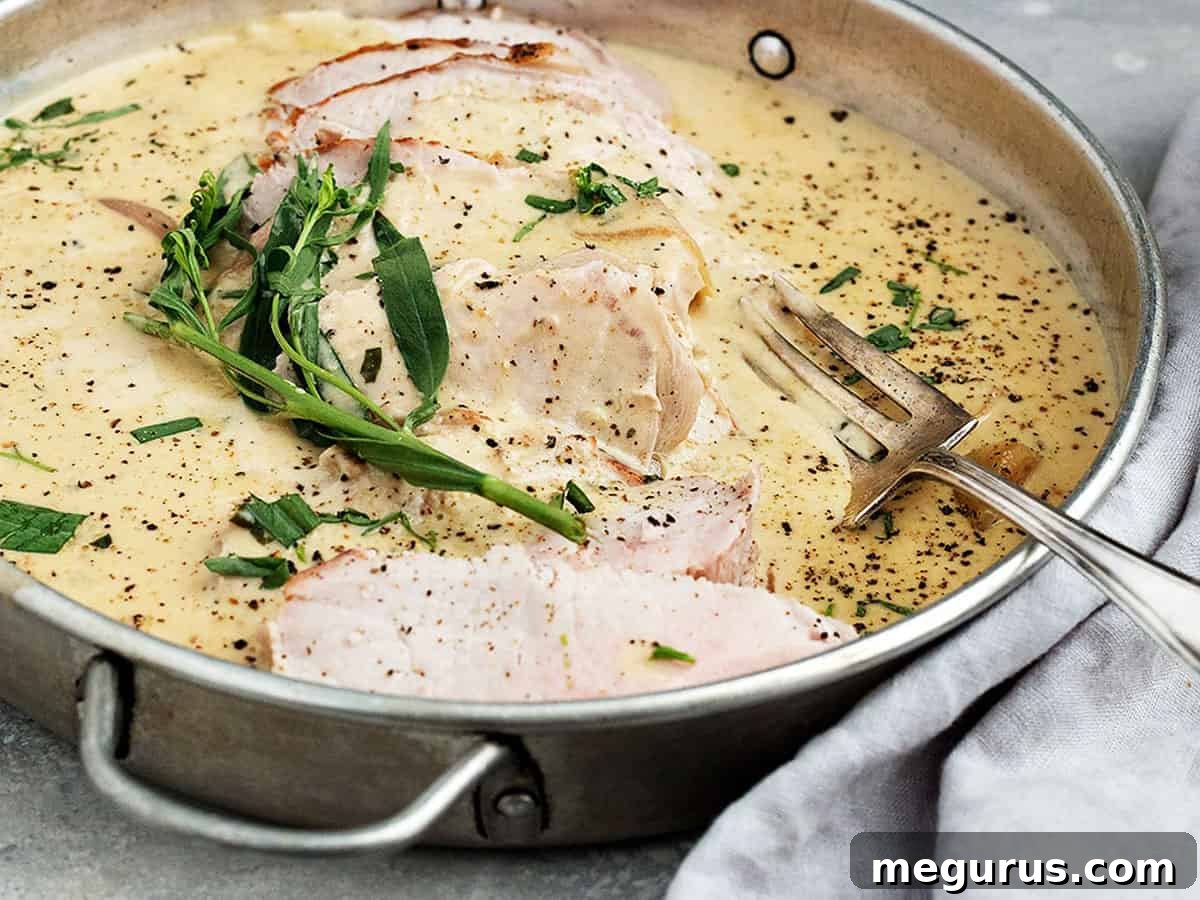
If you’ve enjoyed my Pork Loin with Wine and Herb Gravy, you’re in for a real treat with this variation. While building on a similar foundation of robust flavors and tender pork, this recipe introduces a delightful twist. The key difference lies in the addition of Dijon mustard and the fragrant, slightly aniselike herb, tarragon, transforming the wine gravy into something truly special. For those who adore tarragon’s unique aromatic profile, this dish is an absolute must-try.
What sets this recipe apart further is its starting point: a bone-in, center-cut pork loin roast. These roasts are often found at excellent prices, making them a fantastic freezer staple. However, finding creative and foolproof ways to prepare them can sometimes be a challenge. That’s precisely where this recipe shines, offering a straightforward method that consistently delivers a tender, flavorful pork loin every time.
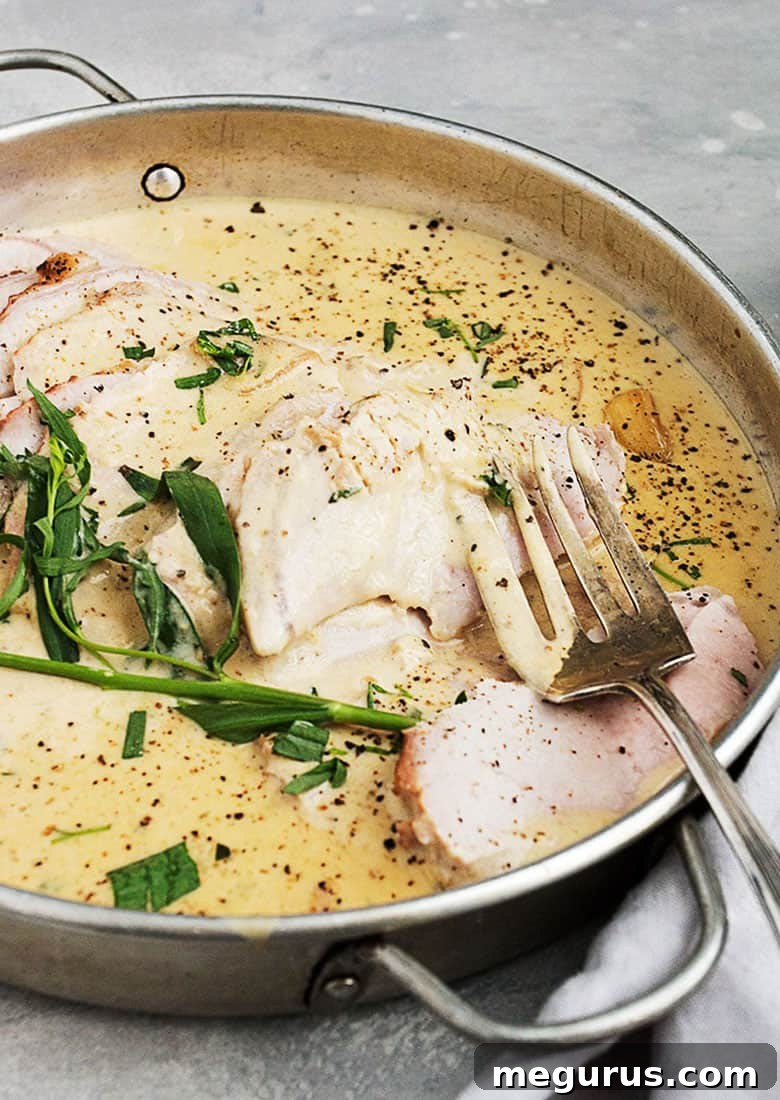
While the recipe calls for a bone-in roast, offering superior flavor and moisture, you have flexibility in how you serve it. You can opt to carefully remove the meat from the bone after cooking and thinly slice it against the grain, as pictured, creating elegant portions perfect for a dinner party. Alternatively, for a more rustic presentation, you can cut the roast into thick, bone-in “chops” and drizzle each serving generously with the rich, aromatic gravy. Either way, the slow stovetop cooking method ensures a melt-in-your-mouth texture that will have everyone reaching for seconds.
Essential Ingredients for a Perfect Tarragon Pork Loin
Crafting this unforgettable pork loin begins with selecting quality ingredients. Each component plays a vital role in building the layered flavors of this dish.
Pork Loin: Understanding Your Cut
It’s crucial to distinguish between a pork loin and a pork tenderloin. A pork tenderloin is a much smaller, thinner, and more delicate cut, ideal for quick cooking methods. A pork loin, on the other hand, is significantly thicker and larger, often sold with or without the bone. This recipe specifically calls for a bone-in, center-cut pork loin roast. The bone contributes immensely to the roast’s flavor and helps maintain moisture during cooking, resulting in a more succulent final product.
- Bone-in Pork Loin: Recommended for the richest flavor and juiciest texture. The cooking times in this recipe are tailored for this cut.
- Boneless Pork Loin: Can be used as a substitute, but expect a slightly reduced cooking time. Always monitor the internal temperature closely.
- Pork Tenderloin: While possible, this cut will cook much faster (typically 30-45 minutes, depending on thickness). If you choose a tenderloin, be diligent with your meat thermometer to prevent overcooking and dryness.
The Distinctive Flavor of Tarragon
Tarragon is a unique herb with an unmistakable flavor profile, often described as having hints of anise, vanilla, and a slight peppery note. It’s a key player in French cuisine and pairs exceptionally well with poultry, fish, and, as you’ll discover, pork. Its flavor can be quite assertive, which is why it often evokes strong opinions – you either love it or you don’t. Before embarking on this recipe, ensure you appreciate tarragon’s distinctive taste, as it is central to the gravy’s character.
Choosing Your White Wine
The white wine forms the aromatic base for our stovetop braise and contributes significantly to the gravy’s depth. It’s important to select a dry white wine – anything you’d happily drink on its own will work perfectly here. Avoid sweet wines, as they will alter the intended savory balance of the dish. Good choices include Sauvignon Blanc, Pinot Grigio, or an unoaked Chardonnay. The alcohol will cook off, leaving behind only the delicious, concentrated wine flavor.
Expert Tips for a Flawless Pork Loin Roast
Achieving a perfectly tender and flavorful pork loin is within reach with a few key techniques. These tips will help you navigate the cooking process with confidence, ensuring a delightful meal every time.
- The Art of Deglazing: Once your roast is cooked and removed from the pan to rest, you’ll likely find flavorful browned bits (fond) stuck to the bottom. Don’t let this flavor go to waste! If the pan is dry, add a splash of wine or a little extra chicken broth to deglaze. Scrape up all those delicious bits with a wooden spoon – they are the secret to a rich, complex gravy.
- Seasoning is Key: Always taste your sauce before serving. Adjust the seasoning with salt and freshly ground black pepper as needed. If you desire a more pronounced tarragon or mustard flavor, feel free to add a little extra of either to the finished gravy. Remember, layering flavors is essential.
- Precision Cooking with a Thermometer: The most reliable way to ensure a perfectly cooked, juicy pork loin is to use an instant-read meat thermometer. For a wonderfully moist pork with a hint of pink, aim for an internal temperature of 135°F (57°C) when you remove it from the heat. If you prefer no pink, cook it to 140°F (60°C). Rest assured, even at this temperature, the pork will remain tender. Keep in mind that the roast’s temperature will rise by another 5°F (3°C) as it rests, so pulling it slightly before your target temperature is ideal. For a 3lb bone-in roast, cooking for approximately 1 hour and 25 minutes might achieve 135°F, but individual ovens and roast sizes vary, so checking every 20 minutes is recommended.
- Maintain Moisture in the Pan: It’s crucial to ensure there’s always enough liquid (wine) in the pan during the stovetop cooking process. You want a gentle simmer, not a dry, scorched pan. Check the liquid level every time you flip the roast (every 20 minutes). If it looks like it’s evaporating too quickly, add an extra splash of wine, especially during the last 10-15 minutes of cooking. This not only keeps the pork moist but also prevents the sauce from becoming too concentrated or burning.
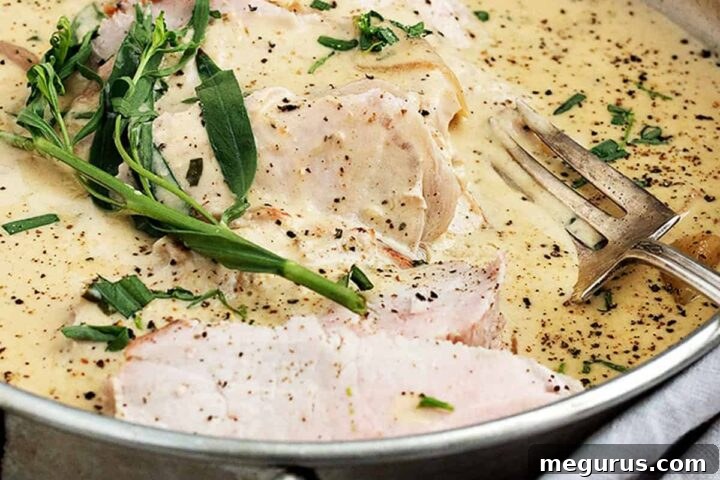
Tarragon Pork Loin with Creamy Mustard Gravy
A succulent bone-in, center-cut pork loin roast, expertly cooked on the stovetop with a rich wine base and finished with an incredibly flavorful mustard and tarragon gravy. Perfect for a hearty family dinner or an elegant gathering.
Rated 5 out of 5 stars by 10 happy cooks!
Pin This Recipe
Leave a Review
Prep Time: 10 mins
Cook Time: 1 hr 40 mins
Total Time: 1 hr 50 mins
Yield: 8 servings
Ingredients
- 1/4 cup olive oil
- 3 cloves garlic, peeled and whole
- 3 medium shallots, peeled and quartered
- 1 (3 lb) bone-in, center-cut pork loin roast (see notes below for other options)
- 3 inch length fresh tarragon sprig
- 1 1/2 cups dry white wine (any kind you enjoy drinking)
For the Creamy Gravy:
- 1 cup chicken broth
- 3/4 cup heavy cream
- 3 Tablespoons Dijon mustard
- 3 Tablespoons fresh tarragon leaves, roughly chopped
- Salt and freshly ground pepper, to taste
To Thicken (if necessary):
- 1 Tablespoon water
- 1 Tablespoon cornstarch
Instructions
- Heat the olive oil over medium-high heat in a large, heavy-bottomed pot with a lid (such as a Dutch oven), ensuring it’s spacious enough to comfortably hold your pork roast. Season the pork roast generously on all sides with salt and pepper. Carefully place the roast into the hot pan, fat-side down first, and allow it to sear until beautifully golden brown, about 5-7 minutes. Flip the roast and sear for another few minutes to brown the other sides. Add the whole garlic cloves and quartered shallots to the pan, stirring them around for about a minute to soften and infuse their aroma into the oil, being careful not to scorch them.
- Pour the dry white wine into the pan. Bring it to a rolling boil for a minute or two, scraping up any browned bits from the bottom of the pot with a wooden spoon (this is deglazing and adds immense flavor). Reduce the heat to medium-low. Place the lid over the pot, slightly ajar, allowing some steam to escape. Cook for 20 minutes. Then, flip the roast, stir the liquid, and ensure it is still at a gentle simmer. Continue cooking, flipping, and checking the liquid level every 20 minutes, for a total cooking time of approximately 1 1/2 hours, or until the internal temperature of the roast reaches 135-140°F (57-60°C) when tested with a meat thermometer. If the pan appears to be getting dry at any point, add a splash more wine to maintain the simmering liquid. Once cooked, transfer the roast to a cutting board and tent it loosely with aluminum foil to rest for 10-15 minutes. This resting period is crucial for juices to redistribute, ensuring a tender and moist roast.
- While the pork rests, prepare the creamy tarragon mustard gravy. To the same pot (after ensuring it still has some liquid or deglazing if dry), add the chicken broth, heavy cream, Dijon mustard, and the freshly chopped tarragon. Bring the mixture to a gentle simmer, stirring continuously to incorporate all the flavors and loosen any remaining browned bits from the bottom of the pan. Taste the gravy and adjust the seasoning with salt and pepper as needed. If you desire a thicker gravy, create a cornstarch slurry by whisking together the water and cornstarch in a small bowl. Gradually add the slurry to the simmering gravy, a little at a time, whisking constantly until your desired thickness is achieved.
- Keep the finished gravy warm. Now, it’s time to serve your perfectly cooked pork. You can either carefully cut the pork away from the bone in one large piece and then thinly slice it against the grain for elegant presentation, or, for a more rustic approach, slice down through the roast and bone to create thick, individual chops. Arrange the sliced pork or chops on plates and generously spoon the rich, creamy tarragon mustard gravy over each serving.
Notes
As mentioned in the ingredient section, a pork loin is much larger and thicker than a pork tenderloin. The cooking times provided in this recipe are specifically for a bone-in pork loin roast, which typically weighs around 3 lbs. If you opt for a boneless pork loin roast, anticipate a shorter cooking time. For those considering a smaller, thinner pork tenderloin, the cooking duration will be significantly less, usually in the range of 35-40 minutes. Regardless of the cut, frequent use of an instant-read meat thermometer is essential to monitor doneness and prevent overcooking. Always refer to the internal temperature guidelines provided in the “Expert Tips” section for the best results.
Cuisine: American, Canadian
Course: Main Course
Author: Jennifer Maloney
Nutrition Information (per serving):
Serving: 1 serving, Calories: 539kcal, Carbohydrates: 7g, Protein: 36g, Fat: 37g, Saturated Fat: 14g, Polyunsaturated Fat: 3g, Monounsaturated Fat: 17g, Trans Fat: 1g, Cholesterol: 138mg, Sodium: 172mg, Potassium: 803mg, Fiber: 1g, Sugar: 1g, Vitamin A: 455IU, Vitamin C: 4mg, Calcium: 89mg, Iron: 3mg
We believe this Tarragon Pork Loin will quickly become a favorite in your culinary repertoire. Its comforting flavors and tender texture make it suitable for a weeknight dinner, yet elegant enough for special occasions. The creamy mustard and tarragon gravy truly elevates the dish, adding a sophisticated touch that will leave a lasting impression.
If you’ve had the pleasure of preparing this recipe, we would absolutely love to hear about your experience! Your feedback helps other home cooks discover and enjoy this wonderful dish. Please consider leaving a star rating and a comment below to share your thoughts. Happy cooking!