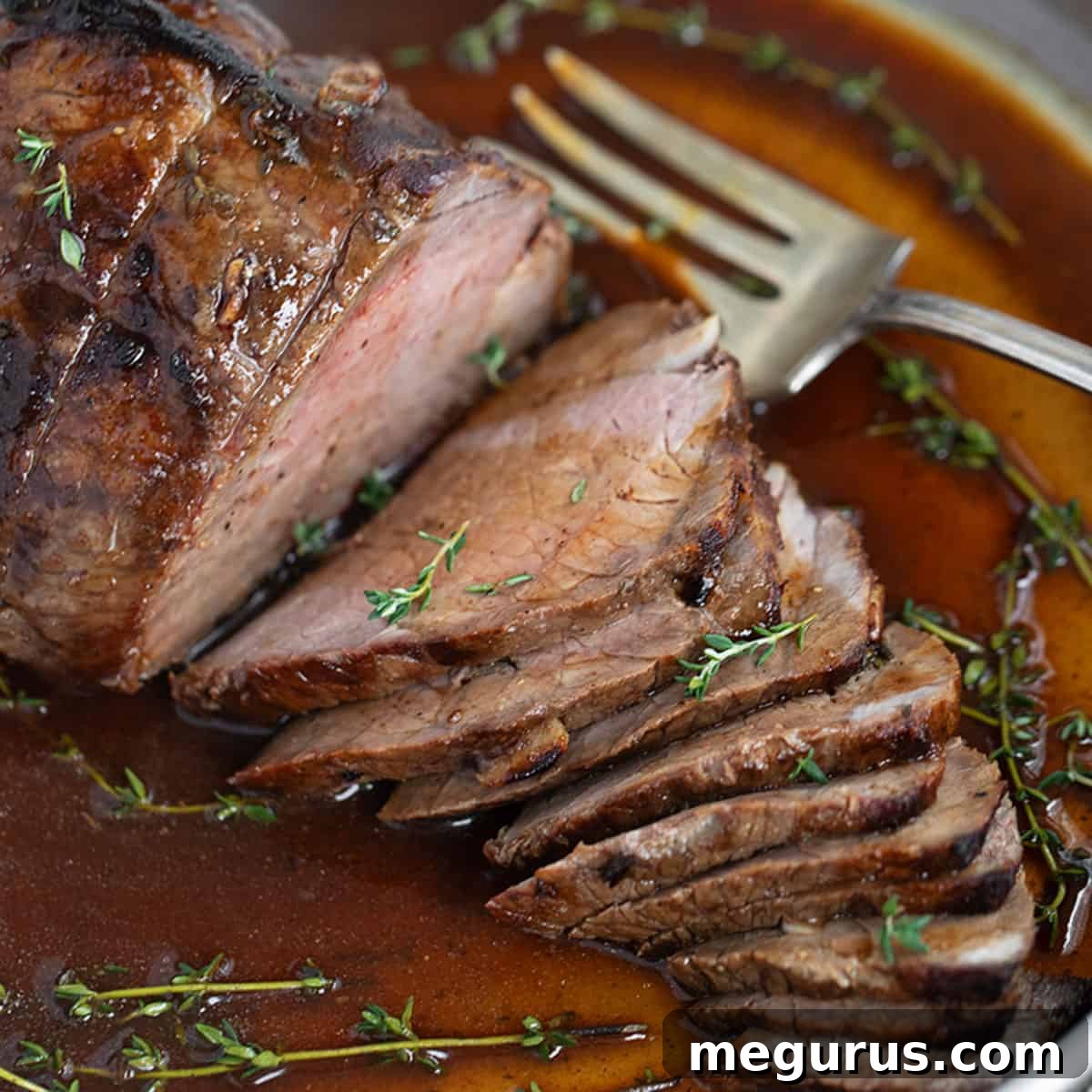
Unlock the secret to a perfectly tender and incredibly flavorful sirloin tip roast with our expertly crafted recipe. Marinated in a robust mustard and herb blend and roasted to a succulent medium, this dish is guaranteed to impress. Paired with a simple yet rich au jus-like gravy, it’s an ideal centerpiece for any special occasion or a comforting Sunday dinner. Say goodbye to dry, tough roasts and welcome a new family favorite that’s both economical and exquisitely delicious.
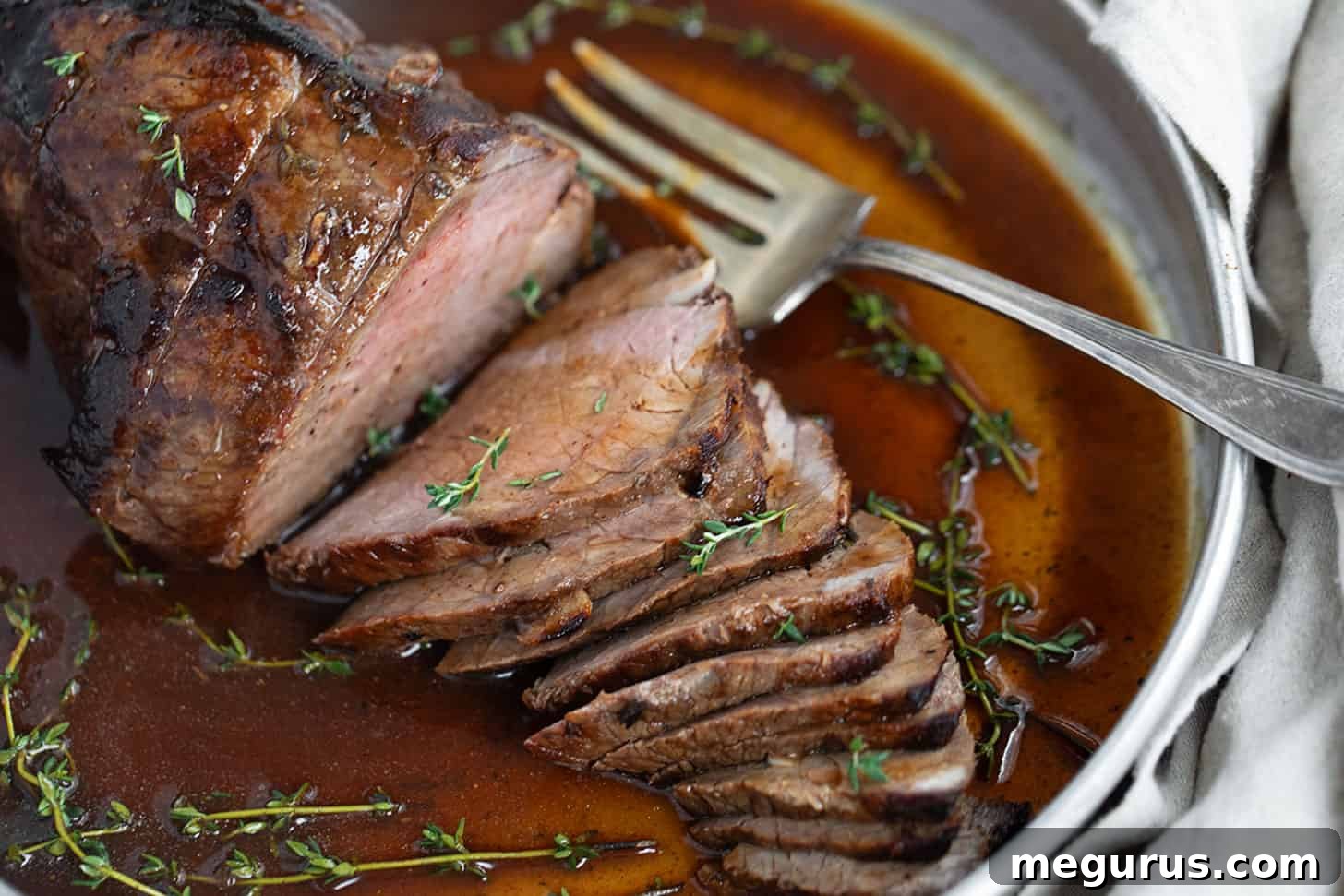
While roast beef might not be a regular weeknight meal for many, discovering a great sale on sirloin tip roasts can spark culinary inspiration. This particular herb and mustard roast beef recipe is designed to transform a more economical cut into a truly luxurious experience. By employing a generous 24-hour marinating period, we achieve both deep flavor penetration and remarkable tenderness. Imagine setting your roast to marinate on a Saturday, anticipating a show-stopping Sunday dinner with minimal last-minute fuss. This method ensures every bite is juicy, aromatic, and melts in your mouth, proving that a premium dining experience doesn’t always come with a premium price tag.
Essential Ingredients & Smart Substitutions for Your Sirloin Tip Roast
Crafting the perfect mustard and herb sirloin tip roast begins with understanding your ingredients and knowing when to make smart substitutions. Here’s a closer look at the key components of this savory dish:
- Sirloin Tip Roast: This recipe shines with a sirloin tip roast, a leaner, more economical cut from the round primal. Its natural leanness benefits significantly from the tenderizing power of a long marinade. While sirloin tip is our top recommendation for its balance of flavor and cost-effectiveness, other roast cuts like inside or outside round roasts, or even an eye of the round roast, can also yield excellent results. These cuts share a similar texture profile and will respond well to the marination process. However, for true roast beef, we advise against using blade roasts, as their connective tissue content often makes them better suited for slow, moist cooking methods like pot roasts, rather than dry roasting to medium doneness. Aim for a roast weighing around 2-3 pounds for ideal cooking times and servings.
- Fresh Garlic: Fresh garlic cloves are indispensable for infusing the roast with aromatic depth. We recommend slicing them thinly and inserting them directly into small slits made in the roast. This technique ensures the garlic’s pungent, savory essence penetrates the meat from within, contributing to a more complex flavor profile than simply rubbing minced garlic on the surface.
- Fresh or Dried Thyme: Thyme is a classic herb that complements beef beautifully, offering a subtle, earthy, and slightly floral note. Fresh thyme sprigs are always a fantastic choice if available, providing a brighter, more vibrant flavor. If fresh thyme isn’t on hand, high-quality dried thyme leaves are a perfectly acceptable substitute. Remember that dried herbs are generally more concentrated than fresh ones, so use about half the amount when substituting (e.g., 1 teaspoon dried for every 1 tablespoon fresh).
- Powdered Dry Mustard: This ingredient is a cornerstone of our marinade and rub. Powdered dry mustard, typically found in small yellow cans, isn’t just for flavor; it also acts as a natural tenderizer for tougher cuts of meat. Its sharp, pungent kick mellows during cooking, leaving behind a warm, savory note that pairs exceptionally well with beef. If you don’t have dry mustard, you can substitute a couple of tablespoons of good quality Dijon mustard. Dijon offers a similar piquant flavor, albeit with a slightly different texture, and can be directly rubbed onto the roast before marinating.
- Dry Sherry (Marinade Base): Dry sherry contributes a unique depth and subtle nutty sweetness to the marinade, enhancing the overall flavor of the beef. If dry sherry isn’t available, several excellent substitutes can be used. Dry vermouth, dry Madeira, or Marsala wines are all suitable alternatives, offering similar aromatic and slightly sweet notes. For a non-alcoholic option, you can substitute beef broth with a splash of red or white wine vinegar. The vinegar provides the necessary acidity to help tenderize the meat and brighten the flavors, mimicking some of the characteristics of the alcoholic wines.
- Soy Sauce (Marinade): Soy sauce provides a crucial umami punch, adding savory depth and seasoning to the roast. It also contributes to the beautiful browning during roasting. Use a good quality regular or low-sodium soy sauce.
- Vegetable or Canola Oil (Marinade): A neutral-tasting oil like vegetable or canola helps carry the flavors of the marinade, keeps the roast moist, and promotes even browning without imparting its own dominant flavor.
- Beef Broth (Gravy): Essential for creating a rich, savory gravy from the pan drippings. Use a high-quality, low-sodium beef broth to control the seasoning.
- Dijon Mustard (Gravy): A touch of Dijon in the gravy enhances its flavor profile, adding a subtle tang and richness.
- Cornstarch and Cold Water (Thickener): This combination forms a slurry used to thicken the gravy to your desired consistency, creating a smooth, glossy finish.
- Salt and Freshly Ground Black Pepper: Standard seasonings for both the roast and the gravy, adjusted to taste.
Crafting Your Mustard and Herb Sirloin Roast: A Step-by-Step Guide
Achieving a perfectly roasted sirloin tip, infused with savory mustard and herb flavors, is simpler than you might think. This visual summary provides a clear overview of the process. For detailed measurements and complete instructions, always refer to the full recipe card below.
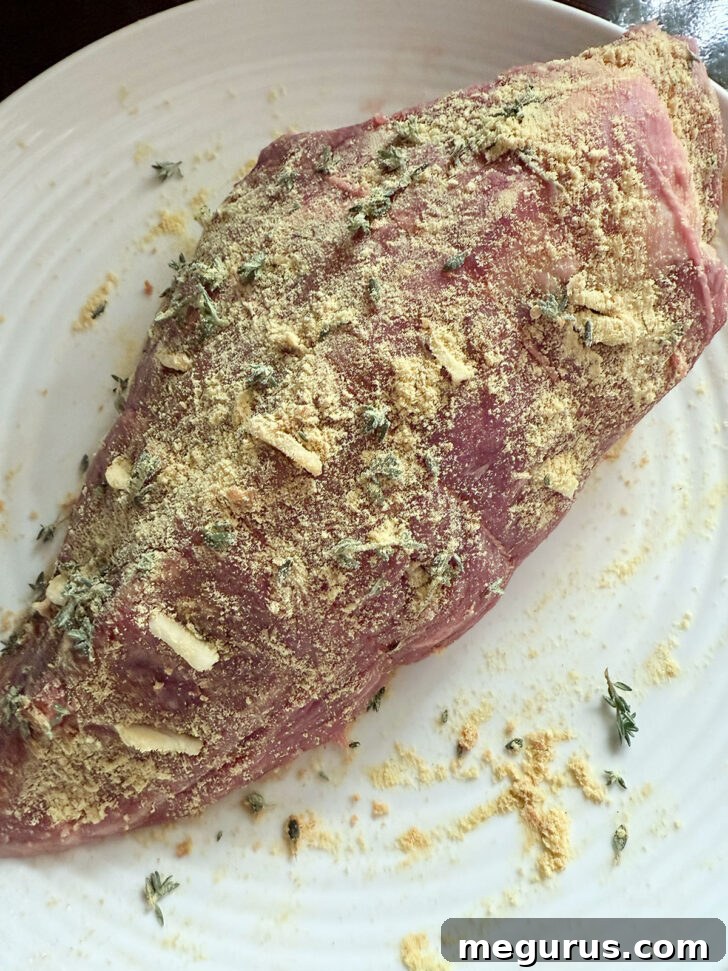
- Prepare the Roast for Flavor Infusion: Begin by preparing your sirloin tip roast. Using the tip of a sharp knife, make small, evenly spaced slits all over the surface of the roast. Into these slits, carefully insert the thinly sliced fresh garlic cloves. This step is crucial for distributing the pungent garlic flavor throughout the meat. Next, in a small bowl, combine the powdered dry mustard and dried thyme leaves. Rub this aromatic mixture generously over the entire surface of the roast, ensuring it’s thoroughly coated. This initial rub not only seasons the meat but also acts as a preliminary tenderizer.
- Assemble the Marinade: In a separate measuring cup or bowl, whisk together all the marinade ingredients: dry sherry (or your chosen substitute), soy sauce, and vegetable or canola oil. Ensure they are well combined to create a cohesive flavor base.
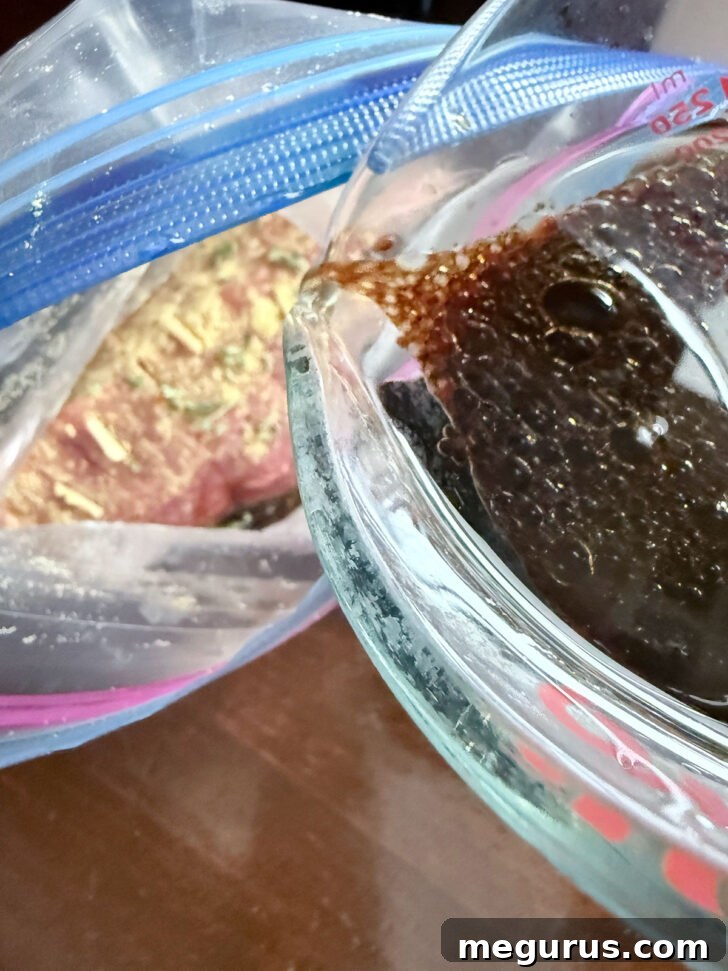
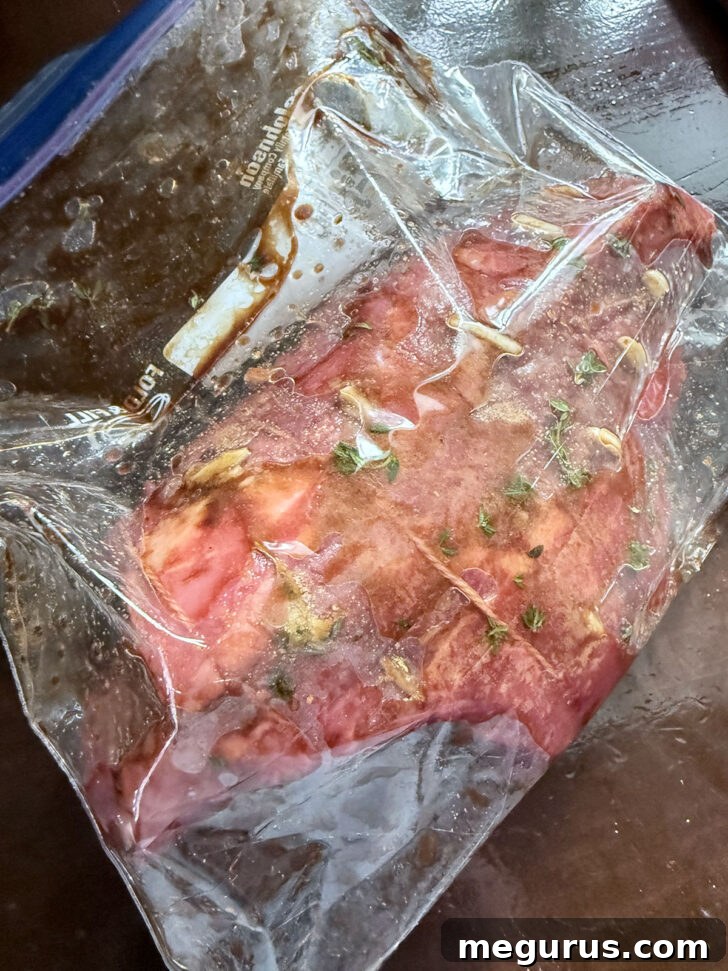
- Marinate for Maximum Tenderness and Flavor: Carefully place the prepared, rubbed sirloin tip roast into a large, sturdy plastic zipper bag. Pour the whisked marinade over the beef, making sure the roast is fully immersed or at least well-coated. Seal the bag, pressing out as much air as possible. Gently turn the bag a few times to ensure the marinade thoroughly coats every part of the roast. Place the sealed bag in the refrigerator and allow the beef to marinate for a minimum of 24 hours, and ideally up to 36 hours. This extended marination time is key to both tenderizing the sirloin tip and infusing it with deep, complex flavors.
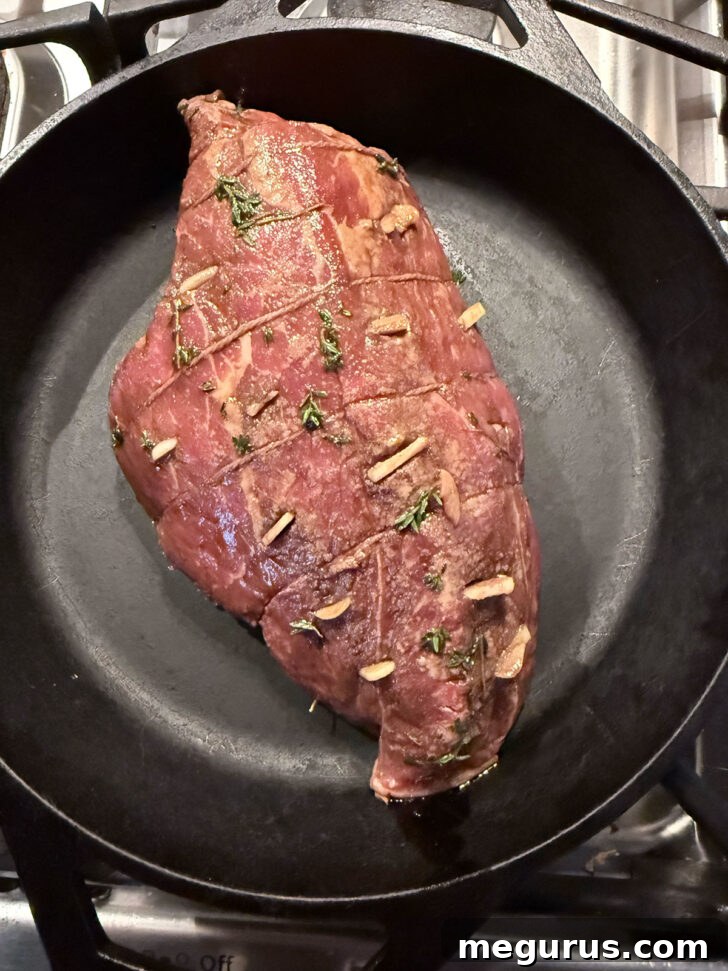
- Prepare for Roasting: Approximately 30-45 minutes before you plan to cook, remove the marinated roast from the refrigerator. Leave it in the zipper bag to allow it to gradually come closer to room temperature. This step promotes more even cooking. Preheat your oven to a high temperature, around 500°F (non-convection). Once the oven is preheated, remove the roast from the marinade, discarding the remaining liquid. Place the roast into a dry cast iron skillet or a shallow roasting pan, ensuring it’s not crowded.
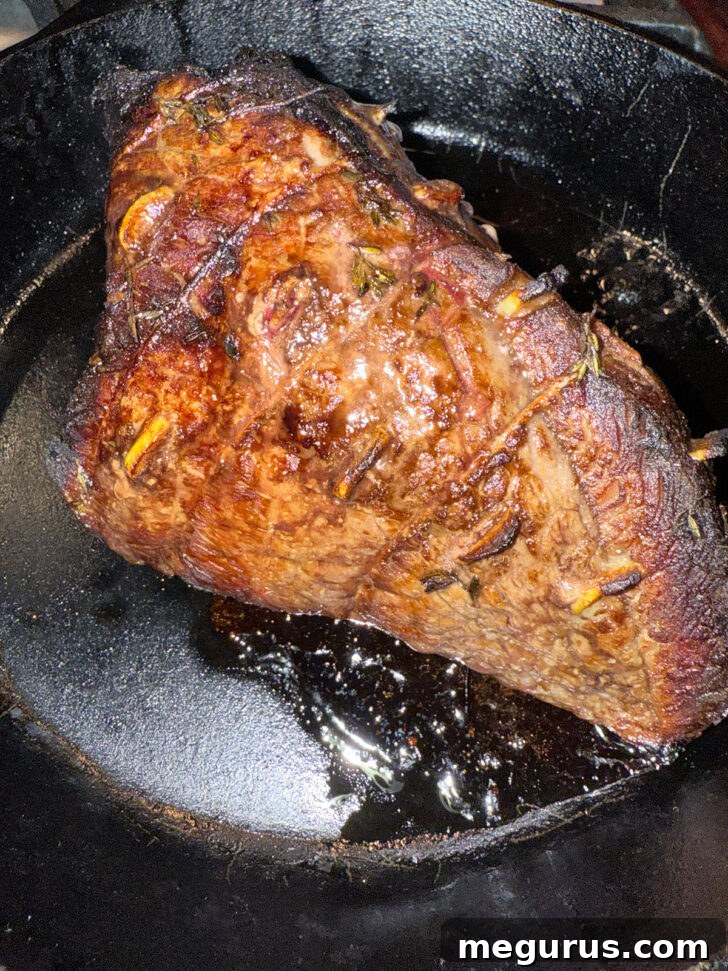
- The Two-Stage Roasting Process: Place the uncovered roast into the preheated 500°F oven. Roast for 20-25 minutes. This initial high-heat blast creates a beautiful, caramelized crust on the exterior of the beef, locking in juices and developing rich flavors. After this high-heat searing period, immediately reduce the oven temperature to 275°F. Continue roasting at this lower temperature until the internal temperature of the roast reaches approximately 140°F when measured in the thickest part with a meat thermometer. This slow finish ensures the inside cooks gently and evenly to a perfect medium-rare, preventing it from drying out. This second stage typically takes an additional 30-45 minutes, but always rely on your thermometer for accuracy.
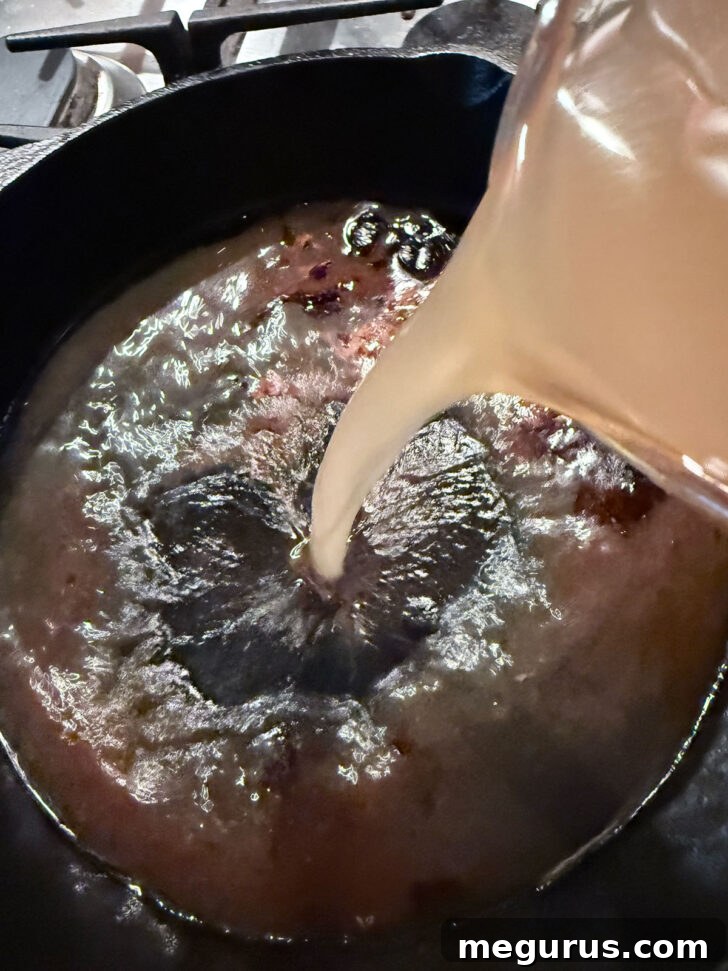
- Rest the Roast & Begin the Gravy: Once the roast reaches 140°F, remove it from the oven and carefully transfer it to a clean cutting board. Tent it loosely with aluminum foil to keep it warm and allow it to rest for 20-30 minutes. Resting is paramount; it allows the muscle fibers to relax and the juices to redistribute throughout the meat, resulting in a more tender and juicy slice. While the roast rests, immediately place the cast iron skillet (or roasting pan) containing the flavorful drippings onto your stovetop over medium heat. Add the beef broth to the hot skillet, using a wooden spoon to scrape up all the delicious browned bits (fond) from the bottom of the pan. These bits are packed with flavor and form the base of your rich gravy.
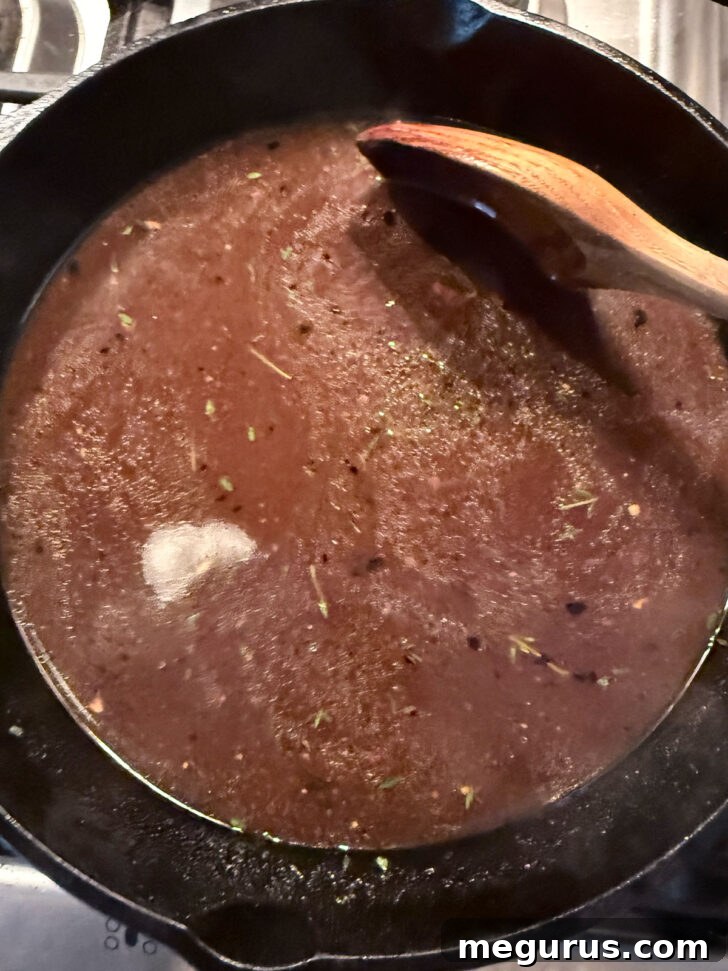
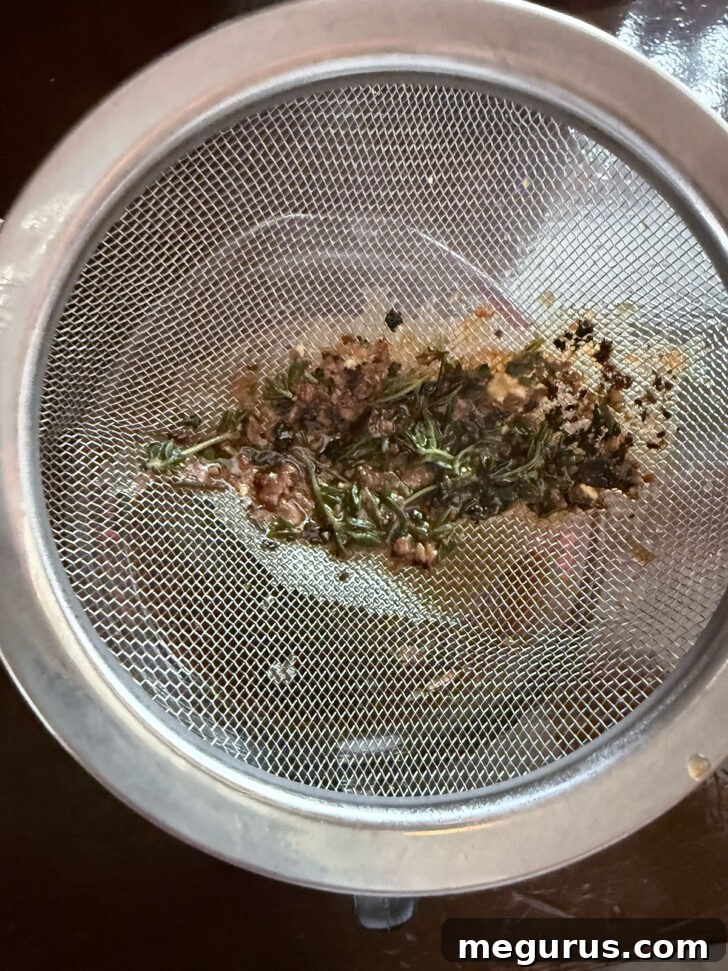
- Finish the Gravy: To the simmering beef broth in the skillet, add the Dijon mustard and dried thyme. Stir well to combine. Allow the mixture to come to a gentle boil and simmer for a few minutes, allowing the flavors to meld and the liquid to reduce slightly. In a small bowl, whisk together the cornstarch and cold water to create a smooth slurry. Gradually pour the cornstarch slurry into the simmering gravy, whisking continuously, until the gravy thickens to your desired consistency. If you prefer a thicker gravy, you can let it boil for a longer period to reduce further, or add a little more cornstarch slurry, mixed with water, as needed. Taste the gravy and season generously with salt and freshly ground black pepper. Adjust seasoning until it reaches perfection.
- Strain and Serve the Gravy: For a silky-smooth gravy, pour the finished gravy through a fine-mesh sieve into a warmed pitcher or gravy boat. This step removes any solids or lumps, ensuring an elegant presentation. You can discard the solids left in the sieve.
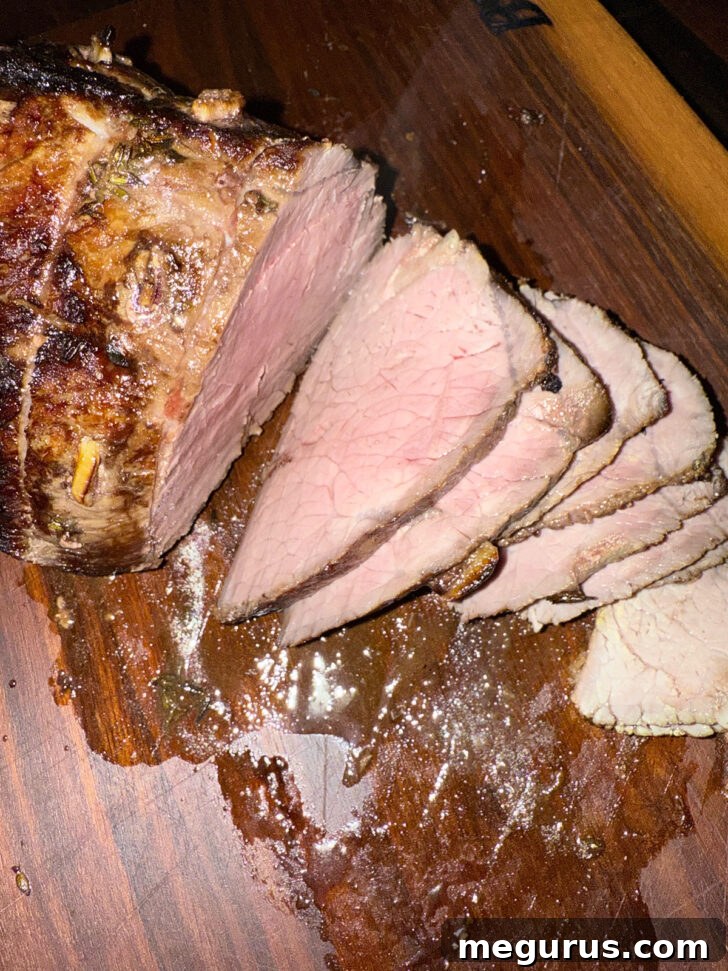
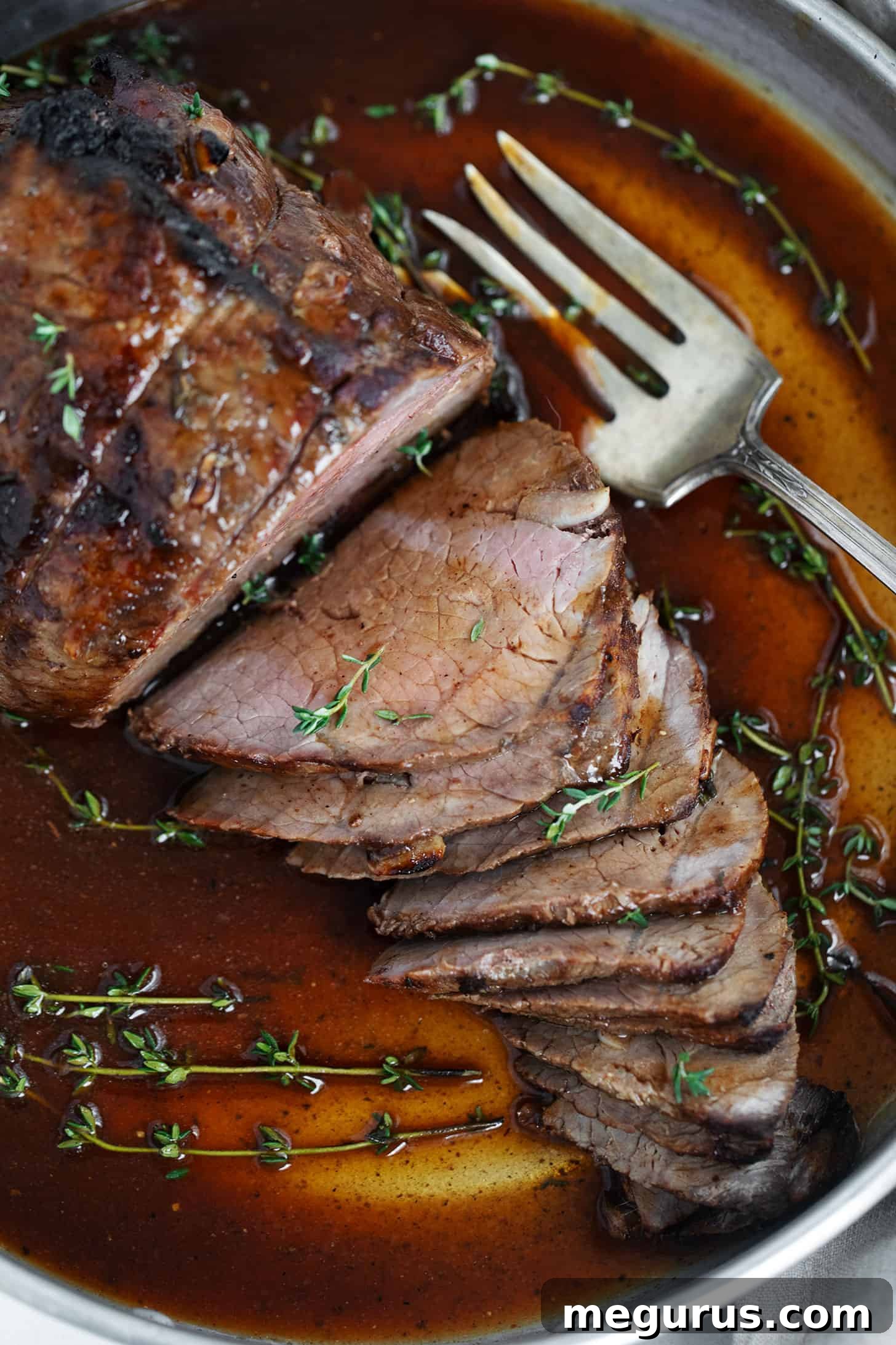
- Slice and Serve: After the roast has rested for the full 20-30 minutes, remove any butcher string if it was present. Thinly slice the roast beef against the grain on your cutting board. Arrange the slices on a serving platter and generously spoon the warm, flavorful gravy over the meat. Serve immediately with your favorite side dishes. You may remove and discard the garlic slices before serving, if desired, although some enjoy their mellow flavor.
Expert Tips for a Flawless Roast Beef Experience
- Roast Uncovered for Best Results: Unlike a pot roast, which requires a covered pot for slow, moist cooking, roast beef should always be cooked uncovered in a shallow pan. This method allows for proper browning and the development of that delicious crust. A cast iron skillet is an ideal vessel for roast beef due to its excellent heat retention, ability to get a good sear, and depth suitable for almost any size roast. Plus, in our experience, cast iron skillets consistently produce the most flavorful pan drippings for gravy.
- Butcher String: Keep it On (Mostly): Many sirloin tip roasts come tied with butcher string. This string helps the roast maintain an even shape, ensuring more uniform cooking. Leave the string intact during both the marinating and roasting phases. Once the roast is cooked and has completed its essential resting period, remove and discard the string just before you begin slicing the meat to serve.
- Bring to Room Temperature: For optimal and more even cooking, it’s crucial to remove your marinated roast from the refrigerator approximately 30-45 minutes before you intend to put it in the oven. Allowing the roast to come closer to room temperature helps prevent the outside from overcooking while the inside struggles to catch up.
- Embrace Varied Doneness: Sirloin tip roasts are often naturally thinner at one or both ends compared to their center. This means these thinner sections will cook through more quickly than the thicker middle. This characteristic is actually a bonus for households with varied preferences, as the thinner ends of the finished roast will be more well-done, while the center remains a perfect medium-rare or medium. This way, everyone can enjoy their preferred level of doneness.
- Master Internal Temperatures: For the most tender and flavorful roast beef, aim for an internal temperature no higher than medium, which is 145°F. Remember that the roast will continue to cook slightly after it’s removed from the oven (this is called “carry-over cooking”). Therefore, for a perfect medium, we recommend taking the roast out of the oven when the thickest part reaches 140°F. For medium-rare, aim for 130-135°F.
- Gravy Consistency: Your Choice: The gravy recipe, as written, offers a consistency that is slightly thicker than a traditional au jus but still thinner than many typical, heavy gravies. It’s the perfect texture for spooning generously over your sliced beef or mashed potatoes. If you prefer a richer, thicker gravy, simply adjust by adding more of the cornstarch and cold water slurry, a teaspoon at a time, until you achieve your desired consistency.
The Secret to a Perfectly Cooked Roast: Your Thermometer!
The single most important tool in your kitchen for achieving consistently perfect roast beef is a reliable meat thermometer. Guessing doneness can lead to disappointing results, but with a thermometer, you’re guaranteed success every time. You have two main options:
- Probe-Type Thermometer: This type stays in the meat throughout the cooking process and often has a wire that connects to an external display, allowing you to monitor the temperature without opening the oven door.
- Instant-Read Thermometer: This is used to quickly check the temperature once the roast is nearing its estimated cooking time. It’s quick and versatile.
How to Use Your Thermometer Effectively: Always test for doneness in the thickest part of the roast, away from any bones. Be sure to insert the probe or tip of the instant-read thermometer precisely into the center of the roast, avoiding pushing it too far down, which could pick up residual heat from the hot pan and give you an inaccurate reading. For maximum accuracy, we recommend testing the temperature in 2 or 3 different spots within the thickest section of the roast.
Making Ahead, Storing, and Freezing Roast Beef
Planning ahead for meals is always a good idea, but when it comes to roast beef, there are specific considerations to ensure the best quality and flavor. Understanding how to handle leftovers is key to enjoying your delicious meal for days to come.
- Cooking Ahead: Not Recommended: We generally do not recommend cooking a roast beef entirely ahead of time if your goal is to serve it as a main course later. The primary reason is reheating. A perfectly roasted medium-rare or medium beef, once refrigerated and then reheated, will invariably cook further, turning it into a well-done roast. This compromises the tender texture and juicy quality that makes fresh roast beef so special. If you absolutely must cook ahead, consider preparing it to a slightly rarer doneness (e.g., medium-rare if you aim for medium) and reheating very gently, perhaps by slicing it thinly and warming it quickly in warm gravy or broth, or on a low heat in the oven, taking care not to overcook.
- Storing Leftovers: Leftover roast beef and any accompanying gravy can be stored safely in an airtight container in the refrigerator for 3-4 days. For the best flavor and texture, store the beef slices separately from the gravy if possible, or keep the gravy in a separate container for reheating.
- Freezing Leftovers: Cooked roast beef freezes remarkably well, allowing you to extend its life for future meals. Slice the leftover beef and place it in a single layer on a baking sheet to flash freeze for about an hour. Once firm, transfer the slices to a freezer-safe bag or airtight container, pressing out as much air as possible to prevent freezer burn. It can be frozen for up to 3 months. The gravy also freezes beautifully; simply pour it into a freezer-safe container, leaving a little headspace, and freeze for up to 3 months. Thaw both in the refrigerator overnight before gently reheating.
Frequently Asked Questions (FAQ)
Here are some common questions about making a sirloin tip roast:
- Q: What is a sirloin tip roast? A: A sirloin tip roast, also known as a round tip roast or knuckle, is a lean cut of beef from the hindquarter, specifically from the sirloin primal near the round. It’s an economical choice that, when prepared correctly with marinating and proper roasting, can be very tender and flavorful.
- Q: Why is marinating for 24 hours so important for this recipe? A: Sirloin tip roast is a lean cut and can be a bit tougher if not treated properly. A 24-hour marinade, especially one containing acidic ingredients like sherry and savory elements like soy sauce, works to tenderize the meat fibers and deeply infuse it with flavor, ensuring a juicy and tender result.
- Q: Can I use fresh garlic and thyme in the marinade instead of dried? A: Absolutely! Fresh garlic cloves are used for inserting into the roast, and fresh thyme can replace dried thyme leaves in the marinade. Use approximately 1 tablespoon of fresh thyme leaves for every 2 teaspoons of dried thyme. Fresh herbs will provide an even brighter, more vibrant flavor.
- Q: How do I know when my roast is cooked to medium? A: The most accurate way is to use a meat thermometer. For a medium roast, remove it from the oven when its internal temperature in the thickest part reaches 140°F. It will continue to cook to about 145°F during the resting period due to carry-over cooking, resulting in a perfect medium.
- Q: Is it absolutely necessary to rest the roast after cooking? A: Yes, resting the roast is a critical step that should not be skipped. It allows the meat’s juices, which have migrated to the center during cooking, to redistribute throughout the entire roast. This process results in a significantly juicier and more tender slice of beef. A rest of 20-30 minutes, loosely tented with foil, is ideal.
Serving Suggestions for Your Mustard and Herb Sirloin Tip Roast
This flavorful sirloin tip roast, with its rich gravy, deserves equally delicious accompaniments to complete your meal. Here are some popular and complementary side dish ideas:
- Classic Mashed Potatoes: Creamy mashed potatoes are an absolute must, perfect for soaking up every last drop of that savory au jus-like gravy. Consider infusing them with roasted garlic or a touch of fresh herbs for an extra layer of flavor.
- Roasted Root Vegetables: A medley of roasted carrots, parsnips, and potatoes tossed with olive oil, rosemary, and salt will add a rustic elegance and sweet, earthy flavors that beautifully complement the beef.
- Steamed Green Beans or Asparagus: Simple, crisp-tender green beans or asparagus, lightly steamed and perhaps finished with a squeeze of lemon juice, offer a fresh contrast to the rich meat.
- Yorkshire Pudding: For a truly traditional British roast experience, homemade Yorkshire puddings are a delightful addition. Their airy texture and ability to capture gravy are unmatched.
- Dinner Rolls or Crusty Bread: Don’t forget some warm dinner rolls or slices of crusty artisan bread, perfect for wiping up any remaining gravy on your plate.
- Creamed Spinach: A rich and creamy side dish that adds a touch of indulgence and a lovely green component to the plate.
Conclusion: A Roast Beef Masterpiece Awaits
Transforming an affordable cut of beef into a culinary masterpiece is not only achievable but incredibly rewarding with this Mustard and Herb Sirloin Tip Roast recipe. The extended marination, coupled with the precise two-stage roasting method and a delectable homemade gravy, ensures a dish that is bursting with flavor, wonderfully tender, and visually stunning. Whether you’re planning a special holiday feast or simply wish to elevate your Sunday dinner, this recipe provides a foolproof guide to roast beef perfection. Gather your ingredients, prepare for a little patience during the marinating phase, and get ready to savor every succulent slice of this unforgettable meal. It’s more than just a roast; it’s an experience.
Adapted from a Rose Murray recipe