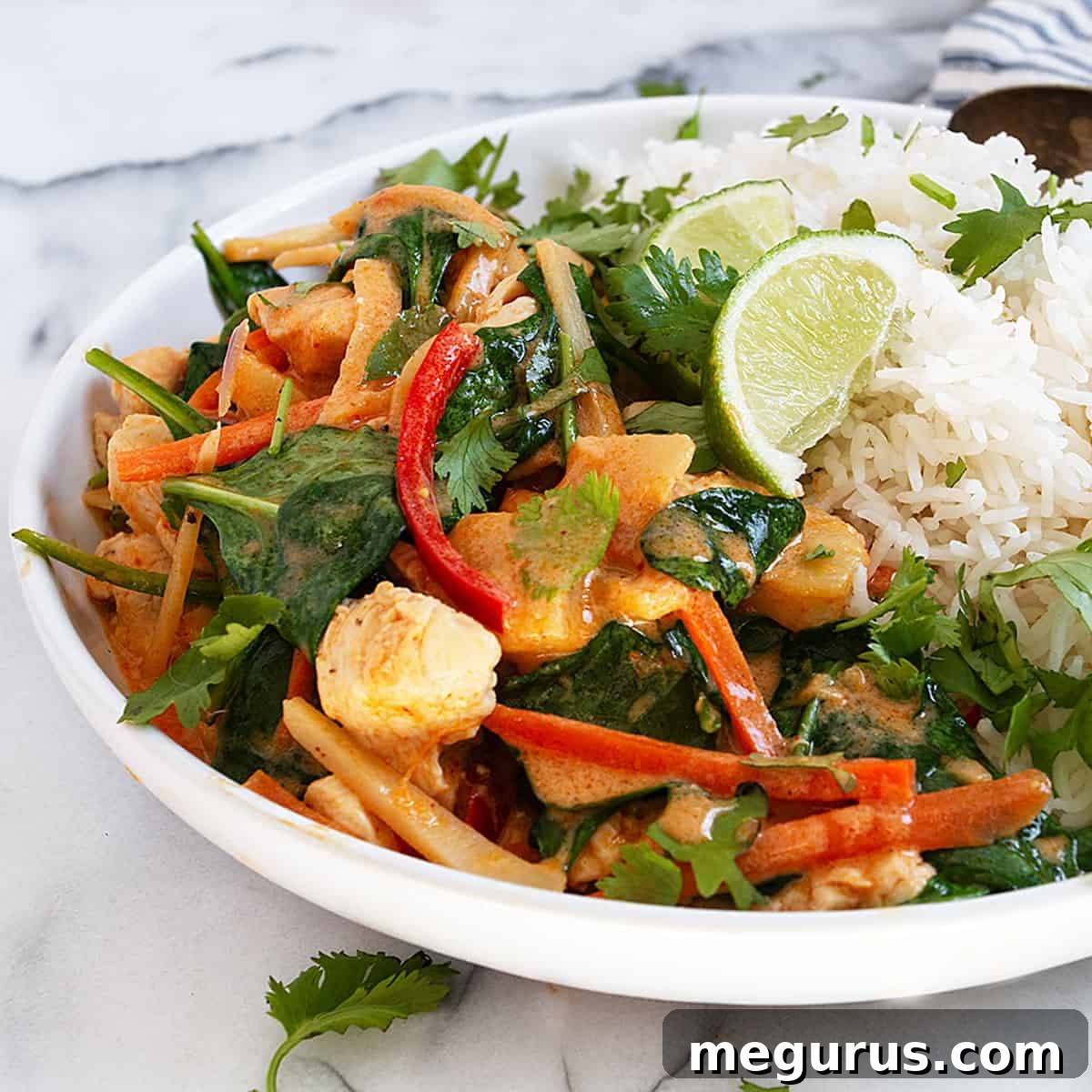
Welcome to the definitive guide for crafting the best Thai Red Curry Chicken, a recipe meticulously refined and perfected over years to bring authentic flavors right into your kitchen!
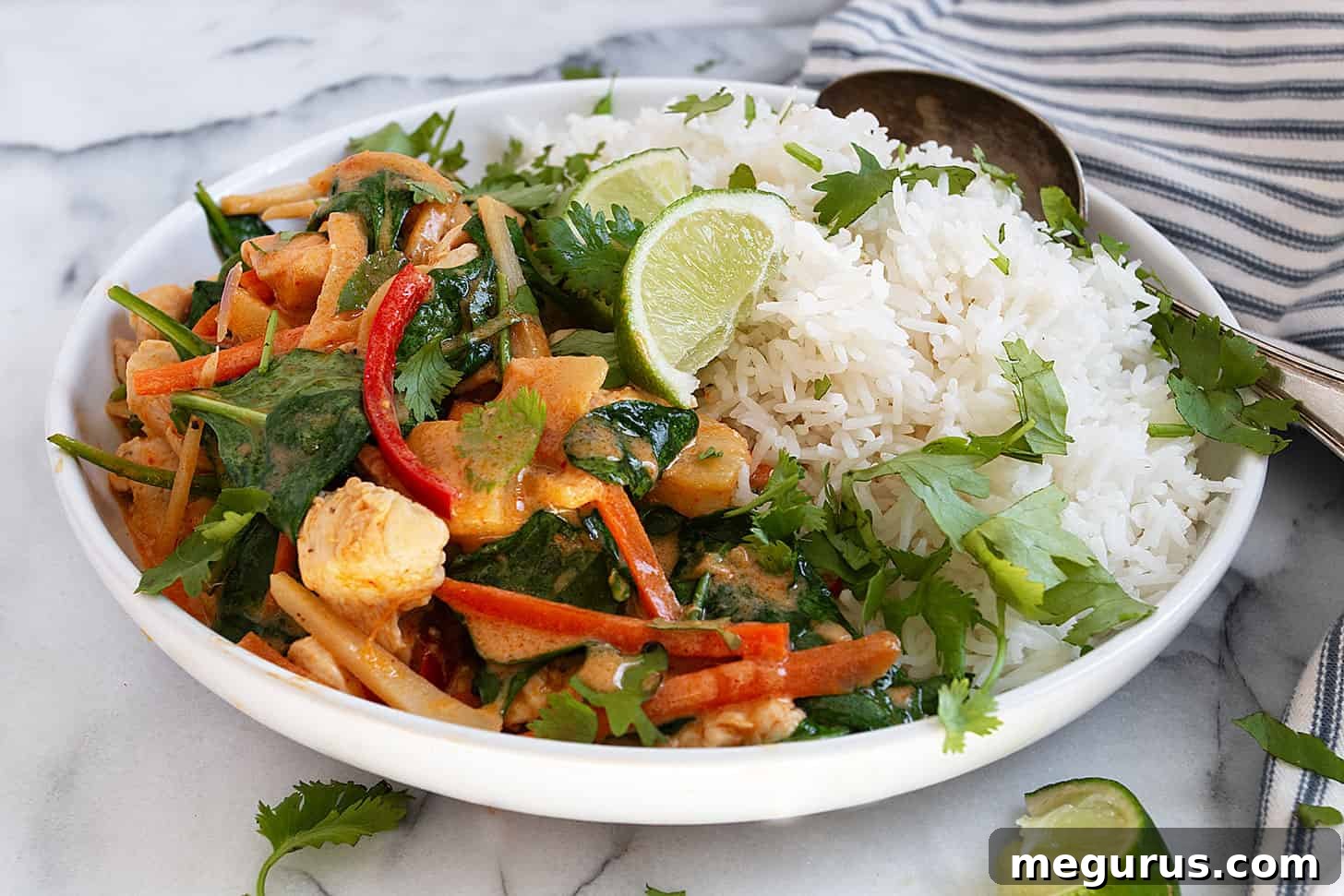
The Ultimate Homemade Thai Red Curry Chicken: Better Than Takeout!
In a world brimming with countless Thai Red Curry Chicken recipes, allow me to introduce you to a culinary masterpiece that I believe stands head and shoulders above the rest. This isn’t just another recipe; it’s a labor of love, a testament to countless hours spent in the kitchen, experimenting and fine-tuning until absolute perfection was achieved. What started as a quest for a good homemade curry has evolved into a dish so delightful, so consistently satisfying, that I no longer find myself craving takeout. My own kitchen now produces a Thai Red Curry Chicken that genuinely surpasses any restaurant offering.
My unique rendition elevates the traditional foundation of tender chicken, vibrant carrots, and crisp red peppers with some truly inspired additions. We’re talking about a generous handful of fresh greens (spinach being my go-to for its subtle earthiness), the delightful, unexpected crunch of thinly sliced canned bamboo shoots, and — perhaps my most cherished secret ingredient — succulent chunks of canned pineapple. If the idea of fruit in your savory curry raises an eyebrow, I implore you: don’t skip it! The pineapple introduces a remarkable sweet and tangy counterpoint that beautifully balances the spicy, rich curry, creating a depth of flavor that is simply irresistible. This harmonious blend transforms a simple meal into an extraordinary dining experience.
Why This Thai Red Curry Chicken Recipe Is a Must-Try
This recipe isn’t just about delicious food; it’s about empowering you to create restaurant-quality Thai cuisine with confidence at home. Many store-bought Thai red curries can be overly sweet or lack the intricate balance of flavors found in authentic dishes. My recipe emphasizes fresh ingredients, thoughtful preparation, and a personalized touch that guarantees a truly memorable meal. It’s also incredibly versatile, making it perfect for meal prepping or adapting to various dietary needs. Whether you’re a seasoned chef or a beginner in the kitchen, this guide will walk you through every step to achieve curry perfection.
Key Ingredients and Smart Substitutions for Your Thai Red Curry
Chicken: The Heart of Your Curry
For this Thai red curry chicken, I typically opt for boneless, skinless chicken breasts, cubed into bite-sized pieces. This choice ensures quick cooking and even distribution throughout the sauce. However, the beauty of this recipe lies in its adaptability. You can effortlessly use boneless, skinless chicken thighs for a richer flavor and slightly more tender texture that stands up well to simmering. For those busy weeknights, this curry is a fantastic way to utilize leftover cooked chicken—simply shred or cube it and add it towards the end to heat through. Even a store-bought rotisserie chicken can be transformed into a super quick and convenient version, making dinner practically effortless. Always ensure your chicken is cooked through before serving.
Bamboo Shoots: Adding Essential Crunch and Authenticity
Don’t underestimate the humble bamboo shoot! While they don’t overpower with flavor, their unique crisp texture is a game-changer, providing a delightful contrast to the creamy sauce and tender chicken. Bamboo shoots are a staple in many Asian cuisines, prized for their delicate flavor and satisfying bite. You’ll typically find canned bamboo shoots in the Asian food section of your grocery store, though occasionally they might be hiding amongst other canned vegetables or fruits. If your store is anything like mine, they might even have a thin layer of dust on top, suggesting they’re not always flying off the shelves. However, I make it a point to always keep a can or two on hand specifically for this curry. They are an often-overlooked ingredient that truly enhances the overall experience by adding an authentic textural element.
Fresh Greens: A Boost of Nutrition and Color
While optional, adding a handful of fresh greens is an effortless way to sneak more vegetables and nutrients into your diet without compromising the curry’s authentic flavor profile. I often use baby spinach for its delicate texture and quick wilting time, which means it integrates seamlessly into the dish without extra effort. However, feel free to experiment with other leafy greens such as chopped baby bok choy leaves, kale (massaged briefly to tenderize and reduce bitterness), or even Swiss chard. They add a vibrant color, a slight earthy note, and a healthy nutritional boost that beautifully complements the richness of the curry. Just stir them in at the very end to ensure they remain vibrant and tender-crisp.
Coconut Milk: The Creamy Foundation for Richness
The luscious, creamy base of any good Thai curry relies on quality coconut milk. I almost exclusively use full-fat coconut milk for its rich consistency and deep flavor, which contributes significantly to the velvety texture of the sauce and the overall luxurious feel of the dish. Full-fat coconut milk also helps to carry and distribute the complex flavors of the curry paste more effectively. If you prefer a lighter option, lite coconut milk can certainly be used, but be aware that the resulting sauce will be slightly thinner and less intensely creamy. Whichever you choose, ensure you shake the can well before opening to re-incorporate the fat that often separates and rises to the top, ensuring a smooth, uniform texture.
Thai Red Curry Paste: The Flavor Powerhouse You Can’t Skip
This is where the magic happens! Thai red curry paste is the foundational flavor of your dish, a complex blend of red chilies, lemongrass, galangal, kaffir lime zest, coriander, cumin, and other aromatic spices. The quality and inherent spice level can vary significantly between brands, so always use your favorite and don’t hesitate to adjust the amount to your personal taste. A good quality paste provides the authentic depth and heat that defines this classic Thai dish. Starting with a tablespoon and adding more to taste allows you to customize the spice intensity perfectly. If you’re feeling adventurous and have access to fresh ingredients, you could even try making your own red curry paste from scratch for an unparalleled fresh and vibrant flavor.
Canned Pineapple Chunks: My Secret Ingredient for Sweet-Tangy Perfection
This might be the most controversial, yet most beloved, addition to my Thai Red Curry Chicken. The sweet and tangy bursts of flavor from canned pineapple chunks cut through the richness of the coconut milk and the spice of the curry paste, creating an incredibly balanced and addictive taste experience. It’s a revelation that transforms the dish from simply delicious to truly extraordinary! The natural acidity of the pineapple also brightens the curry, preventing it from tasting heavy, and subtly tenderizes the chicken, enhancing its succulence. If you’re contemplating skipping it, I urge you, try it at least once. You might just discover your new favorite curry ingredient and understand why it’s a non-negotiable for me.
Other Essential Aromatics and Seasonings for a Balanced Flavor Profile
- Fresh Ginger: A small amount of minced fresh ginger adds a warm, spicy kick and aromatic depth that is quintessential to authentic Thai cuisine. Its pungent notes complement the other aromatics beautifully.
- Freshly Squeezed Lime Juice: The bright, zesty acidity of fresh lime juice is crucial for balancing the flavors, cutting through the richness, and adding a fresh, vibrant finish. Always use freshly squeezed lime juice for the best results; bottled juice simply doesn’t compare in flavor or aroma.
- Brown Sugar: A touch of brown sugar helps to round out the flavors, balancing the heat from the curry paste and the acidity from the lime and pineapple, while enhancing the natural sweetness of the other ingredients. It creates a harmonious sweet-savory balance.
- Fish Sauce: This fermented anchovy sauce provides the essential umami and salty depth found in most Southeast Asian dishes. It’s a fundamental flavor component that adds complexity. If making a vegetarian version, substitute with soy sauce or a good quality vegetarian fish sauce alternative to achieve a similar umami profile without animal products.
Cook’s Notes & Expert Tips for Perfect Thai Red Curry
The Invaluable Power of Mise en Place for Effortless Cooking
While I don’t always adhere strictly to the “mise en place” philosophy (everything in its place) for every meal, this Thai Red Curry Chicken is one recipe where having all your ingredients prepped, cut, and ready to go truly pays off. Thai curries and stir-fries cook incredibly quickly, and having everything at your fingertips ensures a smooth, stress-free cooking process. I like to start my rice cooking first, then get the chicken seared in a skillet. While the chicken cooks, I efficiently chop all the vegetables and gather the remaining ingredients. By the time it’s time to assemble the curry, it’s literally a matter of “dump and stir,” making for a swift and enjoyable cooking experience without frantically searching for ingredients or rushing to chop.
Adapting for Different Proteins and Dietary Preferences with Ease
This recipe is incredibly versatile and adapts beautifully to various proteins. Feel free to substitute chicken with succulent shrimp, flaky salmon fillets (add them towards the end as they cook very quickly), thinly sliced beef (such as sirloin or flank steak), or even firm tofu for a delightful change. For a completely vegetarian or vegan version, simply omit the meat and increase the quantity and variety of vegetables. Great vegetarian additions include broccoli florets, snap peas, mushrooms, or bell peppers. Substitute fish sauce with soy sauce or a high-quality vegan fish sauce alternative to maintain that essential umami depth. Consider adding chickpeas, edamame, or extra mushrooms for added protein and texture in a plant-based curry, ensuring a satisfying and hearty meal for everyone.
Customizing Your Spice Level to Personal Preference
The beauty of homemade curry is the ability to adjust the spice level precisely to your preference. Start with the recommended amount of red curry paste, then taste the sauce after it has simmered briefly. If you desire a spicier kick, add more curry paste in small increments (half a teaspoon at a time), stirring and tasting until it reaches your desired heat level. For a milder curry, you can reduce the initial amount of paste or add a little extra coconut milk to mellow the heat. For those who truly love intense heat, a tiny pinch of cayenne pepper or a finely minced fresh bird’s eye chili can also be added at the beginning with the ginger.
Top Tip: Freeze Leftover Ingredients for Future Feasts!
One of my favorite hacks for efficiency and reducing food waste is to freeze leftover canned pineapple and bamboo shoots. After opening a can for this recipe, I portion the remaining pineapple chunks and bamboo shoots together in pre-measured amounts in small freezer bags. Label them clearly with the contents and date. The next time I decide to whip up this delicious Thai Red Curry Chicken, I simply grab a bag from the freezer. It’s a fantastic way to ensure you always have these unique ingredients on hand, perfectly prepped and ready to go, eliminating waste and saving valuable prep time. This also works well for extra ginger or chili paste.
Mastering the Art of Cutting Carrots into Matchsticks for Elegant Presentation
Achieving perfectly uniform matchstick carrots (also known as julienne) doesn’t have to be a daunting task. This simple technique ensures elegant presentation, quicker cooking, and even texture, contributing to the overall excellence of your curry. Follow these easy, step-by-step instructions for a painless and efficient way to prepare your carrots:
- Prepare the Carrot: Begin by thoroughly peeling your carrot to remove the outer skin. Then, cut it into manageable 2-3 inch lengths, creating more stable sections to work with.
- Create a Flat Base: On a stable cutting board, use a sharp chef’s knife to carefully slice off one rounded side of each carrot length. This creates a stable, flat surface which is essential for safety and precise cutting.
- First Slices: Place the carrot flat-side down on the cutting board. Make thin, even slices, approximately 1/8-inch thick or less, working your way towards the center from the flat edge. Aim for consistency in thickness.
- Flip and Continue: Flip the carrot again, placing the newly created flat edge down. Continue making thin slices as before. Repeat this process one more time if necessary, using any remaining flat edge to stabilize the carrot, until you have a stack of thin, flat carrot planks.
- Cut into Matchsticks: Take your carrot “planks” (the thin, flat slices). Stack two planks together if you feel comfortable and if they are stable. Then, use the tip of your sharp knife to cut them lengthwise into thin, matchstick-like strips. Avoid stacking too many at once, as they can become difficult to keep aligned for precise and safe cuts. Practice makes perfect for uniform matchsticks!
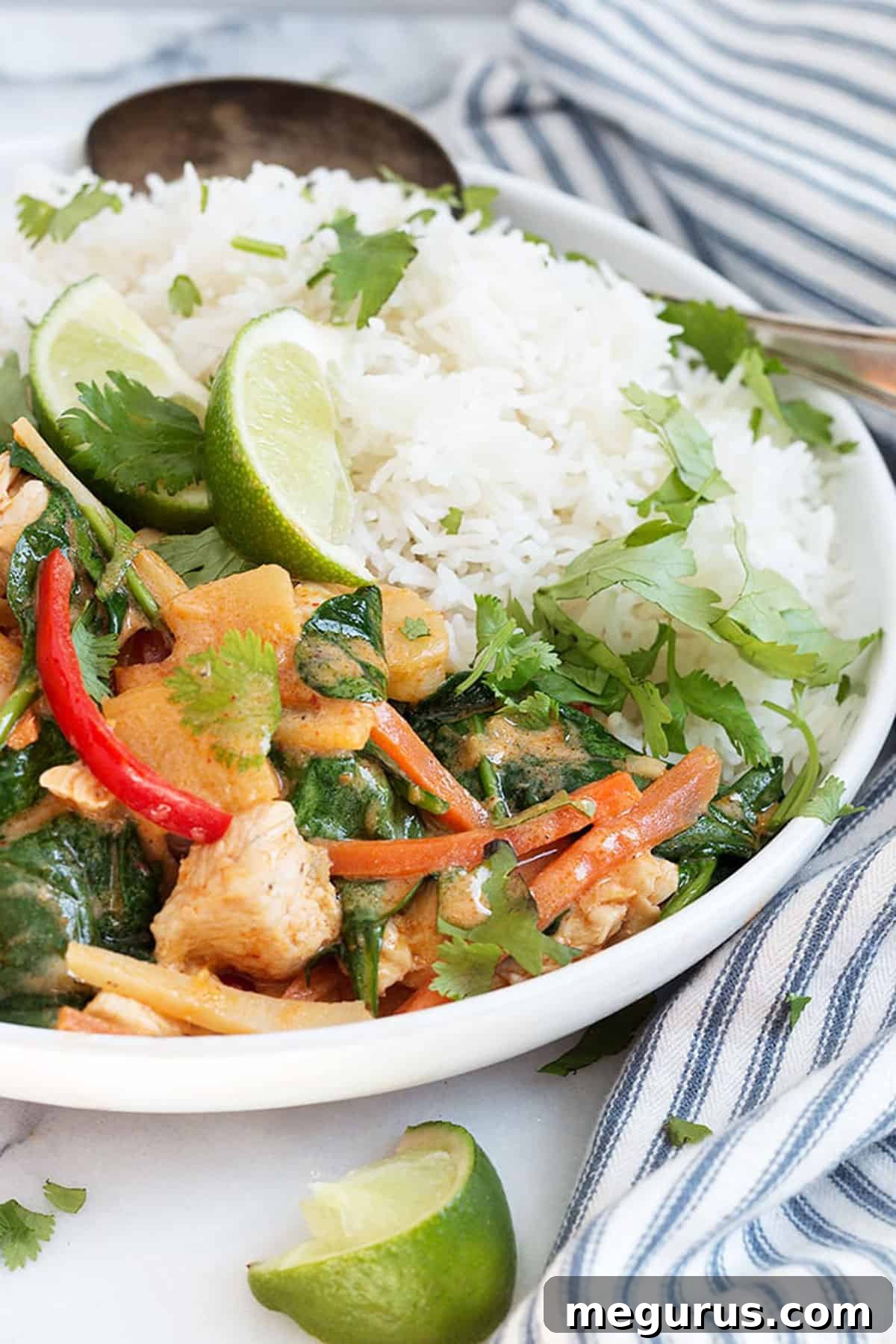
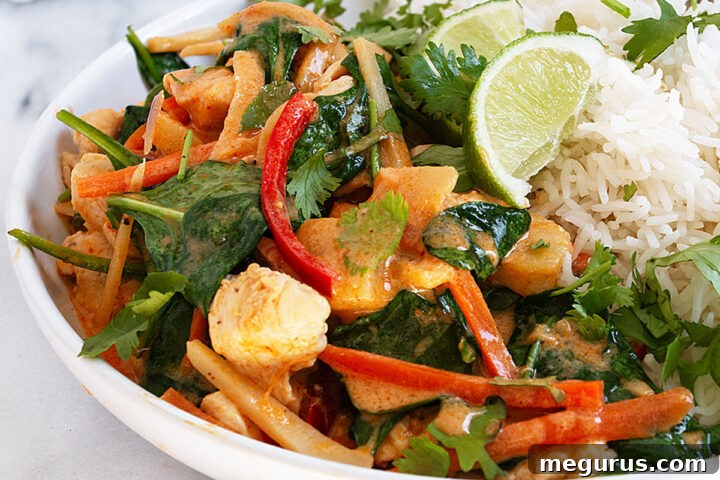
Thai Red Curry Chicken Recipe
This easy and incredibly delicious Thai Red Curry Chicken is packed with fresh vegetables and bursting with authentic Thai flavors. Perfect for serving with fluffy jasmine or basmati rice for a wholesome and satisfying meal.
Average Rating: 4.91 stars from 10 ratings
Pin This Recipe
Leave a Review
Prep Time: 15 mins
Cook Time: 15 mins
Total Time: 30 mins
Yield: 4 servings
Ingredients
- 1 Tablespoon canola or vegetable oil
- 2 large boneless, skinless chicken breasts, cut into bite-sized pieces (or approximately 2 cups of leftover cooked, cubed chicken)
- 1 medium carrot, cut into matchsticks
- 1 medium red pepper, cored and cut into matchsticks
- 1/2 small onion, thinly sliced
- 1/4 teaspoon minced fresh ginger
- 1 Tablespoon red curry paste, plus more to taste
- 14 oz can full-fat coconut milk (about 1 3/4 cups)
- 1 Tablespoon freshly squeezed lime juice
- 1 Tablespoon brown sugar
- 1 Tablespoon fish sauce (use soy sauce for a vegetarian version)
- 1/3 cup canned bamboo shoots, cut into matchsticks
- 1/3 cup canned pineapple chunks, each chunk cut into 2 or 3 pieces
- 2 cups baby spinach (or other greens such as chopped baby bok choy leaves)
- Salt and pepper to taste
Garnish:
- Chopped fresh basil or cilantro leaves
- Lime quarters, for juicing over the finished dish
Instructions
- Prepare Rice: Begin by starting your jasmine or basmati rice according to package directions, ensuring it’s ready to serve with your curry.
- Cook Chicken (if uncooked): (Skip this step if you are starting with pre-cooked chicken). Heat 1/2 Tablespoon of oil in a large skillet or wok over medium heat. Once hot, add the uncooked chicken pieces and cook, stirring frequently, until they are thoroughly cooked through and no longer pink. Remove cooked chicken to a bowl and set aside.
- Vegetable Preparation: While the chicken cooks or during step 1, prepare all your vegetables and bamboo shoots. Cut carrots, red peppers, onions, and bamboo shoots into uniform matchsticks of approximately 2-inch lengths. Assemble all other remaining ingredients, ensuring they are measured and ready for quick addition.
- Sauté Vegetables: Heat the remaining 1/2 Tablespoon of oil in the same skillet, increasing the heat to medium-high. Add the matchstick carrots first, stir-frying for 1-2 minutes. Then, add the red peppers and sliced onion. Continue to cook, stirring, until the onion softens and becomes translucent, but the carrots and red peppers retain a tender-crisp texture.
- Build the Curry Sauce: Add the minced fresh ginger, red curry paste, and about a tablespoon of the thick cream from the top of the coconut milk (if separated) to the skillet. Cook, stirring constantly, for 1 minute to bloom the aromatics. Pour in the rest of the coconut milk from the can, along with the fresh lime juice, brown sugar, and fish sauce. Return the cooked chicken to the pan. Incorporate the matchstick bamboo shoots and pineapple chunks. Bring the mixture to a gentle boil, then reduce the heat to medium-low and simmer for about 3-5 minutes, allowing the chicken to heat through and the flavors to meld beautifully. The carrots should also soften slightly more during this time.
- Note on Consistency: Traditional Thai curries feature a sauce that is quite soup-like and not overly thick. This curry is designed to be served in bowls, with the flavorful sauce spooned generously over hot rice, allowing the rice to absorb all the wonderful liquid.
- Season and Adjust: Taste the curry sauce and season with salt and pepper as needed. This is also the perfect moment to add a bit more red curry paste if you prefer a spicier, more intense flavor.
- Wilt Greens: Remove the skillet from the heat. Scatter the baby spinach (or other chosen chopped greens) over the top of the curry. Let it stand for about 30 seconds, then gently stir the greens into the curry until they have wilted down into the sauce and are tender-crisp.
- Serve: Ladle the vibrant Thai Red Curry Chicken generously over steaming jasmine or basmati rice. Garnish each serving with a sprinkle of fresh chopped basil or cilantro leaves and a wedge of lime for an extra squeeze of bright, citrusy flavor. Enjoy your homemade Thai feast!
Notes
For additional helpful tips and tricks to perfect this recipe, including more substitution ideas and expert cooking advice, be sure to review the “Cook’s Notes & Expert Tips” section earlier in this post!
Cuisine: Thai
Course: Main Course
Author: Jennifer Maloney
Nutrition Information (per serving)
Serving: 1 serving, Calories: 298kcal, Carbohydrates: 13g, Protein: 3g, Fat: 27g, Saturated Fat: 21g, Sodium: 393mg, Potassium: 458mg, Fiber: 3g, Sugar: 8g, Vitamin A: 5125IU, Vitamin C: 33.6mg, Calcium: 41mg, Iron: 2.3mg
Tried this recipe?
If you enjoyed this recipe, please leave a star rating and comment. Your feedback helps others discover and enjoy this delicious dish!
More Delicious Thai Recipes to Love!