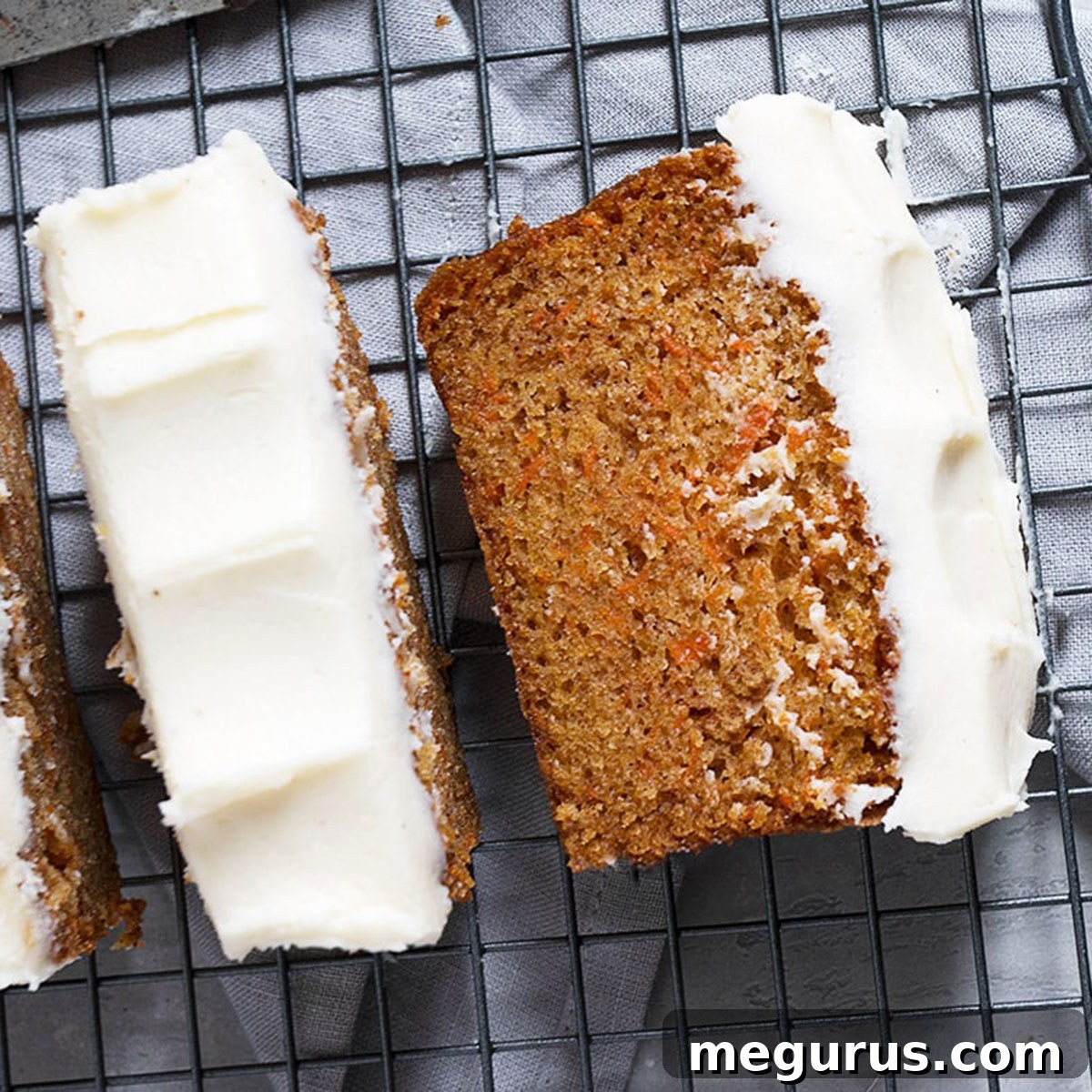
Welcome to the ultimate guide for baking an incredibly moist carrot cake loaf, generously adorned with a luscious cream cheese frosting. This delightful treat is not only simple to prepare but also perfect for any occasion, whether it’s a cozy morning coffee or a festive holiday gathering. Prepare to fall in love with a recipe that promises a tender crumb, rich flavor, and a truly unforgettable frosting experience.
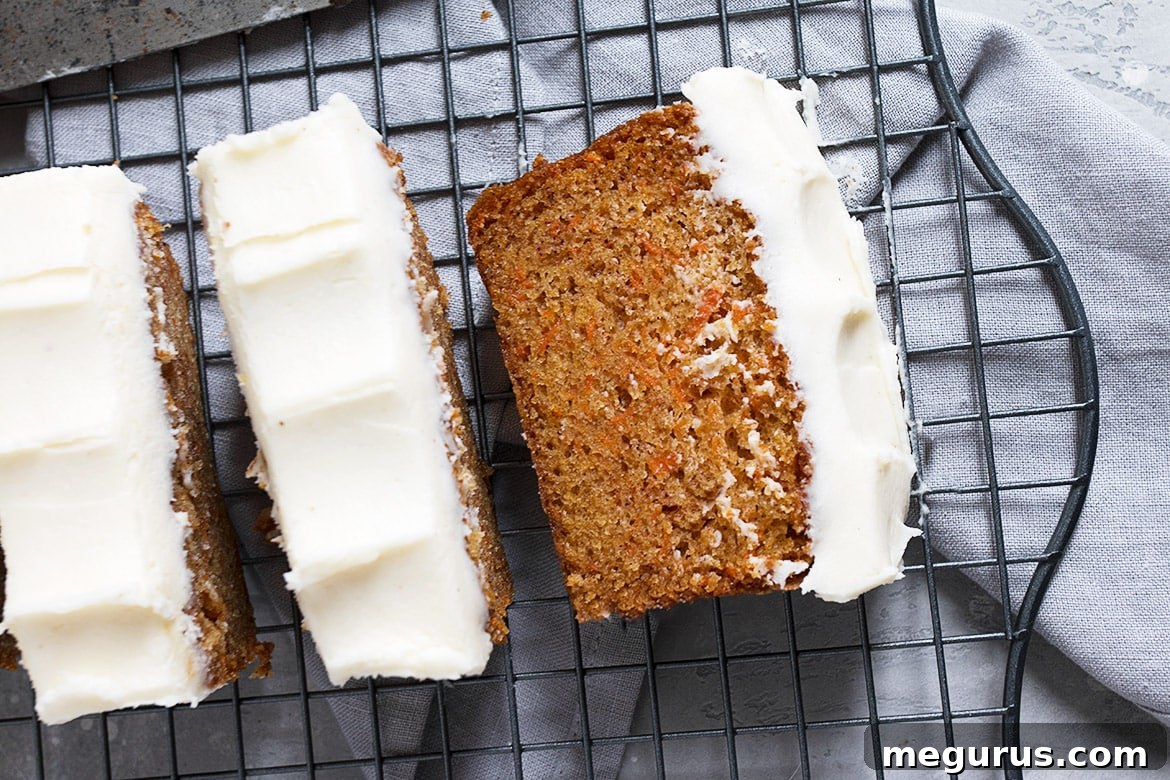
Among the pantheon of classic cakes, carrot cake holds a special, cherished place in many hearts, including mine. It’s a timeless dessert that offers a wonderful balance of sweetness, spice, and moisture, making it a beloved choice year-round. While countless carrot cake recipes exist, this particular one stands out. It’s not just a recipe; it’s a cherished family tradition, passed down from my mother, and it has remained my absolute favorite throughout the years. Its simplicity and consistent deliciousness make it a true winner every single time.
My mother traditionally prepared this recipe as a large 9×13-inch sheet cake, a grand dessert perfect for feeding a crowd. However, over time, I discovered that a smaller, more manageable loaf cake suited my needs (and my self-control) much better. Baking it in a loaf pan provides a more intimate portion, satisfying those irresistible carrot cake cravings without leaving an overwhelming amount of temptation lingering in the kitchen. This scaled-back version allows for guilt-free indulgence, ensuring that every slice is savored.
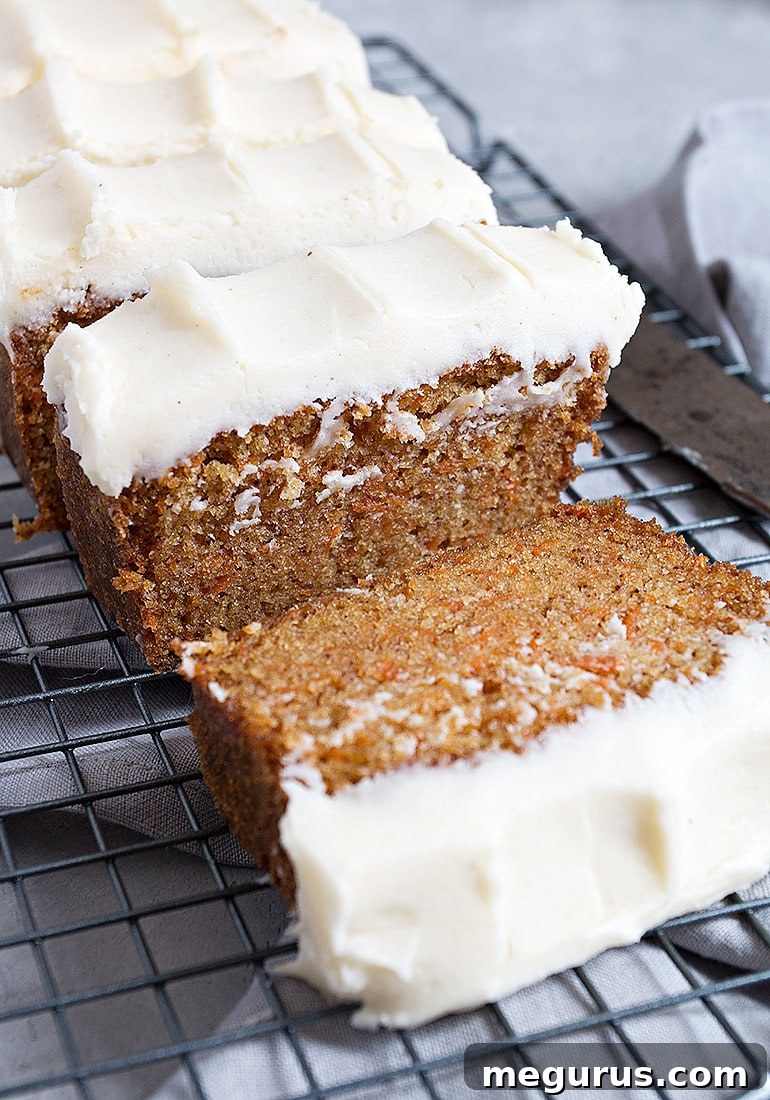
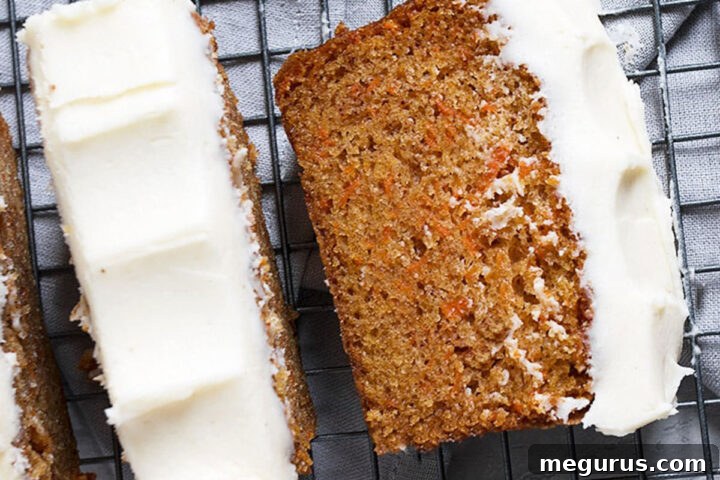
There’s something uniquely appealing about a carrot cake baked in loaf form. Despite its humble shape, when thickly sliced, it transforms into an elegant, fork-and-plate dessert. The taller profile of a loaf also offers the perfect canvas for a truly generous layer of cream cheese frosting – a non-negotiable component in my book! That thick, tangy, sweet frosting complements the spiced, moist cake perfectly, creating a harmonious blend of textures and flavors in every bite. It’s more than just a cake; it’s a moment of pure culinary bliss.
Recipe Video
Discover the visual steps to baking this perfect carrot cake loaf! A detailed video tutorial is available to guide you through each stage of the process, from mixing the batter to applying the luscious cream cheese frosting. Follow along to ensure a flawless and delicious outcome.
Ingredient Spotlight: Unlocking the Flavors of Your Carrot Cake Loaf
Understanding the role of each ingredient is key to baking success. Here, we dive deeper into the essential components of our super moist carrot cake loaf, offering insights and tips for achieving the best possible results.
Vegetable Oil: The Secret to Supreme Moisture – In the world of baking, the fat you choose can significantly impact the final texture and shelf-life of your cake. For this carrot cake loaf, vegetable oil is not just recommended, it’s essential. My years of baking this loaf have consistently shown that vegetable oil yields an incredibly moist, tender, and light crumb that butter simply cannot replicate in this particular recipe. Oil-based cakes also tend to stay fresh longer. While other neutral oils like canola or sunflower oil *might* work, I strongly advise sticking to vegetable oil for guaranteed success. Olive oil is best avoided as its distinct flavor will interfere with the delicate spices of the cake. Substituting butter, whether melted or at room temperature, is not recommended as it would drastically alter the cake’s texture and moistness profile.
Carrots: Nature’s Sweetener and Moistness Booster – It goes without saying, a carrot cake wouldn’t be a carrot cake without its namesake! For the most vibrant flavor and color, I always reach for fresh, organic carrots whenever possible. The key to integrating carrots seamlessly into your cake is proper grating. Aim for a fine to medium grate; this ensures the carrots soften beautifully during baking, releasing their natural sweetness and moisture into the batter without leaving large, crunchy pieces. Make sure to pack your grated carrots well when measuring to achieve the correct volume and moisture content.
Granulated White Sugar: More Than Just Sweetness – Sugar plays a multifaceted role in baking beyond merely sweetening. In this carrot cake loaf, granulated white sugar contributes significantly to the cake’s structure, moistness, and tender crumb. It works by attracting and retaining moisture, and it also aids in the browning process, giving the loaf a beautiful golden crust. While the temptation to reduce sugar might be strong, it can often compromise the cake’s texture and overall quality. For your first bake, I highly recommend using the specified amount. If you wish to experiment, gradually reduce it in subsequent attempts until you find your preferred balance, keeping in mind that too little sugar can result in a dry, dense cake. You could also experiment with a portion of brown sugar for a deeper, more molasses-like flavor, though this will slightly alter the final taste profile.
Walnuts (or Pecans): Adding Texture and Earthy Notes – Nuts are an optional but highly recommended addition to this carrot cake. They introduce a delightful crunch and a subtle earthy flavor that perfectly complements the sweetness and spices of the cake. Walnuts are my go-to, but finely chopped pecans are an excellent alternative, offering a slightly different, buttery nuance. For an extra boost of flavor, lightly toast your chopped nuts in a dry pan or a warm oven for a few minutes before adding them to the batter; this really brings out their essential oils and aroma. If nuts aren’t your preference, feel free to substitute them with 1 cup of plump raisins or shredded coconut for a different, equally delicious textural contrast and sweetness.
Cream Cheese: The Crown Jewel of Frosting – The tangy, rich cream cheese frosting is arguably what elevates a good carrot cake to a great one. For the best flavor and texture, use full-fat cream cheese. It yields a more stable, creamier frosting that is easier to work with. While fat-reduced cream cheese can be used, you might find it softer and may need less confectioners’ sugar to achieve the desired consistency, or you might need to chill it slightly to firm it up. Ensure both your cream cheese and butter are at proper room temperature before mixing; this is crucial for achieving a smooth, lump-free, and fluffy frosting.
The Supporting Cast: Essential Pantry Staples – Beyond the star ingredients, you’ll need a few common baking essentials: all-purpose flour (always spooned and leveled for accuracy), two large eggs (for binding and structure), baking soda and baking powder (our leavening agents for a light rise), ground cinnamon (for that classic warm spice), a pinch of salt (to balance the sweetness), unsalted butter (for the frosting’s richness), and vanilla extract (for depth of flavor in the frosting) and icing/confectioners’ sugar (the base for our decadent frosting).
Essential Cook’s Notes for a Perfect Carrot Cake Loaf
Achieving baking perfection often comes down to attention to detail. These cook’s notes offer valuable tips and tricks to ensure your carrot cake loaf turns out beautifully every single time, from preparation to baking and beyond.
The Parchment Paper Advantage: Effortless Release Every Time – There’s nothing more disheartening than a beautifully baked loaf crumbling as you try to remove it from the pan. To avoid this common pitfall, lining your loaf pan with parchment paper is not just recommended, it’s virtually foolproof. Simply cut a strip of parchment paper long enough to cover the bottom and extend up the long sides of the pan, with an inch or two of overhang on each end. These overhangs act as convenient “handles,” allowing you to effortlessly lift the warm, tender loaf out of the pan once it’s cooled slightly. This method ensures your cake retains its perfect shape and integrity.
Mastering Flour Measurement: The Key to Cake Texture – Accurate flour measurement is paramount in baking. The most reliable method for dry ingredients like flour is the “stir, spoon, and level” technique. First, stir the flour in its container to aerate it and break up any clumps. Next, gently spoon the flour into a dry measuring cup until it’s overfilled. Finally, use the flat back edge of a knife or a straight edge to level off the excess flour, ensuring it’s flush with the top of the measuring cup. This prevents over-packing the flour, which can lead to a dry, dense cake. Never scoop directly from the bag with your measuring cup, as this compacts the flour and results in too much being added.
Navigating Baking Time: Understanding Your Oven’s Personality – Baking times provided in recipes are always estimates, as every oven has its unique quirks and temperature fluctuations. Factors such as oven calibration, the material and color of your baking pan (dark pans absorb more heat and bake faster), and even ambient kitchen temperature can influence how long your loaf needs to bake. For this carrot cake loaf, don’t rely solely on the clock. Instead, use a long, thin skewer or a cake tester inserted into the very center of the loaf. When it comes out clean, with no wet batter or crumbs clinging to it, your loaf is perfectly baked. If you’re in doubt, err on the side of baking a few extra minutes; an underbaked cake is often a soggy disappointment. An oven thermometer can be a valuable tool to verify your oven’s true temperature.
Storage and Longevity: Keeping Your Loaf Fresh – One of the many joys of this carrot cake loaf is its excellent keeping qualities. Thanks to the oil and carrots, it remains wonderfully moist for several days at room temperature (if unfrosted and kept in an airtight container) or in the refrigerator (especially with the cream cheese frosting). To extend its freshness even further, this loaf freezes exceptionally well, even when frosted. Wrap individual slices or the entire loaf tightly in plastic wrap, then in foil, and freeze for up to 2-3 months. Thaw overnight in the refrigerator or at room temperature for a delicious treat anytime.
Versatile Baking: Adapting the Recipe – This robust and flavorful batter is incredibly versatile. While designed for a loaf pan, you can easily adapt this basic recipe to create other delightful treats. For an 8-inch round cake or a batch of muffins, simply pour the batter into the appropriate pans and adjust baking times accordingly (muffins will bake much faster, typically 20-25 minutes). If you’re looking to feed a larger gathering, double the entire recipe – both cake and frosting – to make a traditional 9×13-inch sheet cake or an impressive two-layer 8-inch round cake. This flexibility makes it a go-to recipe for any occasion.
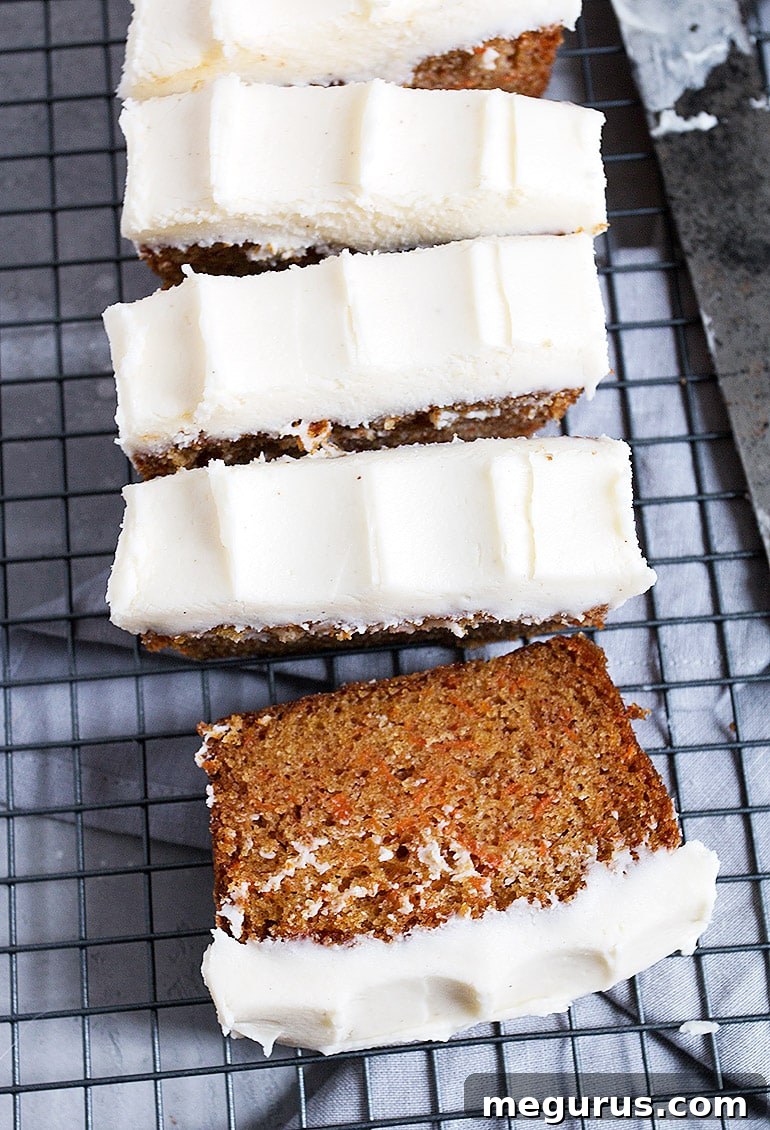
This super moist carrot cake loaf with its generous cream cheese frosting is more than just a dessert; it’s a comforting classic that brings joy to every bite. Whether you’re an experienced baker or just starting your culinary journey, this recipe offers a rewarding experience with consistently delicious results. Enjoy the process of creating this beloved treat, and delight in the praises it will surely garner!
Get the Recipe: Carrot Cake Loaf with Cream Cheese Frosting
Pin This
Leave a Review
Ingredients
Carrot Cake:
- 1 cup granulated white sugar
- 1/2 cup vegetable oil
- 1 1/2 cups carrots, grated, well packed
- 1 cup walnuts, or pecans, finely chopped (optional)
- 2 large eggs
- 1 cup all purpose flour, spooned and levelled
- 1 teaspoon baking soda
- 1 teaspoon baking powder
- 1/2 teaspoon cinnamon
- Pinch salt
Cream Cheese Frosting:
- 4 oz cream cheese, at room temperature
- 2 Tablespoons butter, at room temperature
- 1 teaspoon vanilla extract
- 1 1/2 cups icing/confectioners’ sugar
Instructions
-
Preheat oven to 350°F (175°C) on a regular bake setting (not fan assisted).
-
In a medium bowl, thoroughly whisk together the all-purpose flour, baking soda, baking powder, cinnamon, and salt. Set this dry mixture aside.
-
Prepare your loaf pan: Line a 4 1/2 x 10-inch or 9 x 5-inch loaf pan with parchment paper. To do this, cut a strip of parchment paper to fit the bottom and extend up the two long sides, leaving an overhang of about an inch on each side to serve as handles for easy removal. Set the prepared pan aside.
-
In a large mixing bowl, using an electric beater or a stand mixer fitted with a paddle attachment, cream together the granulated white sugar and vegetable oil until well combined. Add the finely shredded carrots and mix thoroughly. Incorporate the two large eggs, beating until fully blended into the mixture. Stir in the chopped walnuts (or pecans) until evenly distributed. Finally, gradually add the reserved dry flour mixture, mixing on low speed until just combined. Be careful not to overmix the batter.
-
Pour the prepared batter evenly into the lined baking pan.
-
Bake in the preheated oven for 40-50 minutes. Baking time can vary significantly based on your oven and the type of pan used. To determine doneness, insert a long skewer or cake tester into the absolute center of the loaf. It should come out completely clean with no wet batter attached. If it’s not clean, continue baking for a few more minutes and retest.
-
Once baked, cool the carrot cake loaf in its pan for 15 minutes. After this initial cooling period, use the parchment paper overhangs to carefully lift the loaf out of the pan and transfer it to a wire cooling rack. Allow it to cool completely before applying the frosting.
-
While the cake cools, prepare the cream cheese frosting. In a medium bowl, beat together the softened cream cheese, room temperature butter, and vanilla extract until smooth and creamy. Gradually add the icing/confectioners’ sugar, beating on medium speed until the frosting is light, fluffy, and completely smooth. If the frosting seems too thick, add a tiny splash of milk or cream. If it’s too thin, add a bit more confectioners’ sugar.
Notes
For comprehensive tips, ingredient insights, and valuable advice on substitutions and variations for this recipe, please refer to the detailed “Ingredient Spotlight” and “Cook’s Notes” sections located above the recipe card. These sections are packed with essential information to help you achieve the best possible baking results!