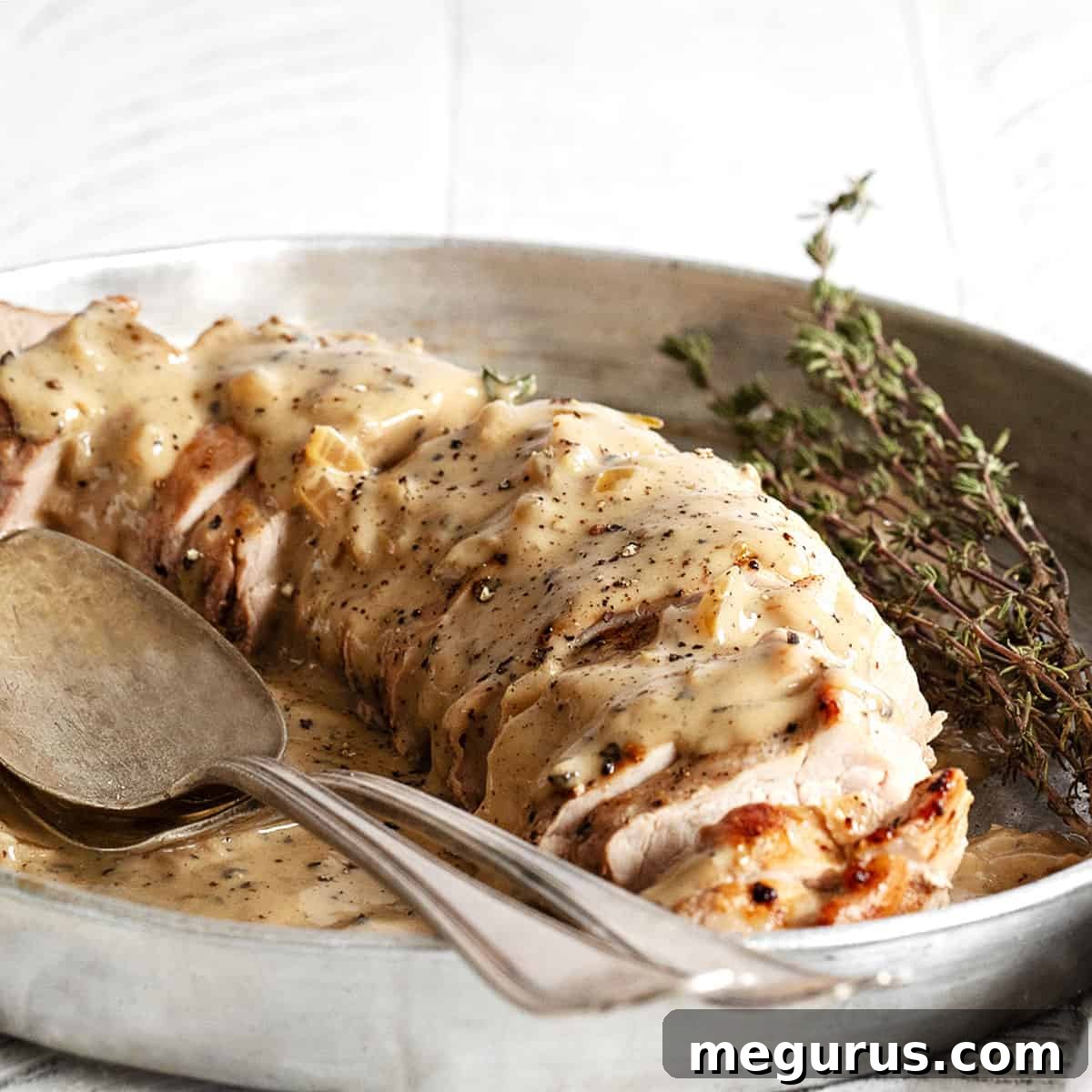
Discover the secret to perfectly tender pork tenderloin every time, paired with a rich, aromatic peppercorn gravy. This recipe is your ultimate guide to a quick and effortless weeknight dinner that also boasts the elegance required for special occasions and entertaining guests. Forget dry, overcooked pork – prepare for a juicy, flavorful masterpiece that will earn rave reviews!
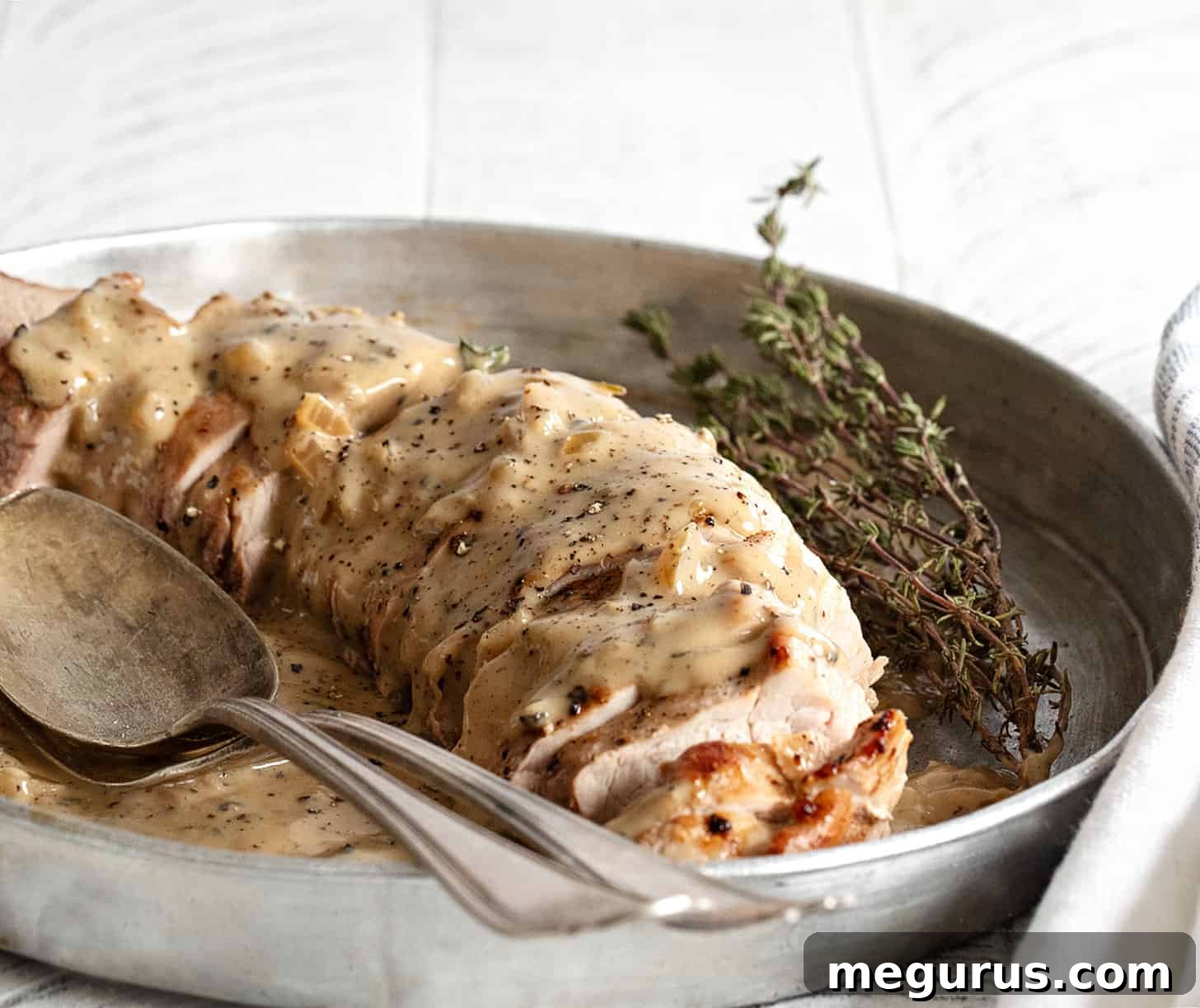
If you’re on the hunt for a truly outstanding pork tenderloin gravy, look no further than this peppercorn-infused creation. With a straightforward list of ingredients and minimal fuss, this meal effortlessly checks all the boxes for a busy weeknight. It’s incredibly easy to prepare, surprisingly fast to cook, and undeniably delicious, making it a staple in any home chef’s repertoire. Elevate your dinner table with a dish that promises tenderness and a burst of savory flavor in every bite.
Why This Peppercorn Pork Tenderloin Will Be Your New Favorite
Pork tenderloin is often lauded as the “filet mignon of pork” for its exceptional tenderness and lean profile. When prepared correctly, it yields incredibly juicy results, making it a fantastic canvas for bold flavors. This recipe elevates the humble tenderloin with a luxurious peppercorn gravy that’s both comforting and sophisticated. Here’s why this dish stands out:
- Speed and Simplicity: From prep to plate, this meal can be on your table in under an hour, making it ideal for busy evenings when you crave something special without the extensive cooking time.
- Unmatched Tenderness: We’ll walk you through the crucial steps to ensure your pork remains succulent and never dry.
- Flavorful Gravy: The peppercorn gravy is a true showstopper, offering a perfect balance of spice, richness, and depth that complements the pork beautifully. It’s versatile enough to spoon over any accompanying side dish.
- Elegant Presentation: Despite its ease, this dish looks and tastes like something you’d order at a fine restaurant, making it perfect for impressing dinner guests or simply treating your family.
- Customizable: Many aspects of this recipe, from the type of peppercorns to the choice of wine and broth, can be tailored to your preference or what you have on hand.
Essential Ingredient Notes for Perfection
Crafting the perfect Peppercorn Pork Tenderloin begins with understanding your ingredients. Each component plays a vital role in achieving the desired texture and flavor profile.
Pork Tenderloin: The Star of the Show
Pork tenderloin is one of my absolute favorite cuts of meat, cherished for its quick cooking time and consistent moisture. You might also find it labeled as “pork filet” or “pork fillet.” Regardless of the name, look for the long, slender cut, typically about a foot in length and around two inches in diameter. This lean cut benefits from quick cooking methods like searing and roasting.
Before you begin cooking, it is crucial to properly prepare the pork tenderloin by removing the “silver skin.” This silvery, connective tissue is tough and does not render down during cooking. If left on, it will contract, causing the pork to cook unevenly and become tough in certain spots. To remove it, simply insert the tip of a sharp knife just under the silver skin at one end. Angle the knife slightly upwards, parallel to the meat, and carefully slice it away, pulling the silver skin taut with your other hand. Always cut away from yourself to ensure safety. Trim any other visible excess fat as well.
Peppercorns: The Heart of the Gravy
The “peppercorn” in this gravy’s name is not just for show; it’s the defining flavor. You have flexibility here: feel free to use black, green, or red peppercorns, or a delightful mixture for a more complex aroma. Each offers a slightly different nuance:
- Black Peppercorns: Provide a classic, robust, and moderately spicy heat.
- Green Peppercorns: Milder, fresher, and slightly fruity with a less aggressive bite. Often brined, they add a unique tang.
- Red/Pink Peppercorns: Offer a sweeter, more aromatic, and subtly fruity flavor with very little heat. They add a beautiful color and exotic touch.
To crush whole peppercorns, a mortar and pestle is the ideal tool, allowing for controlled coarseness. Alternatively, you can place them on a large cutting board and smash them with the flat side of a heavy pan or a wooden rolling pin. The goal is a coarse crush, not a fine powder, to ensure pockets of peppery flavor in the gravy. If you don’t have whole peppercorns, a pepper grinder set to its coarsest setting can work. As a last resort, pre-ground pepper can be used, but start with half the amount specified, as its flavor is more potent, and adjust to taste.
Wine: Adding Depth and Acidity
The recipe allows for either white or red wine, and your choice will subtly influence the final character of the gravy. I often opt for white wine, which yields a brighter, slightly lighter gravy. However, red wine, especially when paired with beef broth, contributes a wonderfully rich, deep color and a more robust, complex flavor. The acidity in the wine is key for deglazing the pan after searing the pork, lifting all those flavorful browned bits (fond) from the bottom of the skillet, which form the foundation of your gravy. If you prefer to omit wine, simply increase the amount of broth slightly, or substitute with a tablespoon of balsamic or red wine vinegar to provide a hint of acidity.
Broth: The Foundation of Flavor
Similar to wine, your choice of broth (chicken or beef) will impact the gravy’s final taste and appearance. I typically use chicken broth as it’s often what I have on hand. It produces a lighter, more delicate gravy. Beef broth, on the other hand, will result in a richer, darker, and more savory gravy, which pairs exceptionally well with red wine. Don’t hesitate to use a good quality, low-sodium broth to control the overall saltiness of your dish.
Cream: For Unctuous Richness
Heavy whipping cream (35% b.f.) is recommended for this recipe for a specific reason: its high fat content helps prevent the sauce from splitting when combined with acidic ingredients like wine. While you can use a lighter cream, be aware that it might split, leaving small, white, fatty bits in your gravy and resulting in a less smooth texture. That said, the gravy is absolutely delicious with or without cream, so if you prefer a dairy-free or lighter sauce, feel free to omit it. The choice is yours based on desired richness and dietary preferences.
Other Essential Ingredients
Beyond the main components, you will also need:
- Olive Oil: For searing the pork and sautéing aromatics.
- Butter: Adds richness and helps brown the onions.
- Onion: Very finely chopped, provides an aromatic base for the gravy.
- Dijon Mustard: Adds a subtle tang and helps emulsify the sauce, enhancing its overall flavor.
- Thyme: Fresh or dried, this herb brings an earthy, savory note that pairs beautifully with pork and peppercorns.
- Cornstarch and Water: To create a slurry for thickening the gravy to your desired consistency.
Chef’s Notes & Expert Tips for Success
Achieving a perfectly cooked pork tenderloin with a delectable peppercorn gravy is easier than you think, especially with these insider tips and considerations:
Harmonizing Wine and Broth
While the recipe offers flexibility, a general guideline for maximizing flavor is to pair red wine with beef broth for a darker, deeper, and richer gravy. Conversely, white wine tends to harmonize better with chicken broth, resulting in a lighter, brighter sauce. Mixing red wine with chicken broth might yield a slightly pink hue, which might be visually appealing to some, but often a robust red wine benefits from the strong backbone of beef broth. If you prefer to skip the wine entirely, simply compensate by adding a bit more broth to your gravy, ensuring you don’t lose any liquid volume.
The Art of Searing for Flavor and Moisture
I always advocate for searing the pork tenderloin before roasting it in the oven. This crucial step achieves two things: first, it creates a beautiful golden-brown crust, adding appealing color and texture. Second, and perhaps more importantly, the high heat of searing caramelizes the meat’s surface (the Maillard reaction), locking in juices and developing incredible depth of flavor. This creates a barrier that helps retain moisture during the roasting process, ensuring a tender and juicy interior. However, if you’re truly pressed for time or energy, you can technically skip this step and roast the pork directly in the oven. Just be prepared for a slightly less browned exterior and consider adding a few extra minutes to the cooking time to ensure it reaches the correct internal temperature.
The Golden Rule: Do Not Overcook Your Pork!
This is arguably the most critical piece of advice for cooking pork. The days of cooking pork until it’s “well-done” and dry are long gone. Modern culinary guidelines recommend cooking pork tenderloin to an internal temperature of **145°F (63°C)**. If you’ve previously experienced “dry pork,” it was almost certainly overcooked. For many years, the recommended temperature was 160°F, but thankfully, this has been revised. Pork cooked to the correct 145°F will be wonderfully moist, slightly pink in the center (which is perfectly safe!), and incredibly tender. The temperature will also continue to rise slightly after removal from the oven due to carryover cooking.
The Importance of Resting Meat
Once your pork tenderloin reaches 145°F, remove it from the oven and transfer it to a cutting board. Crucially, allow it to rest for at least 5-10 minutes, loosely tented with aluminum foil. This resting period allows the muscle fibers to relax and reabsorb the juices that have migrated to the center during cooking. Slicing the meat too soon will cause these precious juices to run out onto your cutting board, resulting in a drier piece of pork. Resting ensures maximum juiciness and flavor in every slice.
Cook Ahead for Convenience
If you plan to prepare this meal in advance, a clever trick is to slightly undercook the pork during its initial roasting phase. Aim for an internal temperature of around 135-140°F (57-60°C). This ensures that when you reheat the pork later, it won’t become overcooked and dry. You can then gently warm it in the oven or slice it and quickly warm the slices in a pan with a bit of gravy just before serving.
Invest in an Instant-Read Thermometer
Speaking of internal temperatures, if you don’t already own an instant-read meat thermometer, I cannot recommend it highly enough. It is one of the best kitchen investments you can make, especially considering the cost of quality meat. These handy gadgets are typically inexpensive (often less than $20) and eliminate all guesswork, ensuring your meat is cooked perfectly every time. No more ruined meals due to under or overcooking – a thermometer guarantees delicious and safe results.
Equipment You’ll Need
To prepare this exquisite dish, gathering the right tools makes the process smooth and enjoyable:
- Oven-Safe Skillet: A cast iron skillet or an oven-safe stainless steel pan is essential for both searing the pork on the stovetop and finishing it in the oven.
- Sharp Knife: Crucial for trimming the silver skin and slicing the cooked tenderloin.
- Cutting Board: A sturdy board for prepping the pork and resting it.
- Meat Thermometer: An instant-read thermometer is your best friend for ensuring perfectly cooked, juicy pork.
- Mortar and Pestle (Optional): Ideal for crushing peppercorns, though a rolling pin or heavy pan can also work.
- Whisk: For combining ingredients and thickening the gravy smoothly.
- Small Bowl: For preparing the cornstarch slurry.
What to Serve with Peppercorn Pork Tenderloin
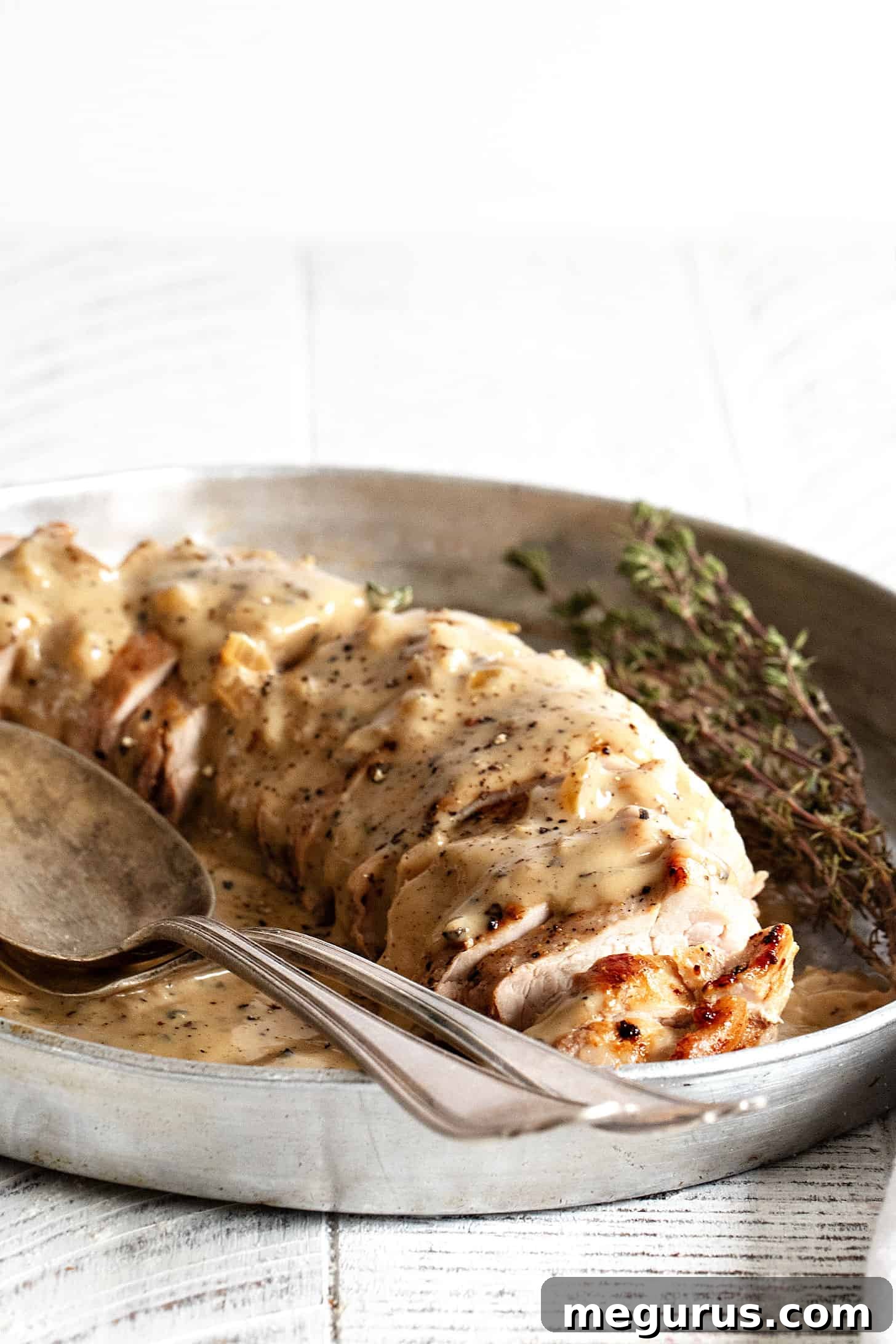
The rich and savory peppercorn gravy is truly the highlight of this dish, and it absolutely begs to be served with something comforting that can soak up every last drop. Here are some fantastic pairing ideas to complete your meal:
- Mashed Potatoes: Classic creamy mashed potatoes are an unparalleled choice. Consider infusing them with roasted garlic or a hint of chives for an extra layer of flavor.
- Roasted Potatoes: Crispy on the outside, fluffy on the inside, roasted potatoes (such as rosemary-garlic roasted new potatoes or smashed potatoes) offer a wonderful textural contrast.
- Rice Pilaf or Quinoa: For a lighter carbohydrate option, a savory rice pilaf or fluffy quinoa can perfectly complement the pork and gravy.
- Pasta: A simple buttered pasta or egg noodles can also be a delightful vehicle for the rich sauce.
- Green Vegetables: Balance the richness with vibrant green vegetables. Steamed or roasted asparagus, tender green beans almondine, or sautéed broccoli rabe would be excellent choices.
- Fresh Salad: A crisp, refreshing green salad with a light vinaigrette provides a nice counterpoint to the decadent flavors of the main course.
- Crusty Bread: Don’t forget a warm, crusty baguette or dinner rolls to sop up any leftover gravy on your plate!
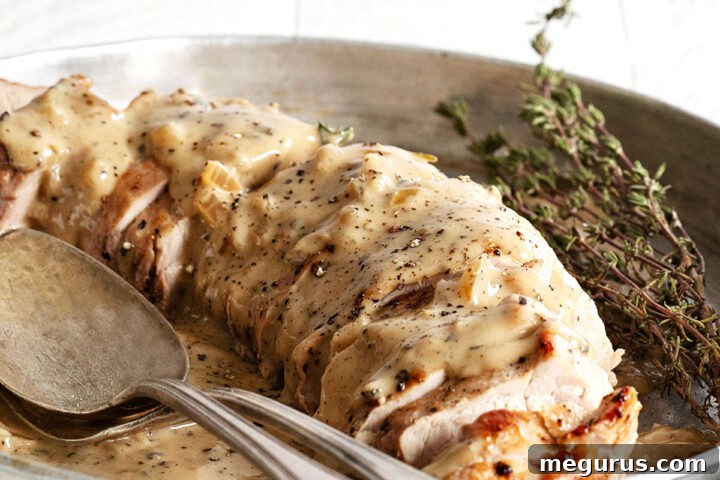
Get the Recipe: Pork Tenderloin with Peppercorn Gravy
Pin This
Leave a Review
Ingredients
- 1 – 1 1/4 lb. pork tenderloin, silver skin and any visible fat removed
- Salt and freshly ground pepper, to taste
- Olive oil, for the pan
For the Peppercorn Gravy:
- 1 Tablespoon unsalted butter
- 1/4 cup onion, very finely chopped (about half a small onion)
- 2 – 3 teaspoons crushed whole peppercorns, use black, green, or red, or a mixture (see Note 1)
- 1/4 – 1/3 cup dry red or white wine, or substitute with additional broth (see Note 2)
- 1 cup chicken or beef broth, (see Note 2 for pairing suggestions)
- 1/2 teaspoon Dijon mustard
- 1/2 teaspoon fresh thyme leaves, or a generous pinch of dried thyme
- 1/4 cup heavy whipping cream , 35% b.f. (optional, for a richer sauce; see Note 3)
- Salt and freshly ground pepper, to taste
For Thickening (use as needed):
- 2 Tablespoons cornstarch
- 1 Tablespoon cold water
Instructions
-
Preheat your oven to 425°F (220°C). This ensures the oven is at the correct temperature for even cooking.
-
Prepare the pork tenderloin by carefully removing the silver skin and any other visible excess fat. Season the entire tenderloin generously with salt and a little freshly ground black pepper. Set aside while you prepare your skillet.
-
Heat an oven-proof skillet (such as cast iron or stainless steel) on the stovetop over medium-high heat. Add a splash of olive oil and let it heat until shimmering. Carefully add the seasoned pork tenderloin to the hot skillet. Sear the pork on all sides, turning as needed, until it is beautifully golden brown and caramelized, typically about 2-3 minutes per side, for a total of 8-10 minutes. This searing step locks in flavor and moisture.
-
Transfer the skillet containing the seared pork directly into the preheated oven. Roast for approximately 20-25 minutes, or until the pork reaches an internal temperature of 145°F (63°C) when measured with an instant-read thermometer in the thickest part of the meat. Be careful not to overcook.
-
While the pork is roasting, take this opportunity to gather and measure out all your peppercorn gravy ingredients. Having them ready will make the gravy-making process seamless once the pork is out of the oven.
-
Once the pork reaches 145°F, carefully remove the hot skillet from the oven. Transfer the cooked pork tenderloin to a clean cutting board to rest. Loosely tent it with a piece of aluminum foil to keep it warm and allow the juices to redistribute for maximum tenderness (rest for 5-10 minutes).
-
Return the hot skillet to the stovetop over medium-high heat (do not clean it, as the browned bits are flavorful). Add the butter and let it melt, scraping up any browned bits (fond) from the bottom of the pan with a wooden spoon or spatula. Add the finely chopped onions and crushed peppercorns to the skillet. Sauté, stirring frequently, until the onions begin to soften and become translucent, about 1-2 minutes. Pour in the wine and cook, stirring constantly, allowing it to deglaze the pan and reduce until mostly evaporated, which should take about 1 minute. Next, add the broth, Dijon mustard, and thyme. Reduce the heat to medium and let the sauce gently simmer and reduce for a few minutes to allow the flavors to meld and the sauce to thicken slightly. If using, stir in the heavy cream until combined and warmed through. Taste the sauce and adjust seasoning with salt and pepper as needed. To thicken the gravy further, combine cornstarch and cold water in a small bowl, stirring until a smooth slurry forms. Gradually whisk small amounts of this slurry into your hot gravy, stirring well after each addition, until your desired thickness is achieved. Be cautious not to add too much at once.
-
Once rested, slice the pork tenderloin into medallions, about 1/2 to 3/4 inch thick. Arrange the slices on a serving platter and generously spoon the hot peppercorn gravy over the top. Serve immediately with your favorite side dishes.
Notes
Note 2: Wine and Broth Combinations: The choice of wine and broth can significantly impact the gravy. For a richer, darker gravy, combine red wine with beef broth. For a lighter, brighter sauce, white wine and chicken broth are an excellent pairing. If you choose to omit wine entirely, simply replace the wine volume with additional broth to maintain the liquid content of the sauce.
Note 3: Cream for Smoothness and Richness: Heavy whipping cream (35% butterfat) is highly recommended for this recipe. Its higher fat content acts as a stabilizer, preventing the sauce from splitting or curdling when combined with the acidic wine. While lighter creams can be used, they carry a higher risk of splitting, which can result in a less smooth sauce with small, unappealing fatty chunks. However, if you prefer a non-creamy or dairy-free sauce, you can simply omit the cream altogether; the gravy will still be wonderfully flavorful.