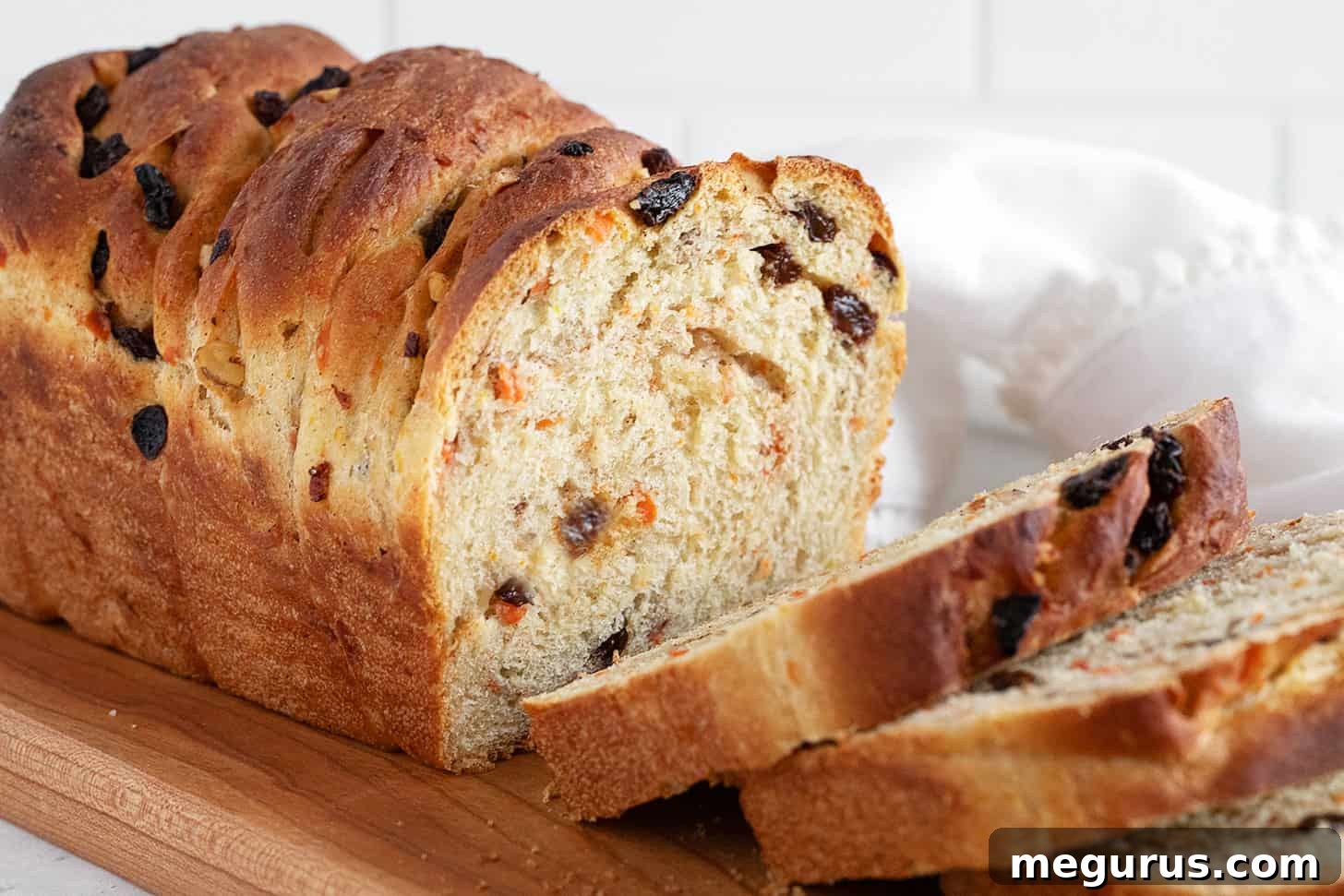
Irresistible Carrot Raisin Yeast Bread: Your New Favorite “Carrot Cake” Loaf
Imagine the warm, spiced comfort of a classic carrot cake, but in the inviting form of a soft, tender yeast bread. This isn’t just any loaf; our Carrot Raisin Yeast Bread captures all those beloved flavors – the subtle sweetness of carrots, the chewiness of plump raisins, a hint of fragrant cinnamon, and the satisfying crunch of walnuts – all baked into a wonderfully versatile bread. Deliciously eaten as is, it makes truly fabulous toast for your morning routine. Got leftovers? They’re absolutely perfect for transforming into the most incredible French toast or creating delightful bread pudding muffins!
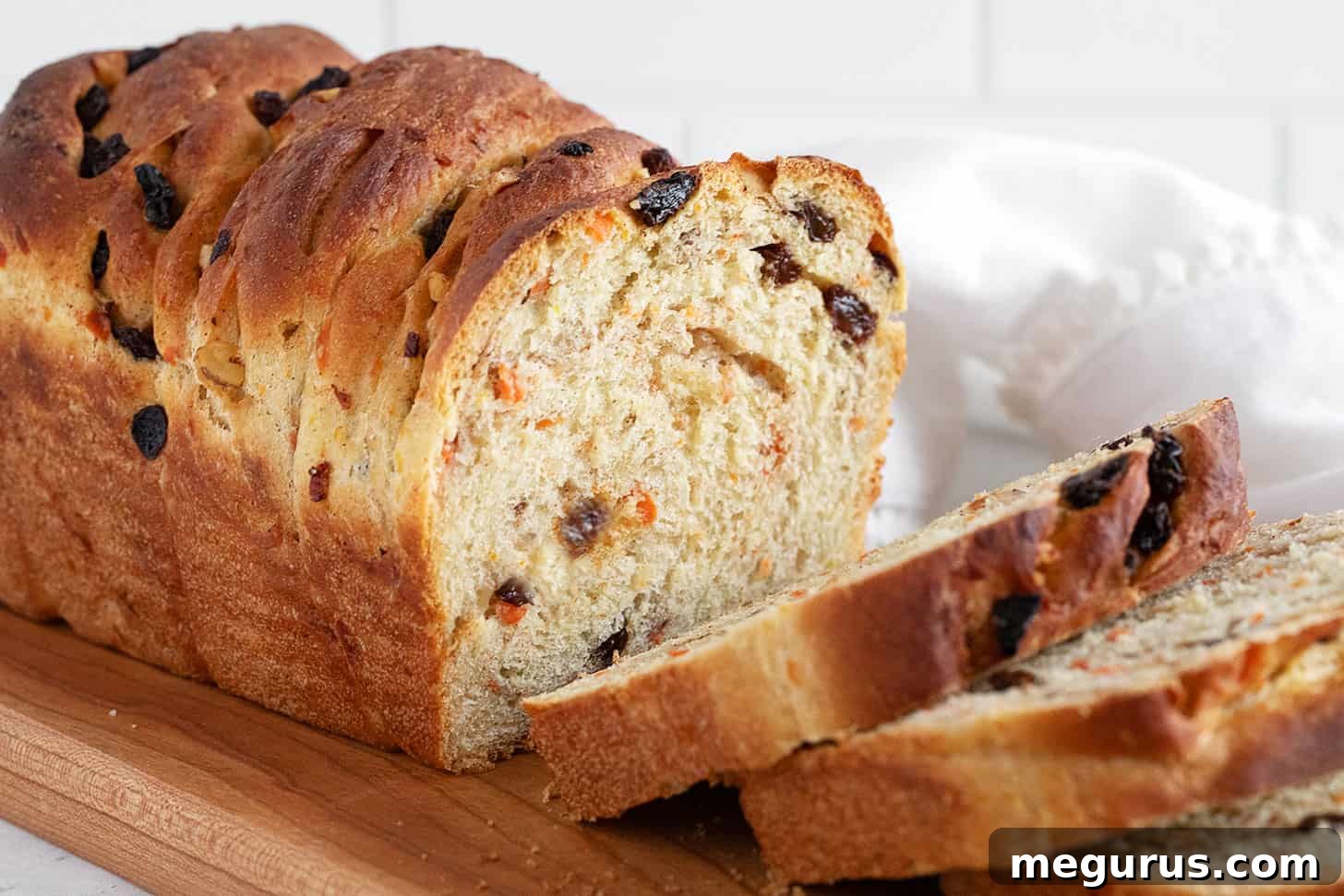
This exquisite carrot raisin bread perfectly channels the iconic flavors of carrot cake, presenting them in a comforting and hearty yeast bread format. It’s an ideal bread to have gracing your kitchen counter, especially wonderful during holiday seasons like Easter, ready for anyone to grab a slice or toast up for a quick and satisfying breakfast or snack. Its delightful aroma alone will fill your home with warmth and joy, inviting everyone to partake in its wholesome goodness.
Perhaps the most exciting aspect of this bread, beyond its initial deliciousness, is its incredible versatility. Any leftover slices can be transformed into new, equally delectable treats! Read on to discover how you can easily repurpose this flavorful loaf into gourmet French toast or charming bread pudding muffins, ensuring no crumb goes to waste and every meal is a celebration.
The Secret to Delicious Carrot Raisin Yeast Bread: A Deep Dive into Key Ingredients
Crafting the perfect loaf begins with understanding the role each ingredient plays. Here’s a closer look at the key components that give our Carrot Raisin Yeast Bread its unique character:
Carrots: The Heart of the Flavor
You’ll typically need one medium to large carrot for this recipe, yielding about one cup when grated. The secret to integrating carrots seamlessly into this bread, ensuring they contribute moisture and flavor without being too crunchy, lies in a brief par-cooking step. We cook the carrots just enough to soften them slightly and mellow out their raw flavor, yet they retain enough firmness to be easily grated with a box grater. This method ensures a tender texture throughout the loaf and enhances the carrot’s natural sweetness.
Raisins: Sweet Bursts in Every Bite
For this recipe, you have the freedom to choose your favorite type of raisin. Thompson raisins are a classic choice and work wonderfully, providing a sweet, chewy contrast to the bread’s texture. Sultanas, known for their lighter color and slightly sweeter taste, are another excellent option, as are golden raisins which offer a brighter flavor profile. For an even more complex experience, don’t hesitate to use a delightful mixture of different raisin varieties. Remember to plump your raisins in hot water before adding them to the dough; this rehydrates them, making them extra juicy and preventing them from absorbing moisture from your bread, which could lead to a dry loaf.
Walnuts: The Classic Carrot Cake Crunch
Walnuts are the quintessential “carrot cake” nut, providing a delightful earthy crunch and rich flavor that complements the carrots and spices beautifully. If walnuts aren’t your preference, pecans make an excellent substitution, offering a similar texture and a slightly buttery, sweet note. For those with nut allergies or simply preferring a nut-free bread, feel free to omit them entirely; the bread will still be incredibly delicious. If you do include nuts, a quick toast in a dry skillet before adding them can deepen their flavor significantly.
Yeast: The Lifeblood of Your Loaf
This versatile recipe accommodates both Active Dry Yeast and Instant Yeast. The key difference lies in their preparation: Active Dry Yeast typically requires “proofing” in warm water to activate, while Instant Yeast can often be mixed directly with dry ingredients. Regardless of which you choose, ensuring your yeast is fresh and properly activated is crucial for a successful rise. Lukewarm water (around 105°F / 40°C) is ideal for waking up the yeast without killing it, leading to a light and airy crumb.
Other Essential Flavors: Cinnamon, Orange Zest & More
Beyond the main stars, ingredients like ground cinnamon are vital for that signature carrot cake flavor. A touch of fresh orange zest elevates the taste, adding a bright, aromatic note that beautifully cuts through the richness. White granulated sugar provides sweetness and helps activate the yeast, while fine table salt balances the flavors. A neutral vegetable oil contributes to the bread’s moistness and tender crumb.
Crafting Your Perfect Loaf: Step-by-Step Guide to Carrot Raisin Yeast Bread
Baking homemade bread is a rewarding experience, and this Carrot Raisin Yeast Bread is no exception. Follow these visual and descriptive steps to achieve a perfectly flavorful and beautifully structured loaf. A full, detailed recipe card with exact measurements is provided further down.
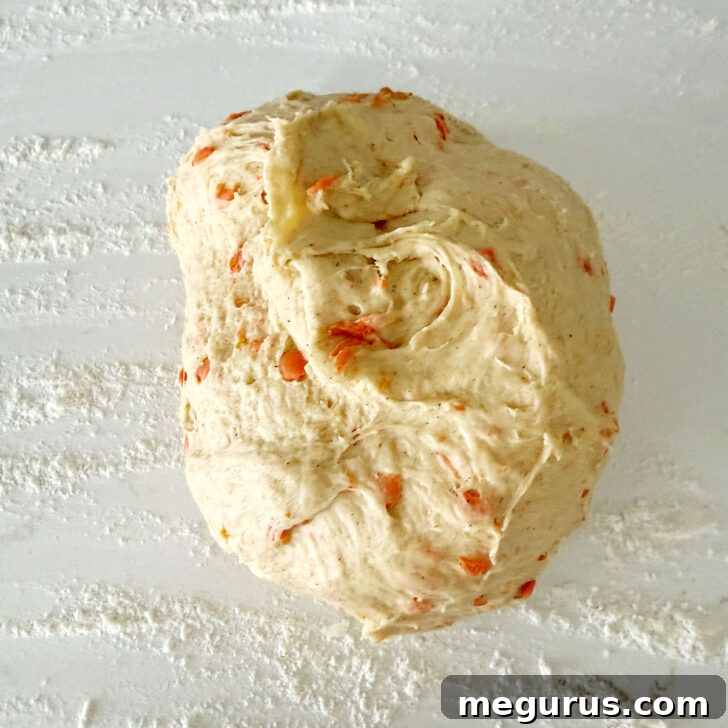
Once your dough is mixed and kneaded to a soft, moist consistency, remove it to a lightly floured work surface. Gently form it into a smooth ball. Cover it with a clean, floured towel and allow it to rest for 30 minutes. This resting period, known as “bench rest,” helps the gluten relax, making the dough much easier to roll out in the next step.
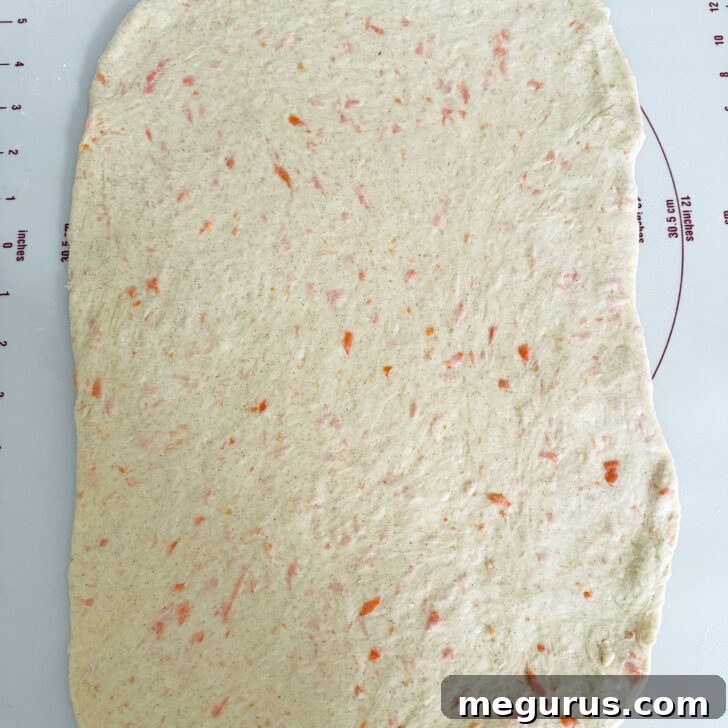
After resting, gently deflate the dough. Using a rolling pin, roll the dough into a uniform rectangle, aiming for dimensions of approximately 10×16 inches. Try to keep the thickness as even as possible across the entire surface; this ensures your fillings are evenly distributed when rolled.
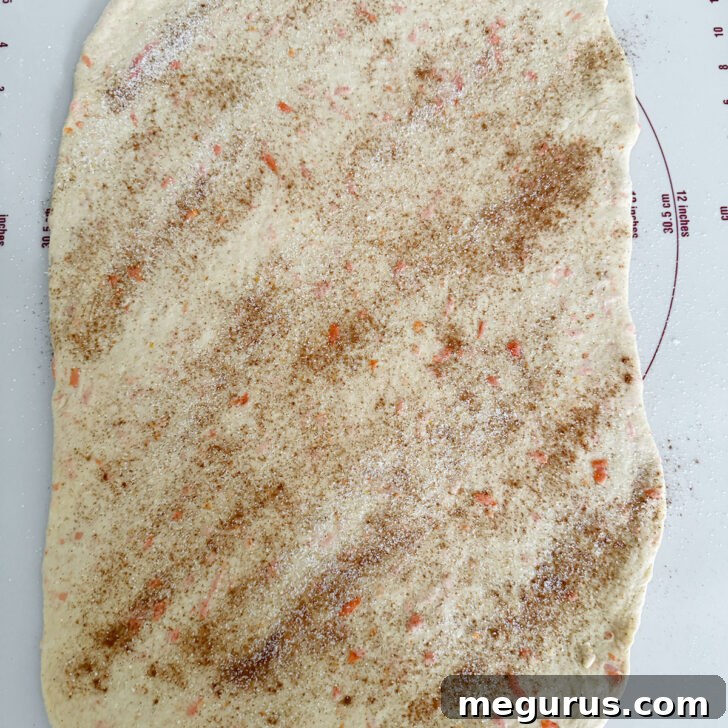
Once your dough is rolled into a rectangle, lightly sprinkle a mixture of white granulated sugar and ground cinnamon evenly over the entire surface. This not only adds sweetness and spice but also creates a beautiful swirl effect within the finished loaf.
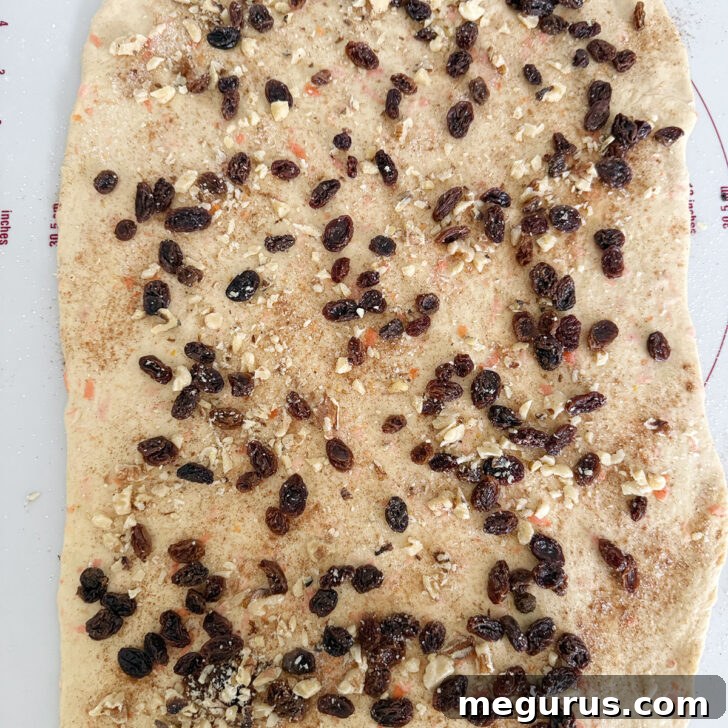
Next, scatter the plumped and dried raisins, along with the chopped walnuts, evenly over the cinnamon-sugar mixture. Distributing them well ensures that every slice of bread will have a delightful mix of flavors and textures.
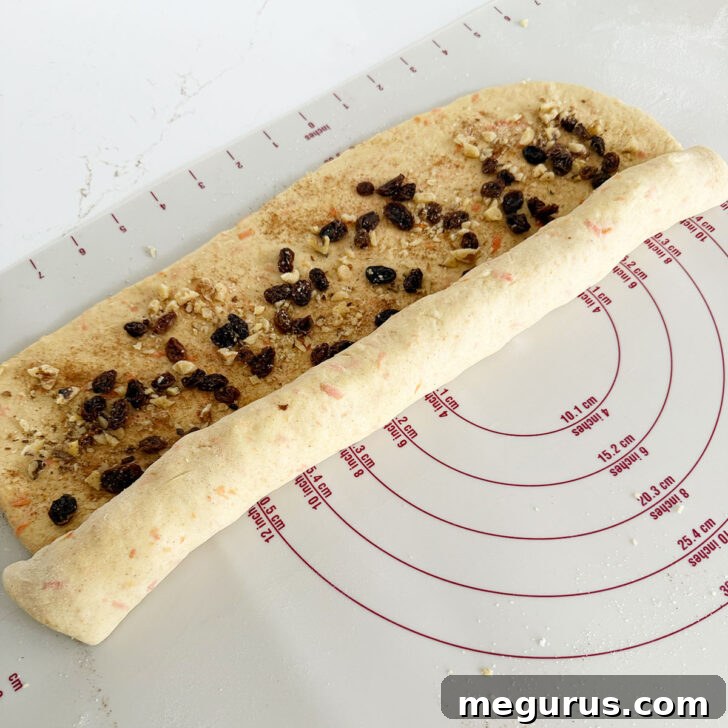
Carefully begin rolling the dough up tightly from one of the long sides, much like you would a jelly roll. Ensure the roll is firm and even. Once fully rolled, pinch the seam along the bottom to seal it securely. This creates the base for our braided loaf.
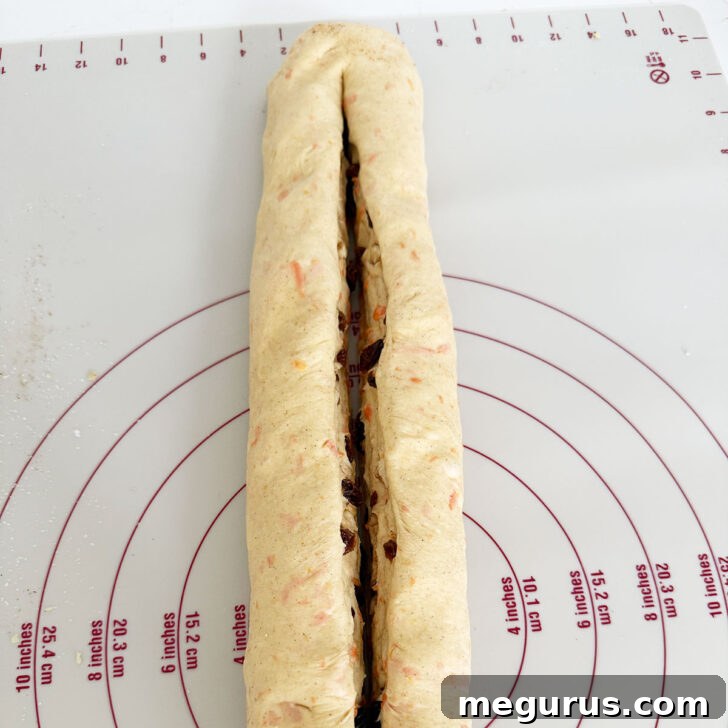
Using a very sharp knife or a bench scraper, carefully slice the rolled dough lengthwise down the exact center. Start about an inch from one end, leaving that end attached, and slice all the way through to the other end. This creates two distinct strands with the delicious fillings exposed.
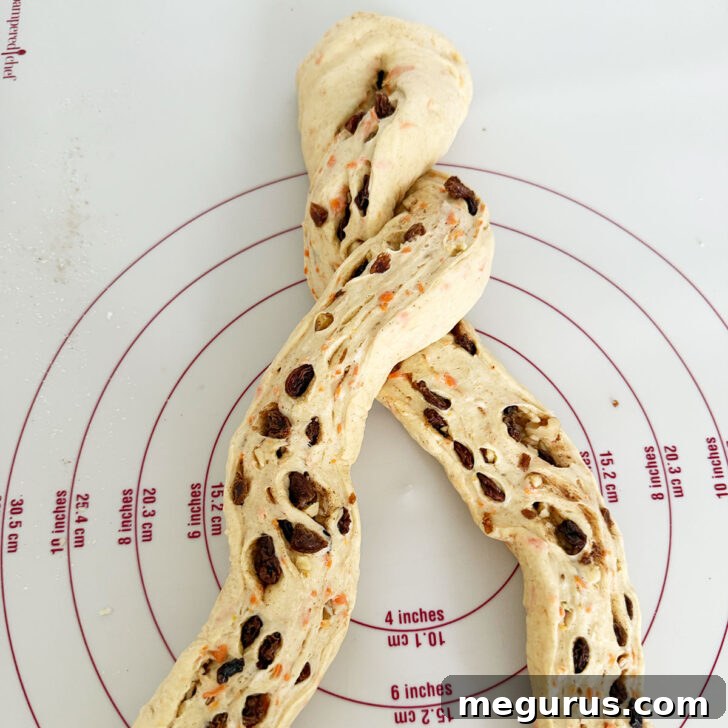
With the two strands created, gently twist them together, almost like braiding. Start from the attached end and work your way down, carefully intertwining the strands. This technique creates a beautiful, rustic swirl pattern in the final baked loaf. Pinch the loose ends together to seal.
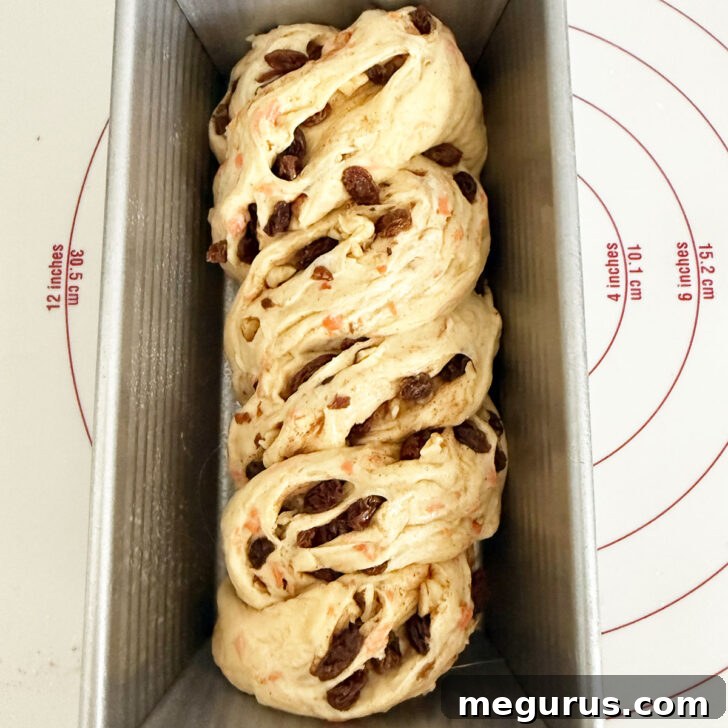
Gently transfer the twisted dough into your prepared, greased loaf pan. Cover the pan loosely with plastic wrap (sprayed with cooking spray on the underside to prevent sticking) and let it rise in a warm spot until it has significantly expanded and just crests the sides of the pan, about 1 hour. Once risen, bake in a preheated oven until golden brown and cooked through. Allow to cool slightly before slicing and savoring!
Beyond the Loaf: Creative Uses for Leftover Carrot Raisin Bread
While this carrot raisin yeast bread is undoubtedly delicious on its own, it truly shines when given a second life. Don’t let a single slice go to waste – transform your leftovers into these incredibly indulgent and satisfying treats!
Gourmet French Toast
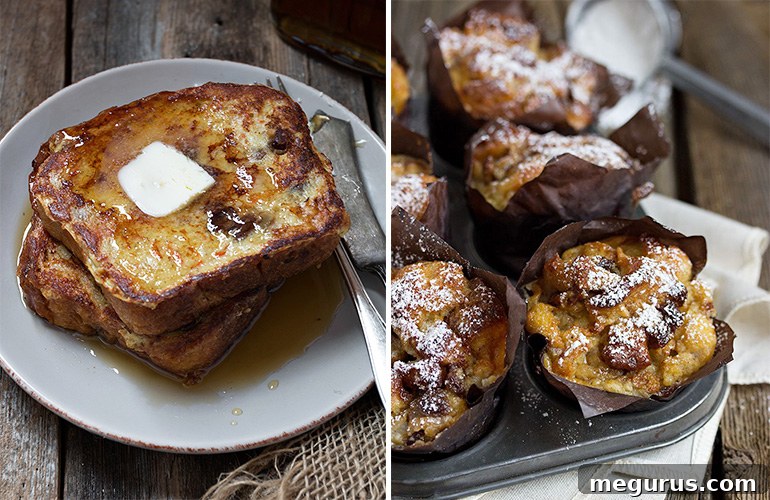
Elevate your breakfast game by turning this delightful bread into the most flavorful French Toast you’ve ever tasted! The subtle sweetness and spice of the carrot bread perfectly complement the classic custard soak. For every two thick slices of bread, simply whisk together 1/2 cup of milk (dairy or non-dairy), 1 large egg, and a dash of vanilla extract. Place your thick slices into this mixture, allowing them to soak for several minutes on each side to absorb all that eggy goodness. Cook in a lightly greased non-stick skillet over medium heat until beautifully golden brown and lightly crispy on both sides. Serve immediately with a generous drizzle of warm maple syrup, fresh berries, a dollop of whipped cream, or even a sprinkle of powdered sugar for a truly decadent breakfast experience.
Delightful Bread Pudding Muffins
For a charming and comforting dessert or brunch item, transform your leftover carrot bread into individual Bread Pudding Muffins. Start with about 4 thick slices of this luscious carrot bread, cut into 1-inch cubes. Place the cubes in a bowl and combine with 2 large eggs, 3 tablespoons of granulated sugar, and 1 cup of half-and-half (10% cream). Gently toss to ensure all bread cubes are coated, then let the mixture stand for at least 30 minutes, allowing the bread to fully absorb the liquid. Spoon about 1/2 cup of the bread mixture into each cup of a greased muffin tin, pouring any remaining liquid evenly over the top. Bake in a preheated 325°F (160°C) oven for 40-45 minutes, or until the muffins are golden brown and set. These are best served warm, perhaps with an extra drizzle of maple syrup, a scoop of vanilla ice cream, or a dusting of cinnamon sugar. You can even add a handful of chocolate chips or extra nuts to the mixture before baking for an added treat!
Making Ahead, Storing, and Freezing Your Carrot Raisin Yeast Bread
Proper storage is key to extending the life and freshness of your homemade bread. Whether you’re planning ahead for a special occasion or simply want to savor your loaf for days to come, these tips will help keep your Carrot Raisin Yeast Bread at its best.
Storing Baked Bread at Room Temperature
Once your bread has completely cooled, it can be stored at room temperature for up to 3 days. To maintain its freshness and prevent it from drying out, place the loaf in an airtight container, a sealed plastic bag, or a bread bag. Avoid refrigerating yeast bread, as it tends to dry out faster in the fridge.
Freezing for Long-Term Freshness
If you wish to make this bread ahead for an event or simply enjoy fresh-baked taste anytime, freezing is an excellent option. Bread freezes beautifully and is a fantastic way to lock in that just-baked freshness. Ensure the bread is completely cool before freezing. Wrap the entire loaf tightly in plastic wrap, then add a layer of aluminum foil. This double-layer protection helps prevent freezer burn. It can be stored in the freezer for up to 3 months.
Thawing and Reheating Tips
To thaw frozen bread, simply remove it from the freezer and allow it to come to room temperature on the counter, keeping it wrapped in its plastic and foil. This helps to retain moisture. Once thawed, you can warm slices in a toaster, toaster oven, or even a conventional oven (wrapped in foil at 300°F/150°C for 10-15 minutes) to bring back that warm, fresh-from-the-oven feel and aroma.
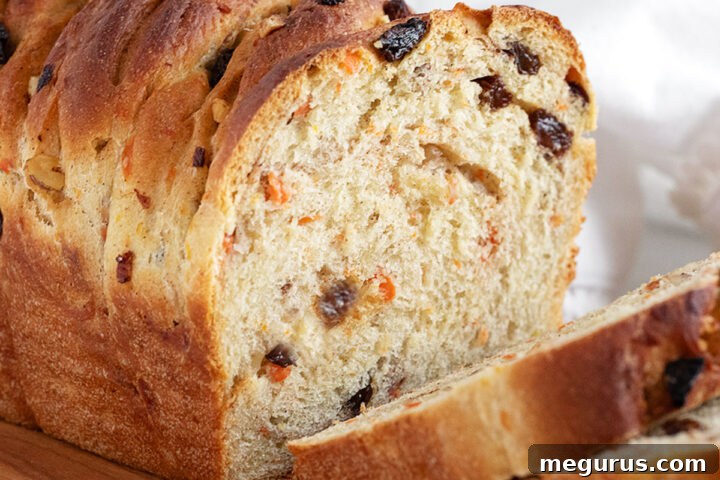
Get the Recipe: Carrot Raisin Yeast Bread
This delicious yeast bread channels the comforting flavors of carrot cake, featuring tender carrots, plump raisins, crunchy walnuts, and aromatic cinnamon. It’s fantastic eaten plain, makes incredible toast, or can be used to create the most delicious French toast!
Pin This
Leave a Review
Ingredients
- 1 large carrot, peeled (about 1 cup grated)
- ¾ cup lukewarm water (about 105°F / 40°C)
- 1 Tablespoon Active Dry or Instant yeast
- 2 ½ Tablespoons white granulated sugar, plus more for sprinkling
- 1 teaspoon fine table salt
- 2 Tablespoons vegetable oil, or a similar neutral cooking oil
- 1 teaspoon ground cinnamon, plus more for sprinkling
- Zest of ½ orange
- 2 ½ – 3 cups all-purpose flour
- ½ cup raisins, plumped in hot water and patted dry (see notes below)
- ¼ cup walnuts, chopped
Instructions
- Grease or spray an 8×4-inch loaf pan with cooking spray and set aside.
- Cut the peeled carrot in half crosswise into two pieces. Cook the carrots in a pot of boiling water until just fork-tender, about 3-5 minutes. Drain and immediately rinse with cold water to stop the cooking. Use a box grater to grate the carrot. Measure out the 1 cup needed and set aside.
- In a large bowl or the bowl of a stand mixer fitted with a kneading hook, combine the lukewarm water and yeast. Stir gently and let stand for about 5 minutes to activate the yeast. Stir in the grated carrots, white sugar, salt, oil, cinnamon, orange zest, and 2 ½ cups of the all-purpose flour.
- Mix with the kneading hook on low speed until the flour is moistened and a shaggy dough forms. Begin gradually adding the remaining ½ cup of flour, a couple of tablespoons at a time, until the dough cleans the sides of the bowl and wraps around the kneading hook. Continue kneading with the kneading hook for 8-10 minutes, adding a tiny bit more flour if the dough is too sticky, until you achieve a soft, moist, and elastic dough. Remove the dough to a lightly floured surface and form it into a smooth ball. Cover with a floured, clean towel and let rest for 30 minutes.
- Gently deflate the rested dough. With a rolling pin, roll the dough into a rectangle approximately 10×16 inches. Evenly sprinkle the dough with a bit more cinnamon and white sugar, then scatter the plumped and dried raisins and chopped walnuts over the top.
- Starting with one of the long edges, carefully roll the dough up jelly-roll style into a tight cylinder and pinch the seam along the bottom to seal it securely. With a sharp knife, slice lengthwise down the center of the roll, starting about 1 inch from one end, but slicing all the way through to the other end. (Refer to the step-by-step photos above for visual clarity on this unique shaping technique.)
- Gently twist the two dough strands together, creating a beautiful braid-like pattern, and pinch together the loose ends to seal. Carefully rearrange the twisted dough, gently pushing in from the ends to shorten the loaf slightly so it fits snugly into your prepared 8×4-inch loaf pan. Transfer the dough to the loaf pan.
- Lightly spray a piece of plastic wrap with cooking spray and loosely place it over the loaf pan, sprayed side down. Allow the loaf to rise in a warm place until it has risen significantly and just crests the side of the pan, which typically takes about 1 hour. (Rising times can vary depending on your kitchen’s temperature and humidity, so watch the loaf’s volume rather than strictly the clock.)
- While the bread is undergoing its final rise, preheat your oven to 350°F (175°C) for a non-convection/not fan-assisted oven.
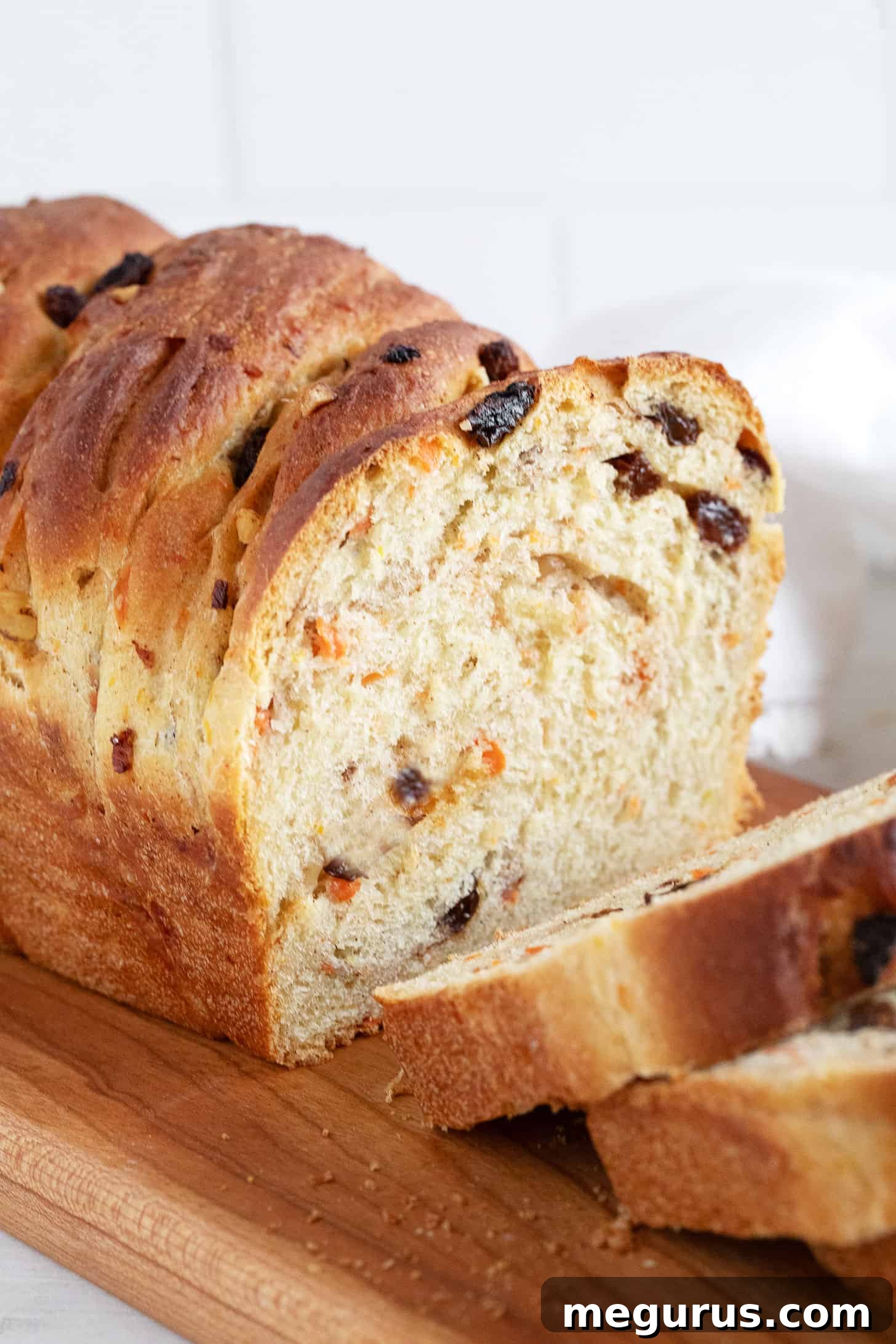
- Bake in the preheated oven for 35-40 minutes. Check the loaf after about 25 minutes of baking; if it appears sufficiently browned, loosely tent it with aluminum foil to prevent further darkening while allowing the interior to cook through. The bread is done when an instant-read thermometer inserted into the center reaches an internal temperature of 195°F (90°C). Let the bread cool in the pan on a wire cooling rack for 10 minutes before carefully removing it from the pan. Allow it to cool completely on the rack before slicing for the best texture and to prevent a gummy interior.
- Store cooled bread in an airtight container or bread bag at room temperature for up to 3 days. Alternatively, wrap well and freeze for up to 3 months.
Notes
To plump raisins: Place the desired amount of raisins in a small bowl. Cover them completely with hot tap water and let them stand for about 15 minutes. Drain the water thoroughly and pat the raisins completely dry with a paper towel before adding them to your dough. This step ensures soft, juicy raisins that won’t absorb moisture from your bread.
Tips for Success!
Don’t forget that any leftover carrot raisin bread makes truly fabulous French Toast! You’ll find detailed instructions for this delicious transformation in the section above this recipe card. You’ll also find creative details for turning this leftover bread into individual bread pudding muffins, making it easy to enjoy every last bit of your homemade loaf.
For additional guidance, helpful step-by-step photos illustrating the dough preparation and unique shaping process are provided above this Recipe Card. These visuals can be very beneficial, especially if you’re new to yeast bread baking or this specific braiding technique.
Nutrition Facts
Serving: 1 slice (1/12 of loaf), Calories: 162kcal, Carbohydrates: 28g, Protein: 3g, Fat: 4g, Saturated Fat: 1g, Polyunsaturated Fat: 3g, Monounsaturated Fat: 1g, Trans Fat: 0.01g, Sodium: 201mg, Potassium: 112mg, Fiber: 2g, Sugar: 3g, Vitamin A: 1003IU, Vitamin C: 1mg, Calcium: 12mg, Iron: 1mg
Tried this recipe?
If you enjoyed this recipe, please consider leaving a star rating and comment. Your feedback helps others discover and love it too!
More Artisanal Bread Recipes to Explore!