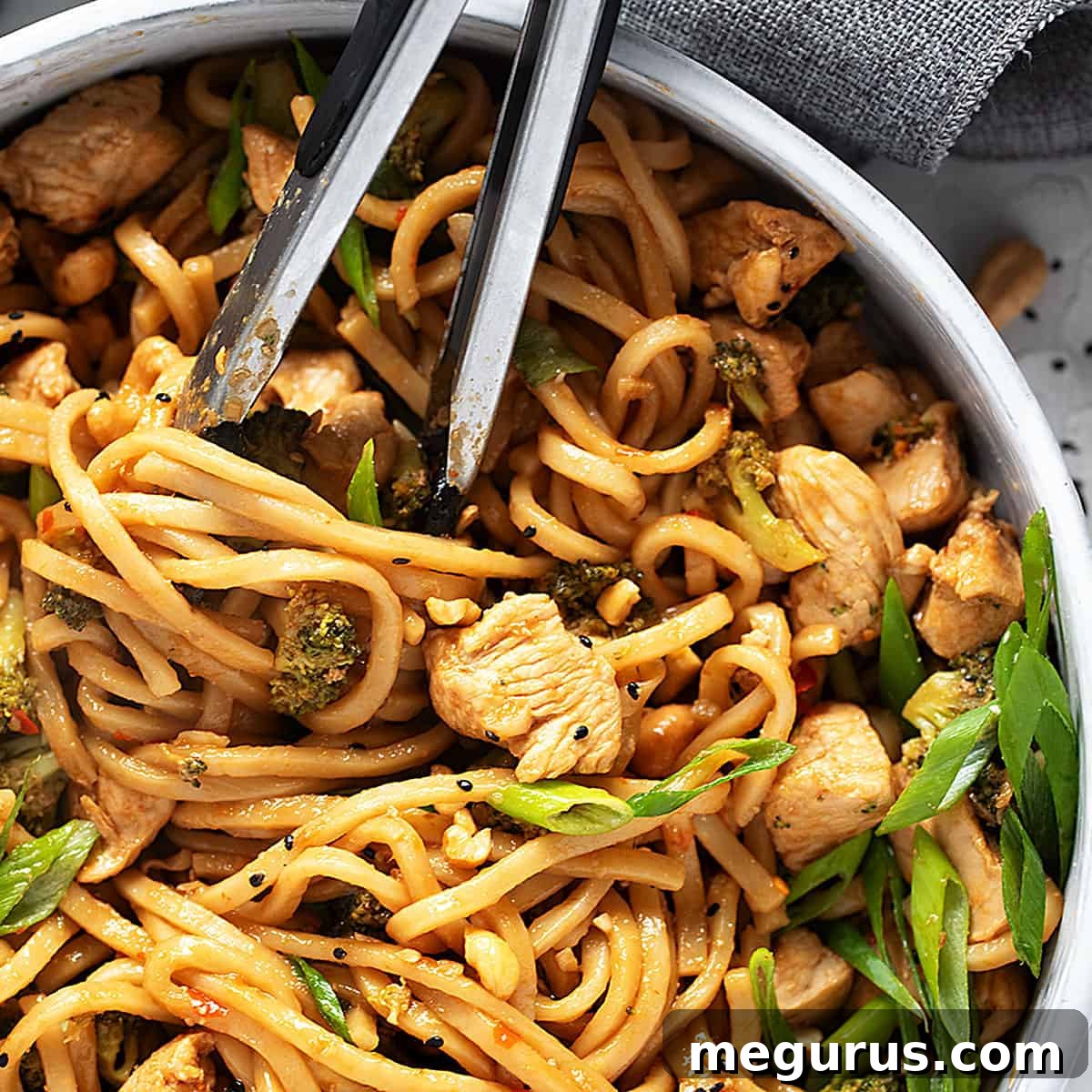
Transform your weeknights with this incredibly satisfying and remarkably quick Cashew Chicken Stir Fry with Broccoli and Udon Noodles! This dish is a true culinary hero, bringing together tender chicken, crisp-tender broccoli, and crunchy cashews, all perfectly coated in a savory, authentic Asian-inspired sauce. The star of the show, chewy udon noodles, soaks up every bit of flavor, making for a hearty and comforting meal that comes together in under 30 minutes. Forget complicated takeout; this easy one-pan wonder delivers restaurant-quality taste right to your table, proving that delicious, home-cooked Asian food doesn’t have to be a labor-intensive affair.
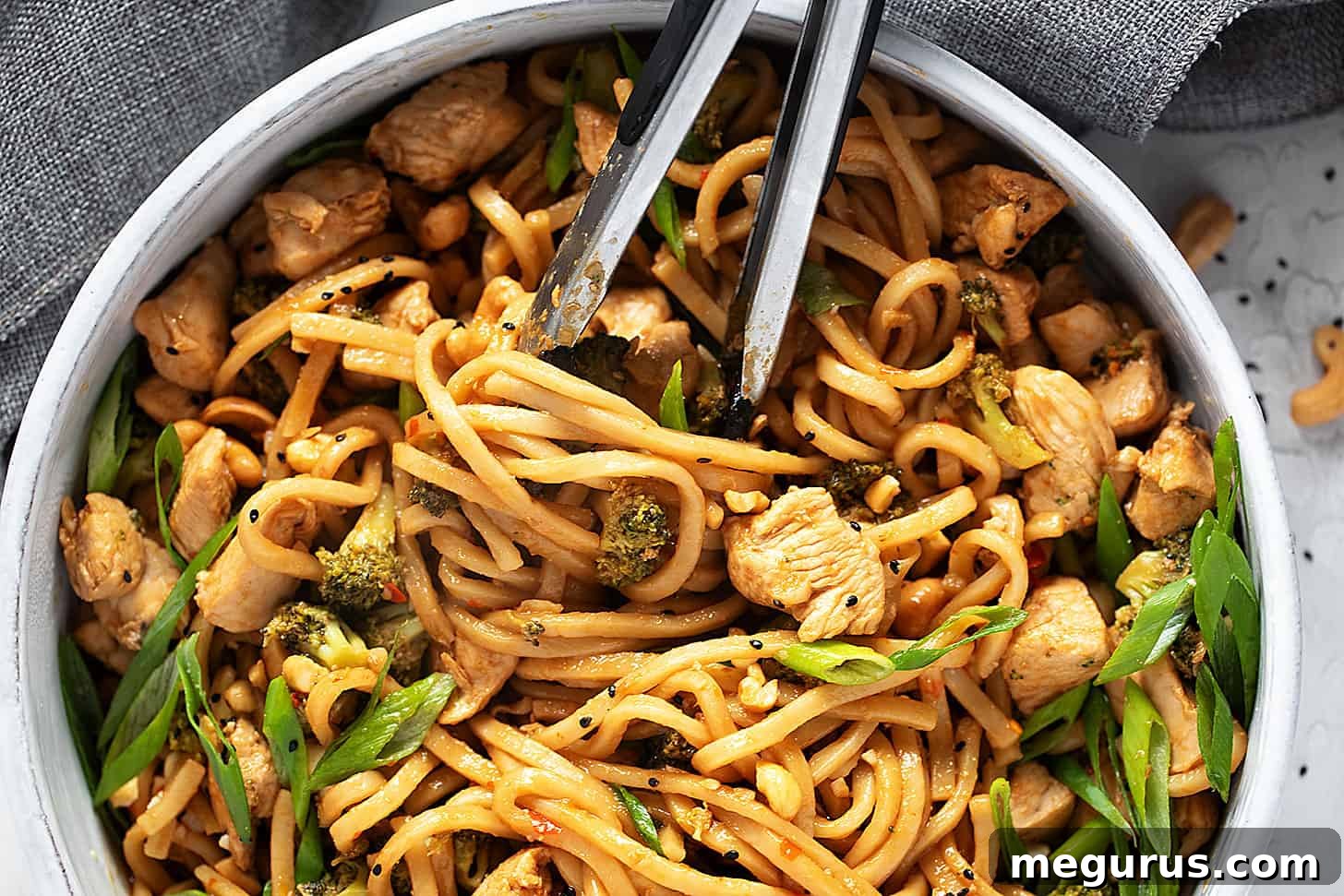
If you’re seeking a simple yet profoundly flavorful dinner solution, your search ends here. This chicken cashew noodle stir fry offers a delightful balance of textures and tastes, making it an instant family favorite. It’s the ideal choice for those busy evenings when you crave something wholesome, delicious, and made from scratch without spending hours in the kitchen. The beauty of a stir fry lies in its versatility and speed, and this recipe maximizes both, ensuring a satisfying meal every time. Prepare to impress your taste buds with minimal effort!
Why You’ll Love This Cashew Chicken Udon Stir Fry
Beyond its speed and simplicity, there are countless reasons why this Cashew Chicken Udon Stir Fry will become a staple in your recipe rotation:
- Lightning Fast: Perfect for hectic weeknights, this meal goes from pantry to plate in about 30 minutes, significantly faster than ordering takeout.
- One-Pan Convenience: Minimize cleanup with a recipe designed to be mostly cooked in a single skillet or wok, reducing your post-dinner chores.
- Flavor Explosion: A harmonious blend of savory, sweet, and spicy notes from our homemade Asian sauce, coupled with aromatic garlic and ginger, creates an unforgettable taste experience.
- Nutrient-Rich: Packed with lean protein from chicken, essential vitamins from fresh broccoli, and healthy fats from cashews, this dish is as nourishing as it is delicious.
- Textural Delight: The satisfying chewiness of udon noodles contrasts beautifully with the tender chicken, crunchy cashews, and slightly crisp broccoli.
- Highly Customizable: Easily adapt the ingredients to suit your preferences or what you have on hand, from different vegetables to various types of noodles.
- Better Than Takeout: Achieve authentic Asian flavors at home, often healthier and fresher than restaurant versions, and at a fraction of the cost.
- Family-Friendly: A crowd-pleaser that can be adjusted for spice levels, making it suitable for both adults and children.
Essential Ingredients & Smart Substitutions
Crafting the perfect Cashew Chicken Udon Stir Fry starts with quality ingredients, but don’t shy away from making smart substitutions to fit your pantry or dietary needs. Here’s a closer look at the key components:
Chicken: For this recipe, we typically use boneless, skinless chicken breast, cut into bite-sized pieces. It cooks quickly and absorbs flavors wonderfully. However, boneless, skinless chicken thighs are an excellent alternative. Thighs offer a richer flavor and tend to stay more moist, even if slightly overcooked. Ensure chicken is cut uniformly for even cooking.
Noodles: Udon noodles are our top choice for their thick, chewy texture that perfectly soaks up the stir fry sauce. You have a few options:
- **Shelf-stable udon:** Often found in vacuum-sealed packages, these can usually be added directly to the pan after a quick rinse or soak in hot water to loosen.
- **Fresh udon:** Found in the refrigerated section, these cook very quickly, usually just a minute or two in boiling water.
- **Frozen udon:** Similar to fresh, these require a few minutes in boiling water to thaw and cook through.
If udon isn’t available, other Asian noodles like ramen (without the seasoning packet), lo mein, or even spaghetti (cooked al dente and rinsed) make suitable substitutes. Always cook them according to package directions before adding to the stir fry.
Broccoli: Fresh broccoli florets add vibrant color, a healthy dose of nutrients, and a pleasant texture. We add it early for a softer bite, but for a more tender-crisp result, you can add it a few minutes later. Feel free to incorporate other vegetables like sliced bell peppers, shredded carrots, snow peas, snap peas, mushrooms, or even spinach for added greens.
Cashews: It wouldn’t be cashew chicken without the distinctive crunch of cashews! They provide a wonderful buttery texture and nutty flavor that complements the dish beautifully. You can use either salted or unsalted roasted cashews. If you’re out of cashews, roasted peanuts are a fantastic alternative, offering a similar crunch and complementary flavor. Toasted almonds could also work in a pinch.
The Irresistible Asian Stir Fry Sauce
The magic of this dish truly lies in its incredible, easy-to-make Asian sauce. It’s a harmonious blend of sweet, savory, tangy, and spicy notes that coats every ingredient beautifully:
- Sambal Oelek (or Asian Chili Garlic Sauce/Sriracha): This is where the heat comes from! Adjust the amount to your personal spice preference. Sambal Oelek is a potent chili paste, so start with a smaller amount and add more if you like things fiery.
- Low-Sodium Soy Sauce (or Tamari): Provides the essential umami and savory depth. Using low-sodium allows you to control the saltiness better. Tamari is a great gluten-free alternative.
- Rice Vinegar: Adds a crucial tangy counterpoint that brightens the sauce and balances the richer flavors. Both seasoned and unseasoned rice vinegar work well.
- Brown Sugar: A touch of light or dark brown sugar brings a subtle sweetness that balances the savory and spicy elements, giving the sauce a lovely glaze-like quality.
Other Stir-Fry Essentials:
- Sesame Oil & Cooking Oil: A blend of oils is ideal. Sesame oil provides a distinct nutty aroma that defines many Asian dishes, while a neutral cooking oil (like vegetable, canola, or grapeseed oil) is used for searing at higher temperatures.
- Garlic & Fresh Ginger: These aromatic powerhouses are the backbone of any good stir fry, providing pungent, warming notes. Freshly minced garlic and grated ginger make a huge difference in flavor. If you have ginger garlic paste on hand, it’s a convenient substitute.
- Green Onions & Sesame Seeds: Used for garnish, these add freshness, a mild oniony bite, and visual appeal, elevating the finished dish.
Crafting Your Chicken Cashew Udon Noodles: A Step-by-Step Guide
Making this delightful stir fry is surprisingly straightforward, perfect for even novice cooks. Follow these visual and detailed instructions for a delicious result. Remember, the full recipe card below provides precise measurements and additional notes.
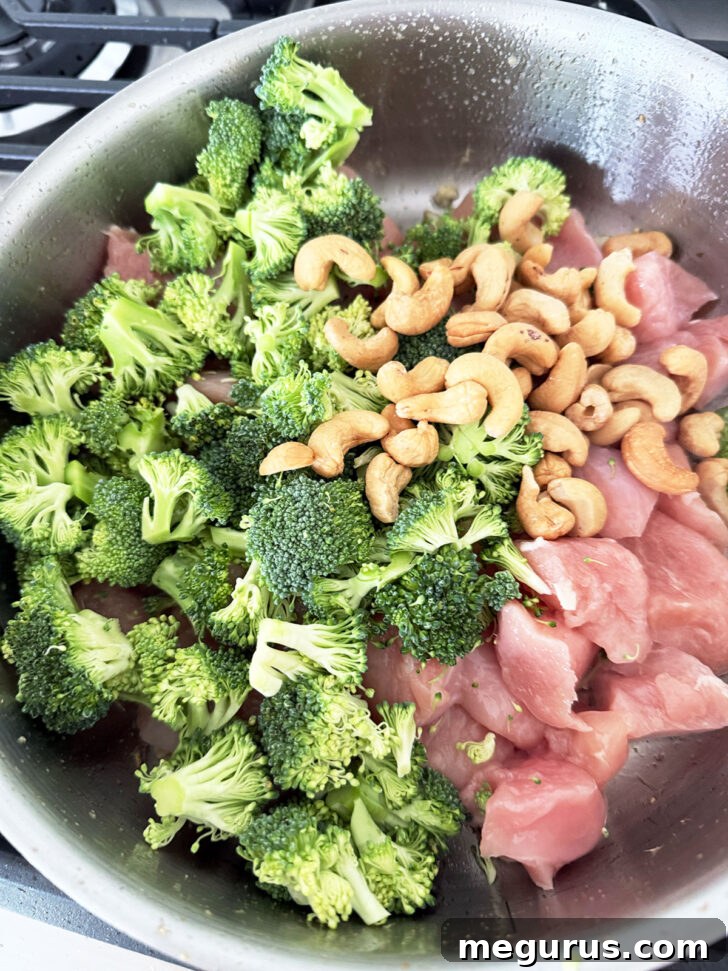
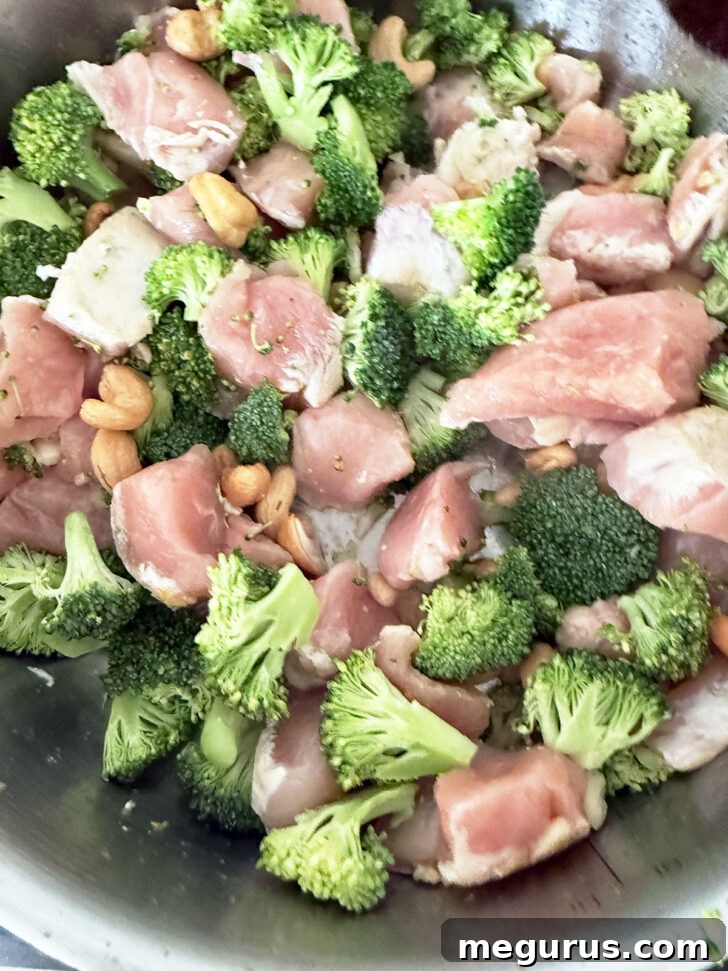
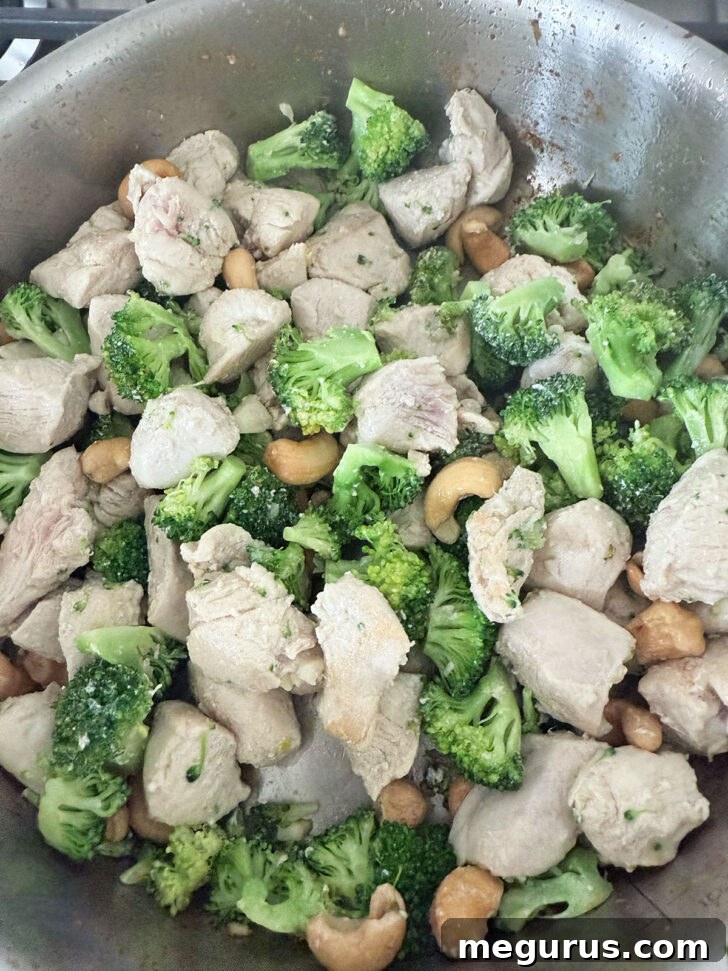
- Prepare Your Ingredients (Mise en Place): The key to a successful stir fry is having all your ingredients prepped and ready before you start cooking. Cut your chicken into bite-sized pieces, chop your broccoli florets, mince the garlic, and grate the ginger. This ensures a smooth and quick cooking process.
- Whip Up the Sauce: In a small bowl or measuring cup, combine all the sauce ingredients: Sambal Oelek (or your chosen chili sauce), low-sodium soy sauce, rice vinegar, and brown sugar. Whisk until the sugar is dissolved and the sauce is well combined. Set aside. This can be done while the noodles are cooking or even a day ahead!
- Cook the Noodles: If using fresh or frozen udon noodles, bring a large pot of water to a boil and cook them according to the package instructions until al dente. For shelf-stable udon, a quick soak in hot water for about 5 minutes is usually sufficient to loosen them. Drain well.
- Sauté Aromatics: Heat the sesame oil and cooking oil in a large skillet or wok over medium-high heat. Once shimmering, add the minced garlic and grated ginger. Sauté for about 1 minute until fragrant, being careful not to burn them.
- Cook Chicken, Broccoli, and Cashews: Add the prepared chicken, broccoli, and cashews to the hot skillet. Stir fry over medium-high heat. Cook for approximately 5-7 minutes, or until the chicken is cooked through and lightly browned, and the broccoli has reached your desired tenderness. If you prefer your broccoli more tender-crisp, add it a few minutes after the chicken.
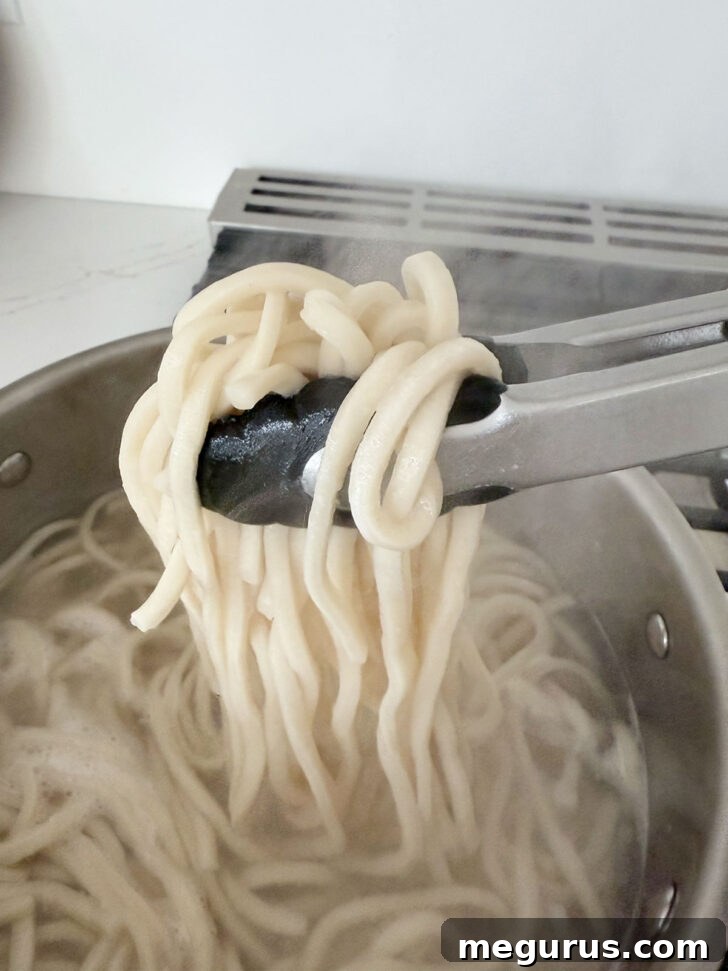
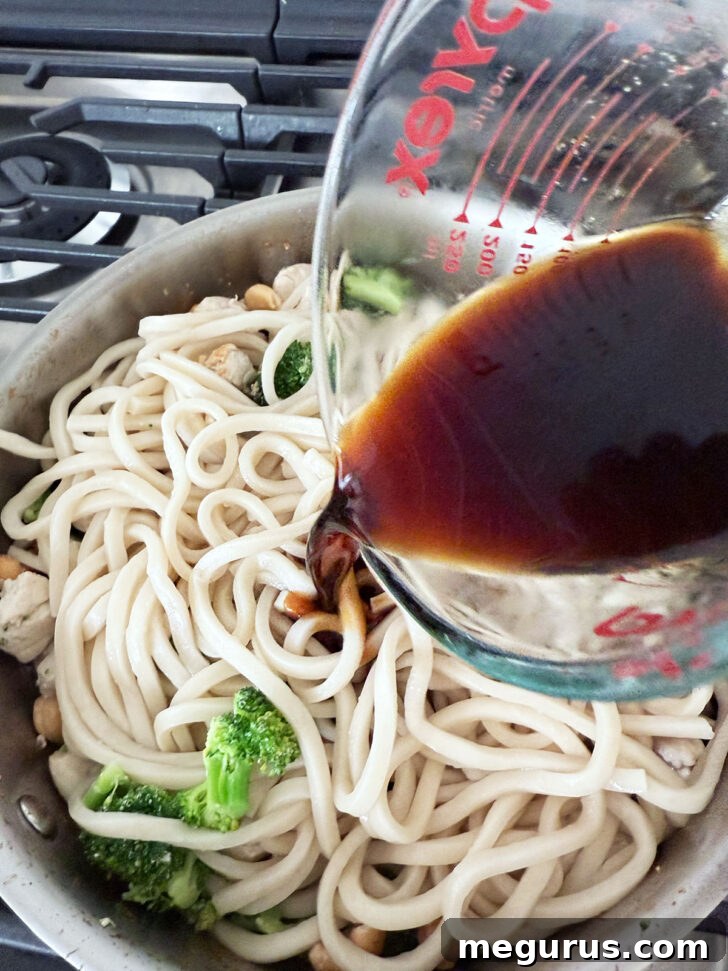
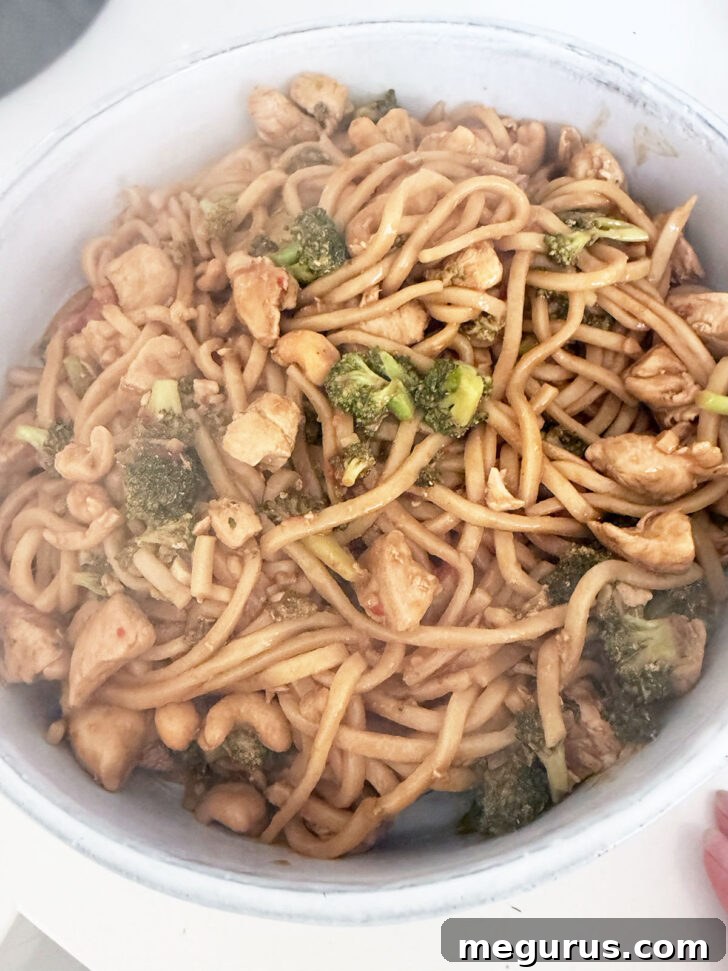
- Combine and Sauce: Once the chicken and vegetables are cooked, add the drained udon noodles to the skillet. Pour the prepared sauce evenly over all the ingredients.
- Toss and Finish: Using tongs or spatulas, toss everything together vigorously to ensure the noodles, chicken, broccoli, and cashews are thoroughly coated with the delicious sauce. Continue to cook for another 1-2 minutes, allowing the sauce to thicken slightly and fully meld with the ingredients. For shelf-stable udon, an extra minute of cooking helps them cook through completely.
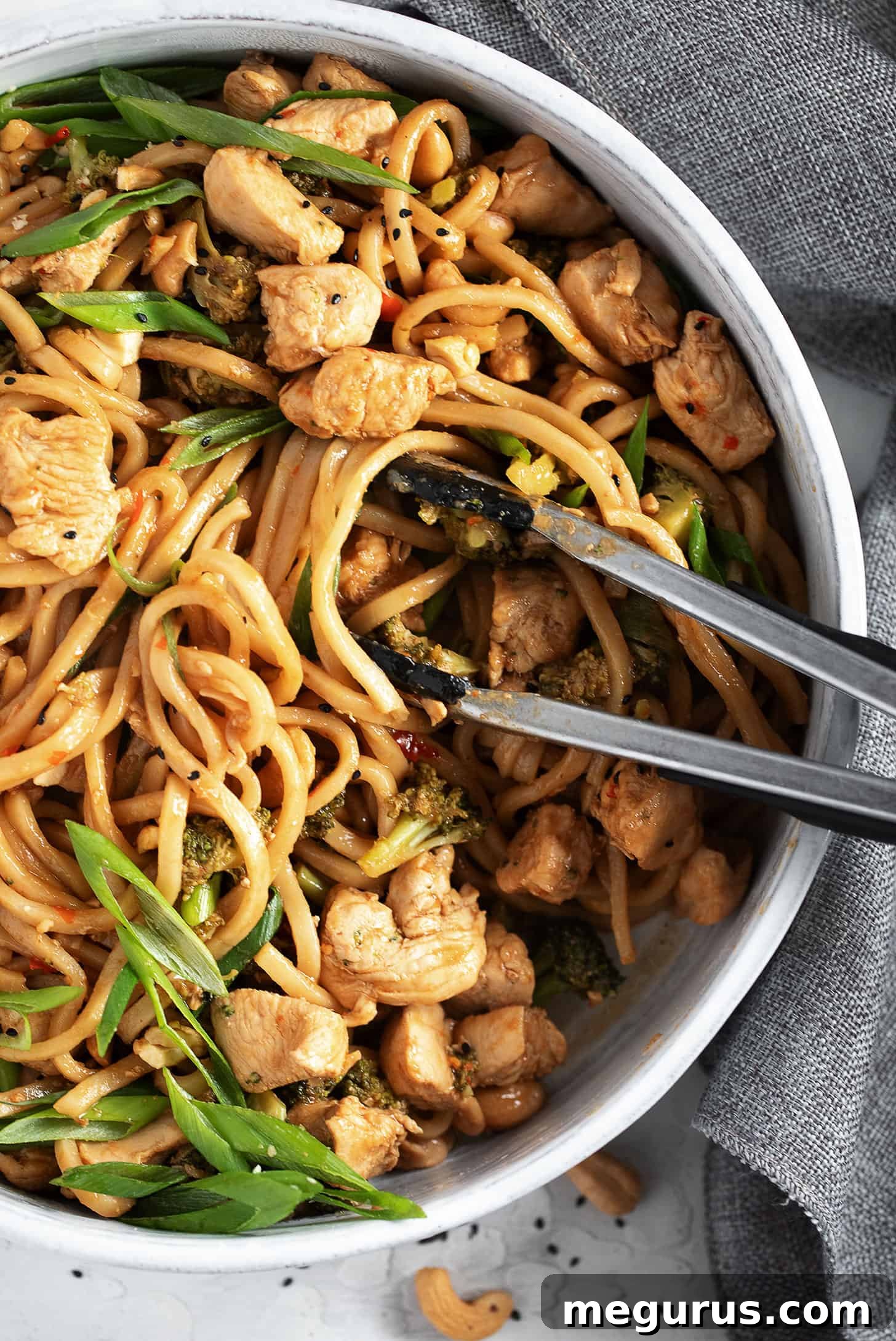
- Serve and Garnish: Transfer the stir fry to serving bowls. Garnish generously with thinly sliced green onions and a sprinkle of sesame seeds. For an extra kick, a drizzle of chili oil or additional chili sauce can be added at the table. Enjoy your homemade, flavorful Cashew Chicken Udon Stir Fry!
Top Tips for Stir-Fry Success
Achieving a perfect stir fry every time is easy with these expert tips:
- Mise en Place is Key: “Mise en place” is a French culinary term meaning “everything in its place.” For stir-frying, this is paramount. Have all your ingredients chopped, measured, and ready before you even turn on the heat. Stir-fries cook quickly, so there’s no time to be dicing while ingredients are in the pan.
- Don’t Overcrowd the Pan: Cooking in batches, if necessary, prevents steaming and allows ingredients to truly stir-fry and caramelize. Overcrowding leads to soggy ingredients.
- High Heat, Quick Cooking: Stir-fries thrive on high heat and fast cooking. This ensures vegetables remain crisp-tender and meat gets a beautiful sear without becoming tough.
- Noodle Versatility: While udon noodles are fantastic, don’t limit yourself! Any long Asian noodle (ramen, lo mein, chow mein) works well. Even regular spaghetti, cooked until al dente, can be a great last-minute stand-in. Always cook them according to package instructions before adding them to the skillet.
- Broccoli Texture: For softer broccoli, add it at the start with the chicken. If you prefer a brighter, more tender-crisp texture, delay adding the broccoli until the chicken has cooked for a few minutes.
- Sauce Adjustments: If you’re adding extra vegetables or increasing the chicken quantity, consider doubling the sauce to ensure everything is generously coated and flavorful.
- Spice It Up (or Down): The heat level is entirely in your hands! Sambal Oelek brings significant spice, so adjust the amount to match your personal tolerance. For less heat, reduce the Sambal Oelek; for more, feel free to add a bit extra or even a pinch of red pepper flakes.
- Wok vs. Skillet: A wok is traditionally used for stir-frying due to its sloped sides and ability to distribute heat evenly. However, a large, heavy-bottomed skillet or cast-iron pan works perfectly well for home stir-frying.
- Serving Suggestions: This stir fry is a complete meal on its own. However, if you’d like to add a side, a refreshing green salad with a light vinaigrette or a crisp marinated cucumber salad would complement the rich flavors beautifully.
- Storage and Leftovers: Leftovers store well in an airtight container in the refrigerator for up to 3-4 days. Reheat gently in a skillet or microwave, adding a splash of water or broth if the noodles seem dry. This dish is great for meal prep!
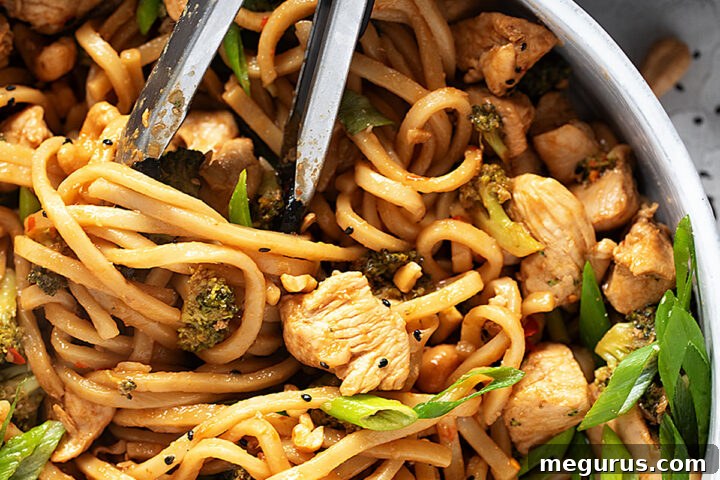
Get the Recipe: Chicken Cashew Udon Noodles
Pin This
Leave a Review
Ingredients
Sauce:
- 1-2 teaspoons Sambal Oelek, or Asian Chili Garlic Sauce or Sriracha, to taste for heat
- 1/4 cup low-sodium soy sauce, or tamari
- 2 teaspoons rice vinegar, seasoned or unseasoned
- 2 Tablespoons brown sugar, light or dark
For the stir fry:
- 1 Tablespoon sesame oil
- 1 Tablespoon cooking oil
- 3 cloves garlic cloves, finely chopped
- 1 Tablespoon fresh ginger, grated
- 10-12 oz boneless chicken breasts, about 2 medium breasts, cut into bite-sized pieces (or 4-5 boneless chicken thighs)
- 5 oz fresh broccoli, cut into bite-sized pieces, about 2 cups
- 2 oz cashews, salted or unsalted, about 1/2 cup
- 14 oz (400 g) udon noodles, or any long noodle
For serving:
- 2 green onions, green part only, thinly sliced, to serve
- sesame seeds, to serve
- chilli oil or additional chili sauce, optional, to serve
Instructions
-
Start a large pot of water to boil for the udon noodles, if needed (generally frozen or fresh udon needs to be boiled. Cook per the instructions on the package.) Shelf-stable udon noodles can be simply soaked in a bowl of hot water for 5 minutes to loosen them up before adding to the stir fry.
-
Make the sauce by stirring together all the sauce ingredients in a small bowl or measuring cup. Set aside.
-
Tip! I add the broccoli from the start, as I enjoy it softer. If you’d like a more tender-crisp broccoli, wait to add it after the chicken has cooked for a minute or so.
-
Heat the oil in a frying pan or wok over medium-high heat. Once hot, add the garlic and ginger and cook for 1 minute until fragrant. Add the chicken, broccoli and cashews and cook for 2 minutes or until the chicken is no longer pink and beginning to brown.
-
Add boiled or soaked udon noodles to the skillet, then pour in the prepared sauce. Toss well to coat all the ingredients evenly. Cook for an additional couple of minutes, stirring constantly, until the sauce has thickened slightly and the chicken is thoroughly cooked through. *If using shelf-stable udon, they may benefit from another minute or two of cooking time to ensure they are fully heated and tender.
-
Serve immediately, garnished with thinly sliced green onion, a sprinkle of sesame seeds, and an optional drizzle of chili oil for extra heat.
Notes
Note 2: For convenience, you can substitute 2 Tablespoons of ginger garlic paste for the fresh garlic and ginger.
Note 3: You can use shelf-stable (2 portions), fresh, frozen, or dried udon noodles. Cook them according to package instructions (usually boiling). Other Asian noodles like lo mein or ramen (without the seasoning) also work. In a pinch, regular spaghetti, cooked al dente, can be used.
For more detailed tips and step-by-step photos, refer to the sections above the recipe card.