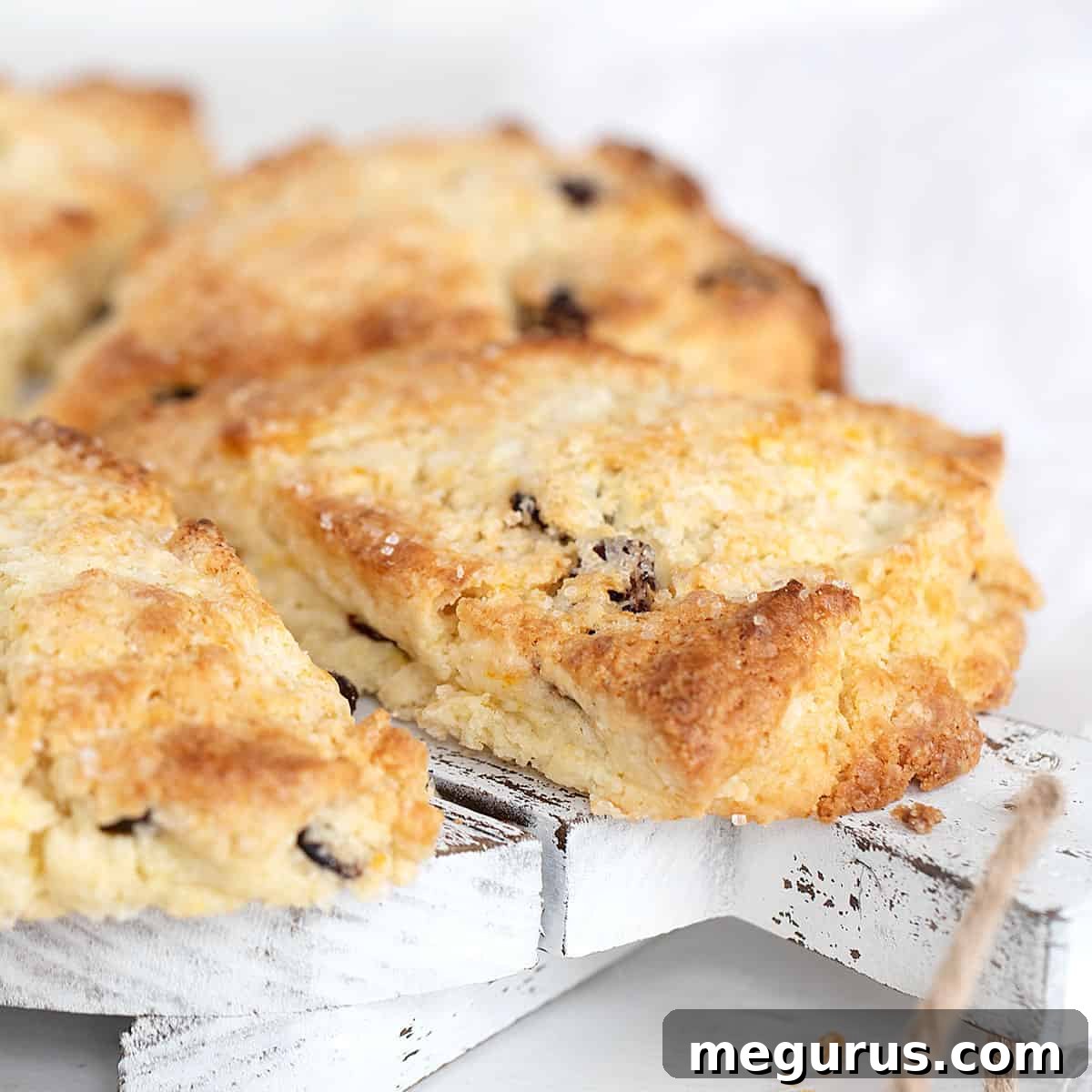
Welcome to the ultimate guide for crafting the most exquisite **Cranberry Orange Cream Cheese Scones**. Imagine biting into a scone that boasts a delightfully crispy exterior, giving way to an incredibly soft, rich, and profoundly flavorful interior. This isn’t just any scone recipe; it’s a culinary journey designed to bring that coveted bakery-style perfection right into your home kitchen. The classic, vibrant pairing of tart cranberries and bright orange zest is elevated to new heights with the luxurious addition of cream cheese, transforming a simple scone into an extraordinary treat. Whether you’re planning a special brunch, a cozy afternoon tea, or simply craving a homemade indulgence, these scones promise to deliver an unforgettable experience.
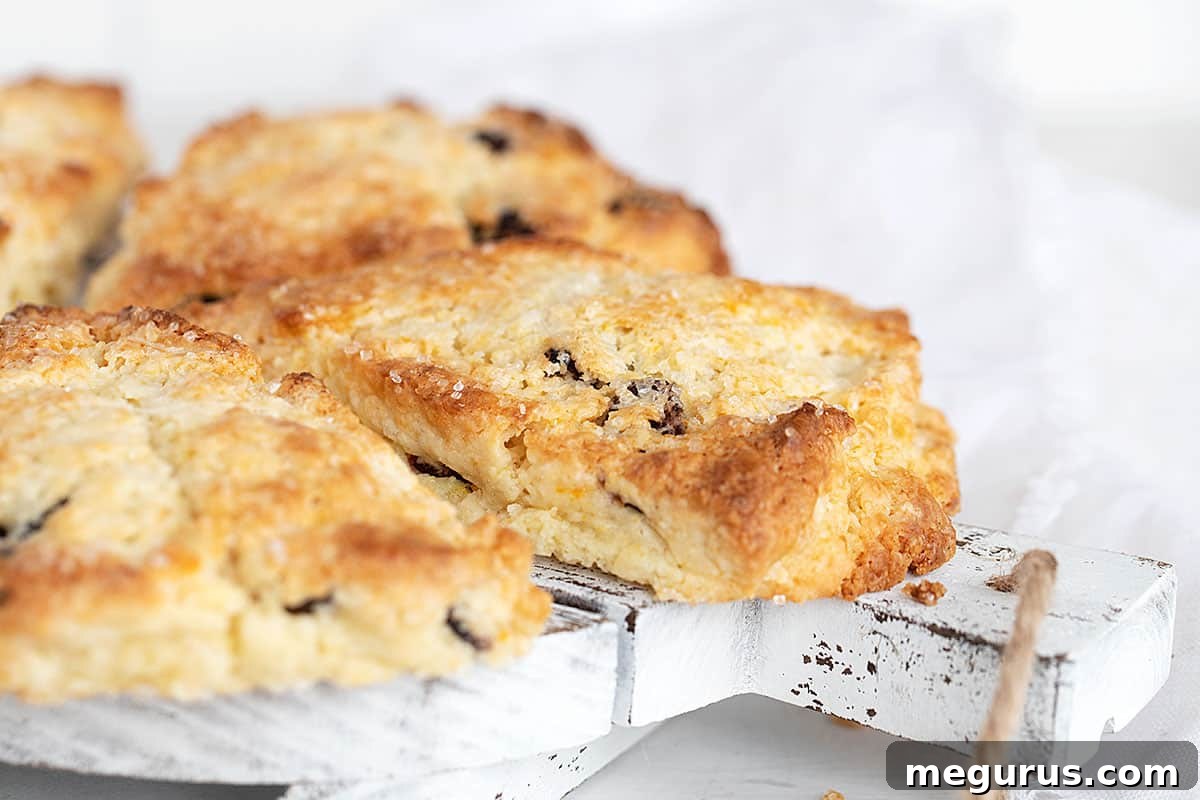
There’s something truly magical about homemade scones. They fill your kitchen with an aroma that signals comfort and indulgence, and the satisfaction of creating them from scratch is unmatched. This particular recipe for **Cream Cheese Cranberry Orange Scones** stands out not only for its incredible flavor profile but also for its wonderfully tender crumb, a direct benefit of incorporating cream cheese into the dough. This addition ensures a moistness and richness that traditional scones often lack, making each bite truly decadent. The tartness of dried cranberries perfectly balances the sweetness, while fresh orange zest infuses a vibrant, aromatic lift, making these scones an irresistible delight for any time of year.
Key Ingredients and Thoughtful Substitutions
Crafting the perfect scone begins with understanding the role of each ingredient. Here’s a closer look at the stars of this recipe and how you can approach any necessary adjustments:
All-Purpose Flour: The foundation of our scones. For best results, use unbleached all-purpose flour. While not strictly necessary, sifting your flour can help create a lighter texture by aerating it and removing any lumps.
Granulated Sugar: Provides sweetness and contributes to the scone’s golden-brown crust. You can slightly adjust the amount to your preference, but keep in mind it also aids in tenderizing the dough.
Baking Powder & Salt: These are your leavening agents and flavor enhancers. Baking powder is crucial for achieving that characteristic rise and fluffy texture. Salt, even in sweet recipes, is vital for balancing flavors and making the cranberry and orange notes truly pop. If you opt for salted butter, remember to reduce the added fine salt by 1/4 teaspoon to prevent over-salting.
Butter (Unsalted, Cold): Cold butter is non-negotiable for tender, flaky scones. When cold butter pieces are worked into the flour, they create pockets of steam during baking, resulting in a light and airy texture. Unsalted butter allows you to control the exact amount of salt in the recipe. If using salted butter, reduce the recipe’s added salt accordingly.
Cream Cheese (Full-Fat, Cold): The secret ingredient that elevates these scones from good to extraordinary. Full-fat cream cheese is highly recommended. Its higher fat content and lower moisture content, compared to light or reduced-fat versions, are essential for achieving the desired rich flavor and perfectly tender crumb. Using a lighter cream cheese can introduce excess moisture, potentially affecting the final texture of your scones. Ensure it’s cold and cut into small pieces, just like the butter, for optimal results.
Heavy Cream (aka Whipping Cream, 35% B.F.): This is where the “cream” in “cream scones” truly shines, imparting unparalleled richness and tenderness. Heavy cream, with its higher fat content, contributes significantly to a luxurious texture. While any cream or even milk can be used, be aware that lighter alternatives will yield a less rich scone. If substituting, add the liquid gradually in small increments until the dough is just moistened, as the required amount may differ. The goal is a cohesive but not sticky dough.
Large Egg: Acts as a binder and adds richness, helping to create a more tender crumb and a beautiful golden color.
Vanilla Extract or Vanilla Bean Paste: A touch of vanilla rounds out the flavors beautifully. Vanilla bean paste offers a more intense vanilla flavor and visible specks, but high-quality vanilla extract works perfectly.
Dried Cranberries: These add delightful bursts of tartness and chewiness that perfectly complement the orange. You can use conventional dried cranberries or even sugar-reduced varieties. If you don’t have cranberries, dried cherries or blueberries could be a suitable alternative, though the flavor profile will shift slightly.
Orange Zest (from one large orange): The zest is where all the aromatic oils and bright citrus flavor reside. Use a fine grater or microplane to zest only the orange part of the peel, avoiding the bitter white pith. Fresh zest is paramount for the best flavor; dried or pre-packaged zest simply won’t compare.
Crafting Your Cranberry Orange Cream Cheese Scones: A Step-by-Step Guide
Making these delightful scones is a rewarding experience, and following these steps carefully will ensure success. Remember to refer to the complete recipe card below for precise measurements and detailed instructions.
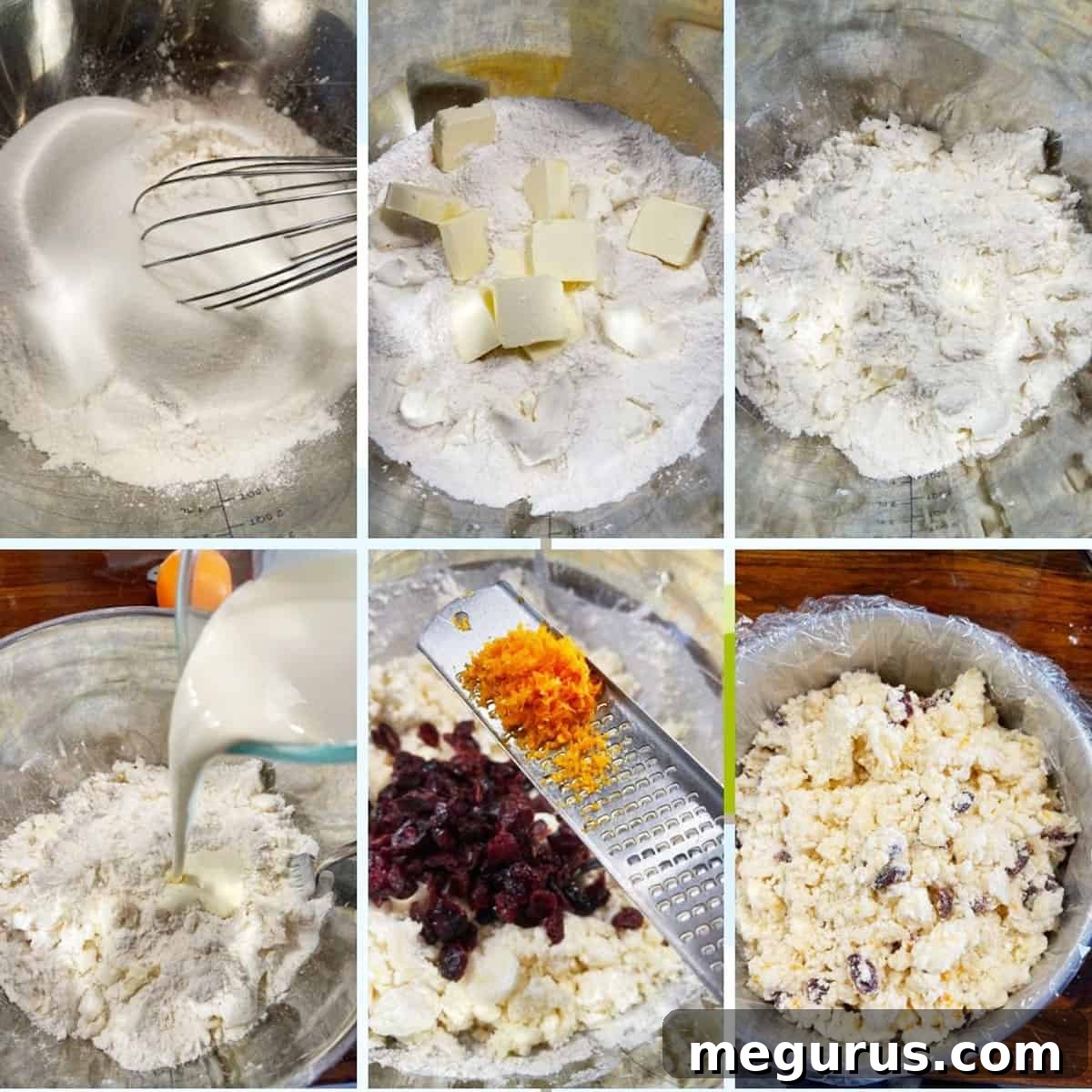
- Prepare Your Pan: Begin by lining an 8-inch round cake pan or springform pan with plastic wrap, ensuring plenty of overhang on the edges. This clever trick will make it incredibly easy to lift the scone dough out later. Set this aside.
- Combine Dry Ingredients: In a large mixing bowl, thoroughly whisk together the all-purpose flour, granulated sugar, baking powder, and fine salt. Whisking ensures these dry ingredients are evenly distributed, which is crucial for a consistent rise.
- Incorporate Cold Fats: Add the cold, cubed butter and cream cheese to the dry mixture. Using your fingertips, gently and quickly rub the butter and cream cheese into the flour. Your goal is to achieve a crumbly texture with pea-sized pieces of fat remaining throughout. Avoid overworking the mixture; warmth from your hands can melt the fats, leading to tougher scones.
- Add Flavors: Stir in the dried cranberries and fresh orange zest until they are evenly distributed throughout the crumbly mixture. Their vibrant flavors are key to these scones.
- Introduce Wet Ingredients: In a separate measuring cup, whisk together the heavy cream, large egg, and vanilla extract. Pour this liquid mixture into the dry ingredients. Stir with a spoon or spatula until just combined. The dough should be moistened but not sticky. If you notice a significant amount of dry flour at the bottom of the bowl, add a bit more cream, one tablespoon at a time, until the mixture just comes together. Gently knead the dough a few times within the bowl to ensure everything is cohesive.
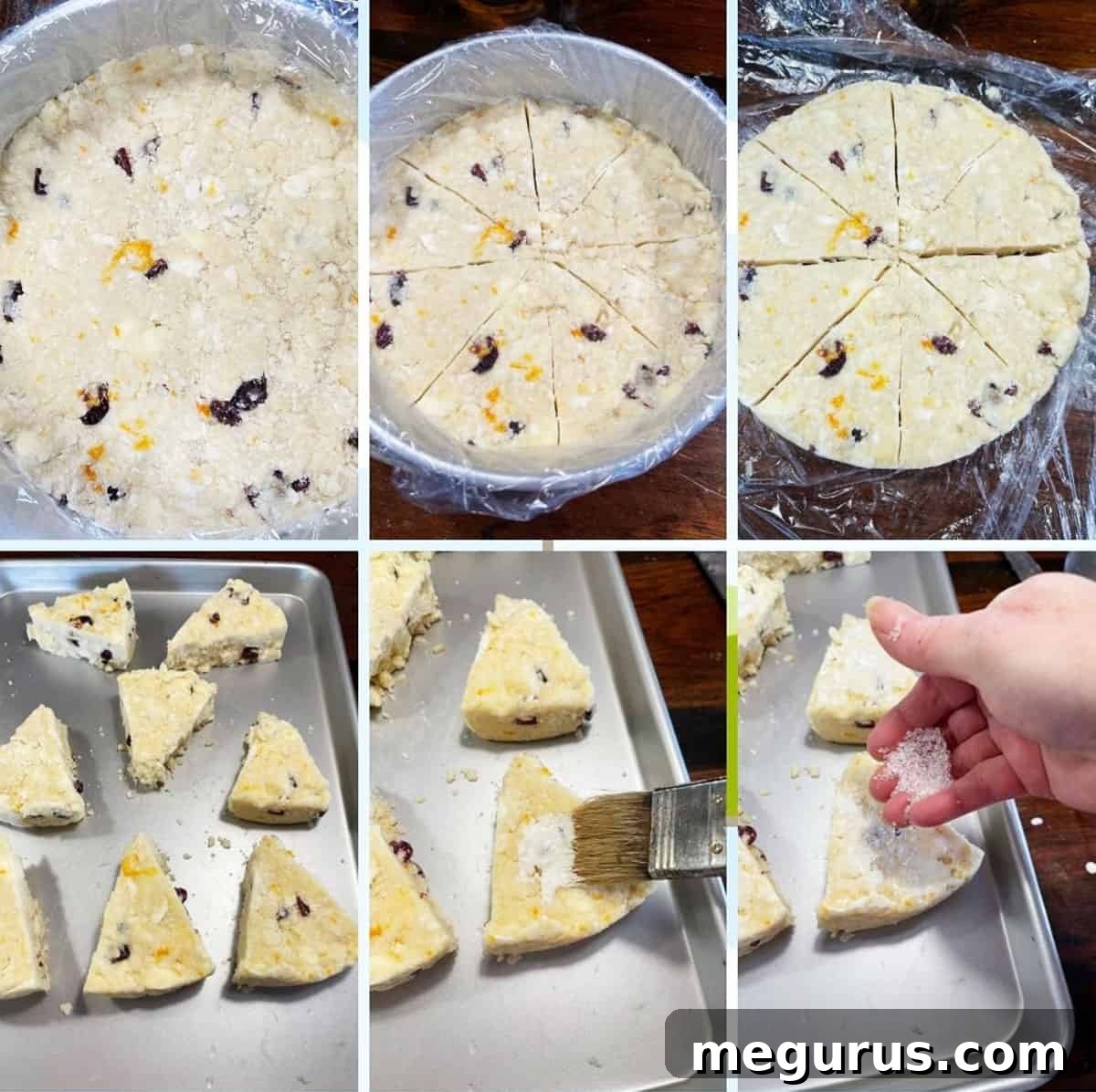
- Shape and Chill: Transfer the dough to your prepared plastic-wrap-lined pan. Press the dough evenly into the pan, forming a round. Fold the overhanging plastic wrap neatly over the dough to cover it completely. Place the pan into the freezer for at least 2 hours, or ideally, up to 24 hours. This freezing step is vital for achieving tall, beautifully shaped scones with a superior texture.
- Preheat Oven and Score: When you’re ready to bake, preheat your oven to 425°F (220°C). While the oven heats, remove the pan from the freezer. Without removing the dough, use a sharp knife to score the top of the frozen dough into 8 even wedges. These lines will guide your cuts.
- Cut and Arrange: Carefully lift the entire dough round out of the pan using the plastic wrap overhang. Place it on a clean surface and cut along the scored lines to fully separate the 8 wedges.
- Prepare for Baking: Transfer the separated scone wedges onto an ungreased baking sheet, ensuring they are spaced at least 2 inches apart to allow for even baking and expansion.
- Garnish and Bake: Lightly brush the tops of each scone with a little extra heavy cream. This helps them brown beautifully and contributes to a crisp crust. Sprinkle the tops generously with coarse sugar (such as sparkling or turbinado sugar) for added sparkle and crunch.
- The Baking Process: Place the baking sheet into the preheated oven. Immediately reduce the oven temperature to 400°F (200°C). Bake for 15 minutes, then reduce the oven temperature again to 375°F (190°C) and continue baking for another 13-15 minutes, or until the scones are gloriously golden brown and cooked through.
- Cool and Enjoy: Once baked, remove the scones from the oven and transfer them to a wire rack to cool slightly. Scones are best enjoyed warm, ideally on the day they are baked.
Expert Tips for Scone Perfection!
- Liquid Adjustment is Key: When mixing scone dough, remember that flour hydration can vary. The amount of liquid (heavy cream in this case) needed might differ slightly each time you bake. Always add the cream gradually, aiming for a dough that is moistened but not sticky. It should hold together when squeezed gently. Don’t be afraid to add a little more cream, one tablespoon at a time, if your dough seems too dry, or a tiny bit more flour if it feels too wet.
- The Magic of Freezing: Don’t skip the freezing step! While not strictly “disastrous” to bake unfrozen scones, they will spread out more while baking, resulting in wider, thinner scones. Freezing the dough solidifies the butter and cream cheese, ensuring the scones hold their shape beautifully, rising tall and proud. This also contributes to a superior flaky texture. If you’re short on time, even 30 minutes in the freezer can make a noticeable difference.
- Cold Ingredients, Always: Emphasizing this point cannot be overstated. From butter and cream cheese to heavy cream, keeping all your fats and liquids as cold as possible until they hit the oven is crucial for that perfect flaky, tender scone texture.
- Don’t Overmix: Scone dough is delicate. Overmixing develops the gluten in the flour, leading to tough scones. Mix just until the ingredients are combined and the flour is moistened. A few gentle kneads to bring the dough together in the bowl are sufficient.
- Temperature Transition: The initial high temperature followed by a reduction helps achieve a beautiful rise and golden crust before the interior has a chance to overcook. This creates the desired crispy outside and soft inside.
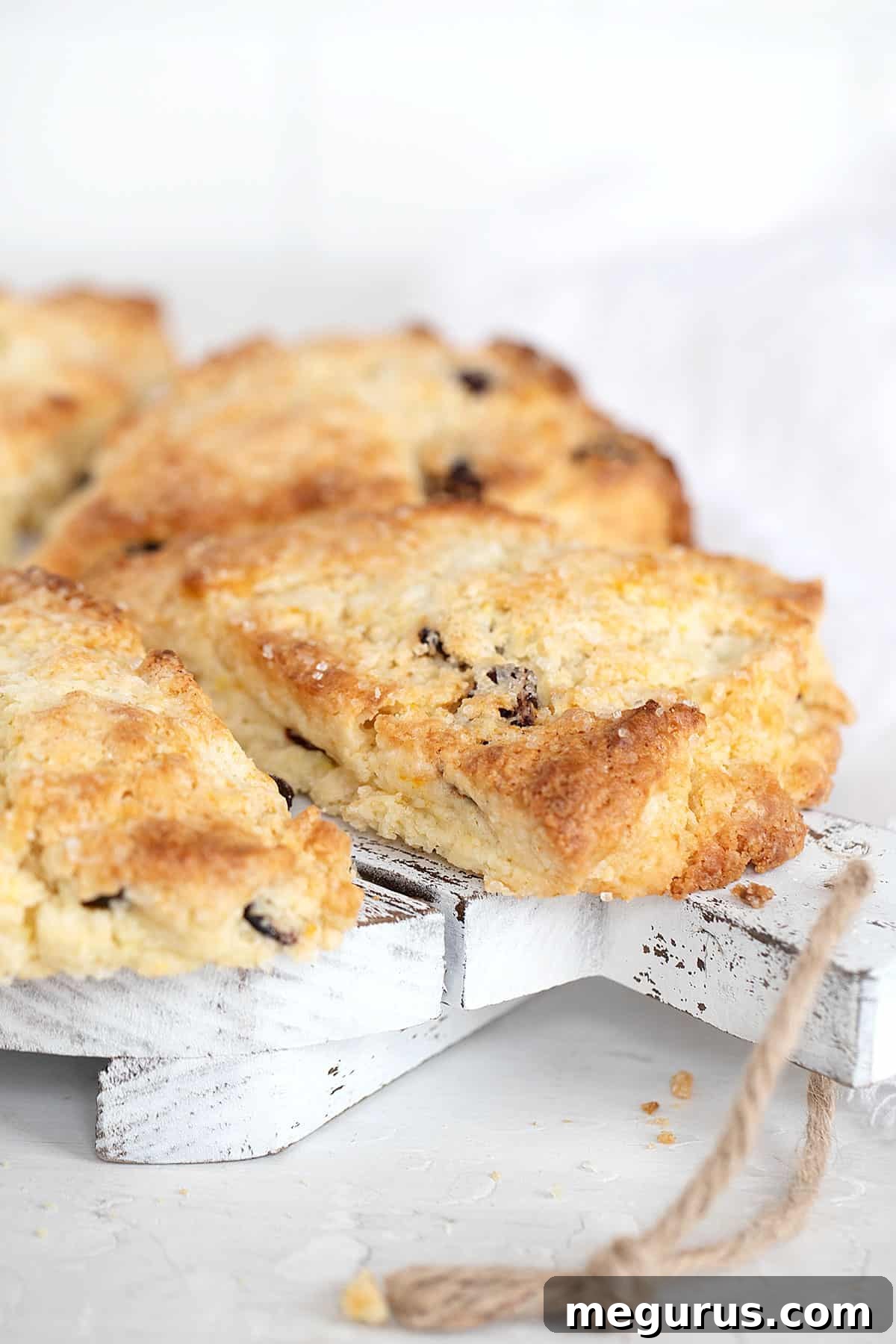
Making Ahead, Storing, and Freezing for Freshness
One of the many joys of these cranberry orange cream cheese scones is their make-ahead convenience, allowing you to enjoy freshly baked treats with minimal effort. While scones are truly at their peak on the day they’re baked, proper storage can extend their deliciousness.
- Baked Scone Storage: Once completely cooled, store any leftover baked scones in an airtight container at room temperature for up to 2 days. To refresh them, a quick warm-up in a toaster oven or microwave can bring back some of their original charm.
- Freezing Unbaked Dough: This recipe is designed for baking from frozen, making it incredibly convenient for meal prep. Prepare the scone dough through step 6 (pressing into the pan and freezing). You can keep the entire round in the freezer for up to 2 months. When ready to bake, simply follow the baking instructions from step 7 onwards.
- Freezing Individual Wedges: For ultimate flexibility, once the dough round is frozen and scored, you can cut the individual wedges and freeze them separately. Place the unbaked wedges on a baking sheet lined with parchment paper, freeze until solid, then transfer them to an airtight freezer bag. This way, you can bake just one or two fresh scones whenever a craving strikes! They will still bake beautifully from frozen within the 2-month timeframe.
Serving Suggestions for Your Perfect Scones
These Cranberry Orange Cream Cheese Scones are so flavorful and rich, they are delicious all on their own. However, a few accompaniments can elevate the experience even further:
- Clotted Cream or Whipped Cream: A dollop of traditional clotted cream or freshly whipped cream is a classic pairing that adds an extra layer of indulgence.
- Fruit Spreads: Complement the cranberry and orange flavors with a good quality orange marmalade, cranberry jam, or even a mixed berry compote.
- Honey or Maple Syrup: A light drizzle of honey or maple syrup can add natural sweetness and a lovely sheen.
- Hot Beverages: Pair your scones with a freshly brewed cup of tea (Earl Grey or English Breakfast are excellent choices) or your favorite coffee for the ultimate cozy experience.
Troubleshooting Common Scone Issues
Even seasoned bakers encounter hiccups. Here’s how to address common scone challenges:
- Scones are Too Flat/Spread Out: This usually indicates that your butter and cream cheese weren’t cold enough, or the dough wasn’t sufficiently chilled before baking. Ensure all fats are rock-solid cold, and don’t skip the minimum 2-hour freezer time. Overworking the dough can also contribute to spreading.
- Scones are Tough: The culprit here is almost always overmixing. Too much handling develops gluten, making the scones dense and bread-like. Mix the dough only until the ingredients are just combined.
- Scones are Dry: This can happen if you didn’t add enough liquid, or if they were baked for too long or at too high a temperature. Remember the tip about adjusting liquid based on flour hydration. Monitor baking time and temperature closely.
- Scones Don’t Rise Well: Ensure your baking powder is fresh and active. Old leavening agents lose their potency. Also, ensure your oven temperature is accurate; an oven that’s too cool might not activate the baking powder effectively.
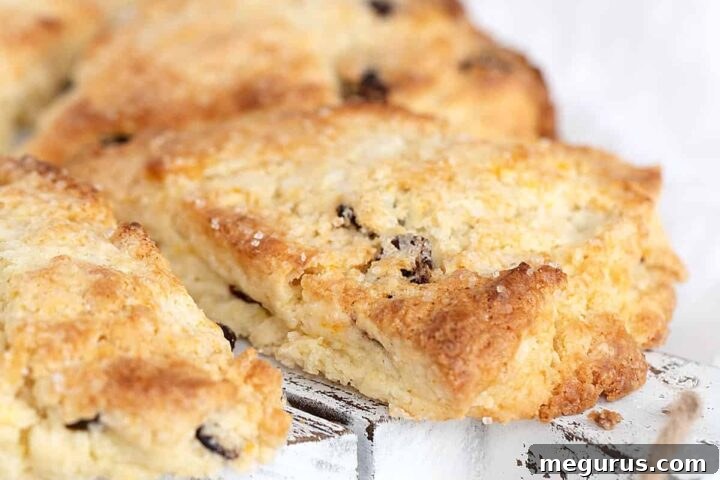
Cranberry Orange Cream Cheese Scones
Delicious cream cheese scones, with dried cranberries and orange zest. Lovely and crispy on the outside and beautifully soft, rich and flavourful inside.
Pin This
Leave a Review
Cook Time: 30 mins
Minimum Freezing Time: 2 hrs
Total Time: 2 hrs 45 mins
Ingredients
- 2 3/4 cups all-purpose flour
- 1 cup white granulated sugar
- 4 teaspoons baking powder
- 1 teaspoon fine salt (reduce to 3/4 teaspoon if using salted butter)
- 1/2 cup unsalted butter, cold and cut into 8 pieces
- 4 oz full-fat cream cheese, cold and cut into 8 pieces (1/2 the standard 8oz package)
- 1/2 cup heavy whipping cream (35% b.f. or see Note 1 for other options)
- 1 large egg
- 1/2 teaspoon vanilla extract (or vanilla bean paste)
- 3/4 cup dried cranberries
- Zest of one orange
Topping:
- Additional cream, for brushing tops before baking
- Coarse, turbinado or granulated sugar, for sprinkling tops before baking
Instructions
- Prepare an 8-inch round cake pan or springform pan by lining with plastic wrap, overhanging the edges of the pan. Set aside.
- In a large bowl, whisk together the flour, sugar, baking powder, and salt. Add the cold butter and cream cheese pieces to the bowl. Using your fingertips, rub the butter and cream cheese into the flour until you have an even mixture with pea-sized pieces of butter.
- In a measuring cup, measure out the cream and whisk in the egg and vanilla. Add the cream/egg mixture to the flour mixture and stir to combine well. If you have a lot of dry flour at the bottom of the bowl, add a bit more cream, in 1 Tablespoon increments, adding only until the flour is just moistened. (You don’t want it to be sticky, but it should hold together when squeezed.) Stir in the orange zest and dried cranberries and distribute evenly. Gather together/briefly knead the mixture in the bowl, gathering up any bits of flour.
- Press dough into the prepared baking pan. Fold the overhanging plastic wrap down over the dough to cover. Place the pan into the freezer for at least 2 hours or up to 24 hours.
- When ready to bake, preheat oven to 425F (220C – regular bake/not convection/fan assisted). Remove dough from the freezer and while still in the pan, score the top of the dough into 8 even wedges. Lift out the dough round by the plastic wrap and cut the slices following the score lines.
- Transfer the wedges to a baking sheet, spacing at least 2-inches apart. Brush the tops of the scones with heavy cream, then sprinkle with coarse sugar.
- Place into oven and immediately reduce the oven temperature to 400F (200C). Bake for 15 minutes, then reduce the oven temperature to 375F (190C) and bake an additional 13-15 minutes, or until golden.
- Remove from oven and transfer to a wire rack to cool.
Notes
1. You can use a lighter cream or even milk, though you will, of course, have a less rich scone. The amount of light cream/milk may also differ slightly from the amount specified. Add gradually, adding only as much as needed to moisten the flour. You don’t want the dough to be sticky at all.
Course: Snack
Author: Jennifer Maloney
Nutrition Facts
Serving: 1 scone, Calories: 467kcal, Carbohydrates: 70g, Protein: 8g, Fat: 18g, Saturated Fat: 11g, Polyunsaturated Fat: 1g, Monounsaturated Fat: 5g, Trans Fat: 1g, Cholesterol: 76mg, Sodium: 410mg, Potassium: 316mg, Fiber: 2g, Sugar: 33g, Vitamin A: 614IU, Vitamin C: 1mg, Calcium: 161mg, Iron: 2mg
Tried this recipe? If you enjoyed this recipe, please consider leaving a star rating and comment. Your feedback helps others discover delicious recipes!