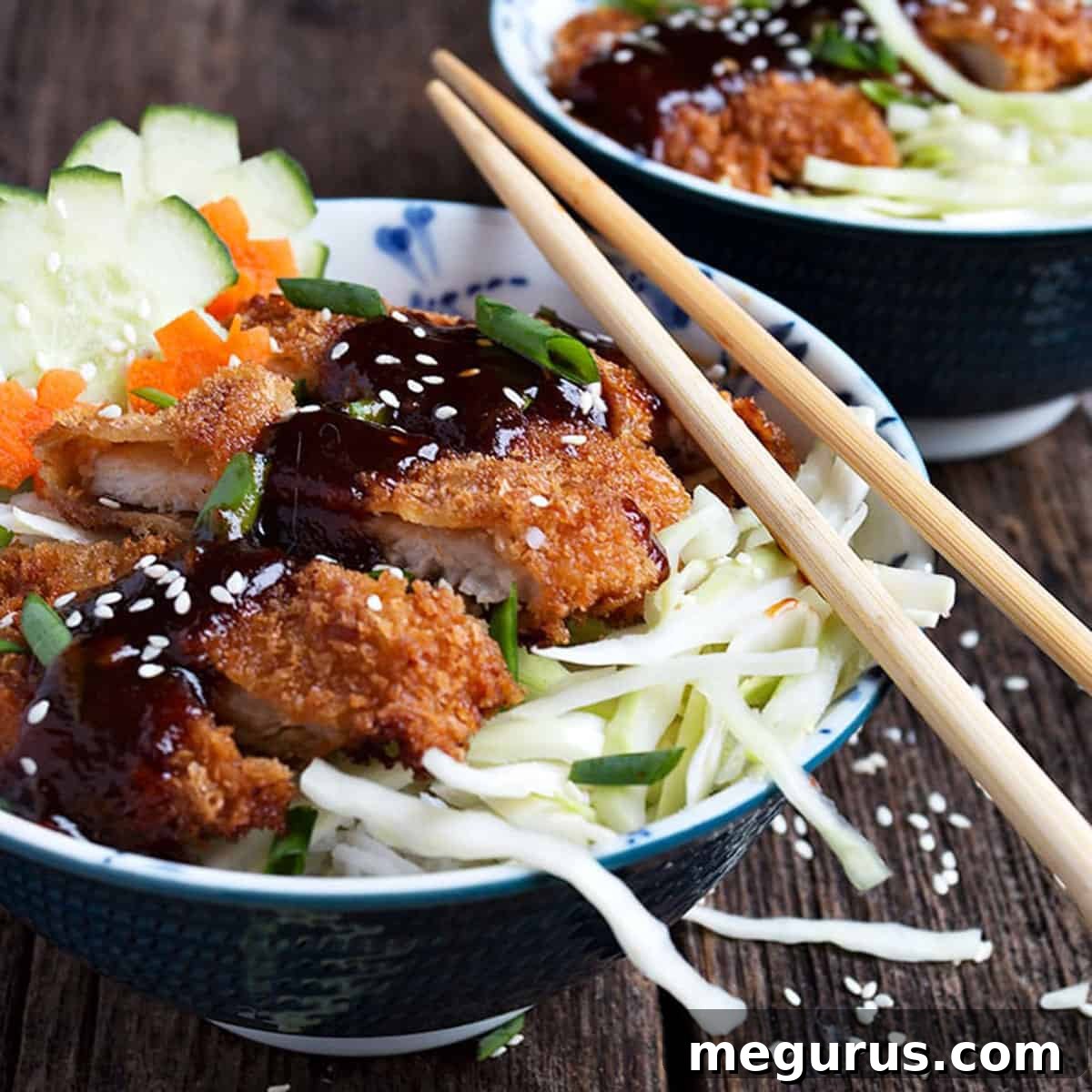
Crispy Pork Tonkatsu Bowls: Your Ultimate Guide to Authentic Japanese Katsu at Home
Embark on a culinary journey to Japan right from your kitchen with these incredible Pork Tonkatsu Bowls. This recipe transforms a simple meal into an unforgettable dining experience, featuring golden, panko-breaded pork cutlets (Tonkatsu), fluffy rice, a vibrant medley of fresh vegetables, and a tantalizing homemade Tonkatsu sauce. Quick to prepare and bursting with flavor, these bowls are perfect for a weeknight dinner, yet elegant enough for a special occasion. Get ready to master the art of crispy katsu and assemble a dish that will impress every palate.
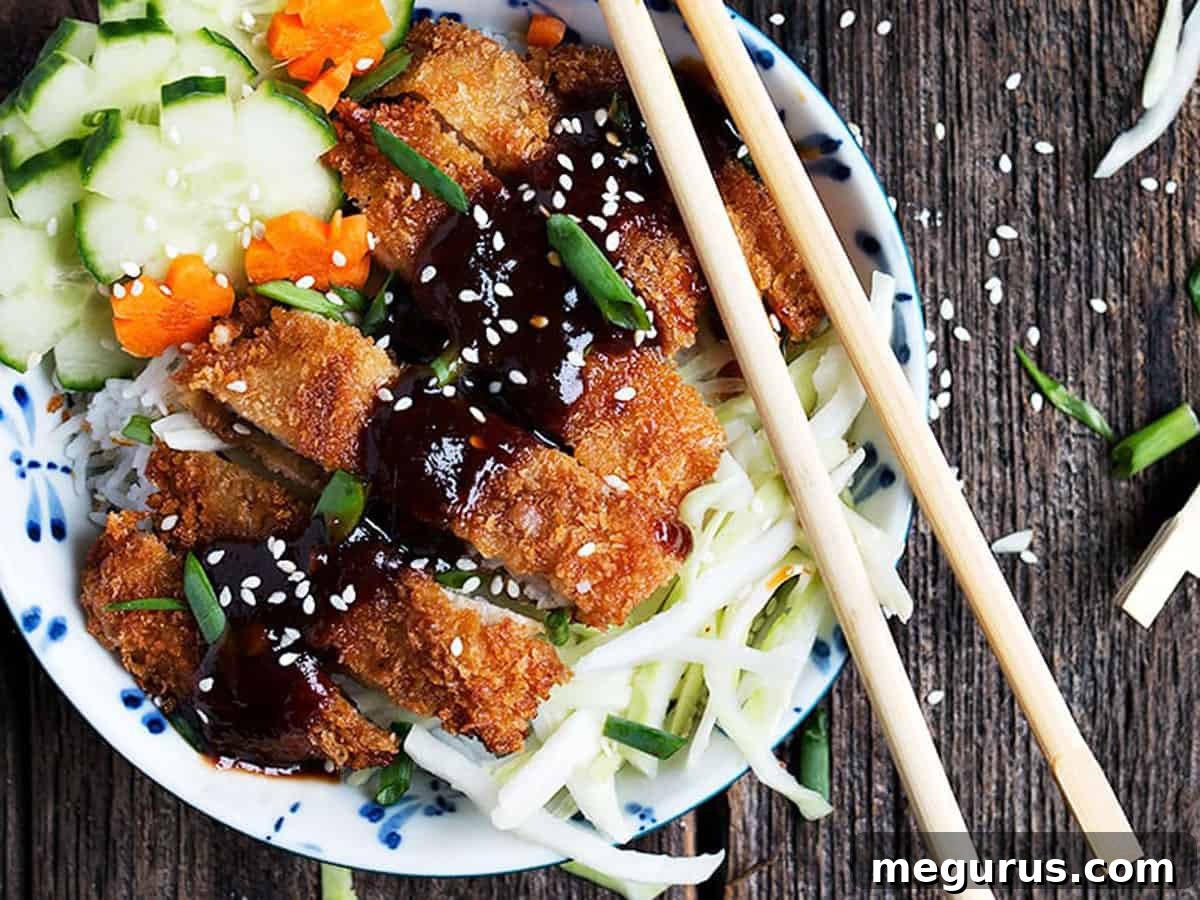
My first encounter with Katsu was at a beloved local Japanese eatery, and it was love at first bite. Many are familiar with Katsu in its chicken form, a perfectly breaded and fried chicken cutlet. When crafted with succulent pork, it becomes Tonkatsu – a delightful combination of “ton” (meaning pig or pork) and “katsu” (a Japanese abbreviation of cutlet, derived from the English word “cutlet”). This classic dish is traditionally served with a rich, savory, and slightly sweet Tonkatsu sauce, which, surprisingly, is incredibly simple to whip up at home using readily available pantry staples.
While Tonkatsu is undeniably delicious served on a plate with a side of rice and perhaps some crisp vegetables, I particularly love the convenience and aesthetic appeal of serving it as a full-fledged bowl meal. Layering the crispy Tonkatsu over a bed of warm rice and complementing it with an assortment of fresh, vibrant vegetables elevates it to a complete and balanced dish. In this recipe, we embrace the traditional accompaniment of thinly shredded cabbage, enhanced with refreshing slices of cucumber and carrot for added color and crunch.
Inspired by the meticulous presentation at my favorite restaurant, I’ve included a special section in the Cook’s Notes below detailing how to create “pretty” vegetable garnishes. This optional step adds a touch of gourmet flair to your homemade bowls, making them as visually appealing as they are delicious. Even if you choose to keep it simple, the flavors will speak for themselves, but a little extra effort in presentation can truly transform your meal into a culinary masterpiece.
Unveiling Tonkatsu: A Japanese Culinary Delight
Tonkatsu, a staple in Japanese cuisine, is much more than just a breaded pork cutlet; it’s a testament to Japanese culinary innovation. Originating in the late 19th century as a variation of French cutlets, Tonkatsu has evolved into a distinctly Japanese dish. The secret to its iconic crispiness lies in the use of panko breadcrumbs, which are coarser and lighter than traditional breadcrumbs, resulting in an airy, shatteringly crisp exterior when fried. This contrasts beautifully with the tender, juicy pork inside.
The term “katsu” generally refers to a deep-fried cutlet of meat, typically coated in panko. When you specify “Tonkatsu,” you are referring exclusively to the pork version. Other popular variations include “Chicken Katsu” or “Menchi Katsu” (minced meat). Tonkatsu is a versatile dish, enjoyed on its own, as part of a bento box, or most famously, over rice as a hearty bowl, often drizzled generously with its namesake sauce.
The beauty of Tonkatsu lies not only in its delightful texture and flavor but also in its accessibility. Despite its gourmet appeal, the process of making Tonkatsu is straightforward, involving a simple breading technique and shallow frying. This makes it an ideal dish for home cooks looking to explore Japanese flavors without complicated methods. Paired with a freshly made Tonkatsu sauce, this dish offers a perfect balance of savory, sweet, and tangy notes that will leave you craving more.
Key Ingredients for Exceptional Pork Tonkatsu Bowls
Crafting truly outstanding Pork Tonkatsu Bowls starts with selecting quality ingredients. Each component plays a vital role in achieving the harmonious balance of textures and flavors that define this beloved Japanese dish.
Pork: For the most tender and evenly cooked Tonkatsu, I highly recommend starting with thin, boneless pork loin cutlets, often labeled as “Fast Fry” chops. These cuts are naturally slender, requiring minimal pounding to achieve the ideal uniform thickness. If you opt for thicker, boneless center-cut pork chops, don’t worry – a meat mallet will quickly transform them into the perfect thin cutlets. Pounding the pork ensures even cooking and helps tenderize the meat, making every bite incredibly succulent.
Panko Breadcrumbs: The cornerstone of authentic Tonkatsu’s unparalleled crispiness is panko. Unlike regular breadcrumbs, panko is made from bread without crusts, yielding larger, flakier, and lighter crumbs. This unique structure allows for a crispier, less greasy fried coating that doesn’t absorb too much oil. Do not substitute regular breadcrumbs if you want that signature Tonkatsu crunch!
Homemade Tonkatsu Sauce: While store-bought Tonkatsu sauce is available, making it from scratch is incredibly rewarding and allows you to control the flavor profile. Our homemade version uses common ingredients like ketchup as a base, enhanced with the umami richness of Worcestershire sauce and soy sauce, a touch of sweetness from granulated sugar and mirin, and aromatic depth from minced garlic and grated ginger. A hint of dry mustard adds a subtle complexity. This sauce is a fundamental element, providing the perfect tangy, sweet, and savory counterpoint to the crispy pork.
Fresh Vegetables: The vegetables not only add freshness and crunch but also balance the richness of the fried pork. Shredded cabbage is a traditional accompaniment, offering a refreshing, slightly bitter contrast. Cucumber slices provide cool crispness, while carrots add a touch of sweetness and vibrant color. Feel free to incorporate other favorites like thinly sliced radishes or green onions for extra flavor and visual appeal.
Expert Tips for Perfect Tonkatsu Bowls!
- If you’re new to the world of Tonkatsu, rest assured that this dish is surprisingly approachable. At its core, Tonkatsu is a wonderfully basic breaded pork cutlet. Beyond a quick dip in soy sauce for flavoring, the pork itself is simply seasoned, coated in panko, and fried to golden perfection. On its own, the breaded pork is mild, flavorful, and incredibly kid-friendly. If you or your family prefer a simpler taste, you can absolutely enjoy the crispy pork cutlet without the sauce, perhaps with a squeeze of lemon.
- That being said, the homemade Tonkatsu sauce truly elevates this dish, especially when paired with the crispy breaded pork. Think of it as an Asian-inspired ketchup, but with far more depth and complexity. It cleverly starts with a ketchup base, then gets a flavor boost from savory Worcestershire sauce, umami-rich soy sauce (low sodium is recommended to control salinity), and fragrant garlic and ginger. It naturally leans towards the salty side due to the Worcestershire, which is why low-sodium soy sauce is a smart choice. Remember to use the Tonkatsu sauce more like a condiment than a drenching sauce; start with a light drizzle and add more to taste, allowing the individual flavors of the bowl to shine.
- When it’s time to fry your breaded pork, selecting the right pan and managing oil is key. I consistently reach for my mid-sized nonstick frying pan, which is just large enough to accommodate all the pork pieces in a single layer without overcrowding. The advantage of a non-stick pan of appropriate size is that it allows you to use significantly less oil for frying. You literally need just enough oil to create a thin, even layer across the bottom of the pan, ensuring the pork cooks through to a beautiful golden crisp without becoming excessively greasy. This method provides the perfect balance of texture and flavor, yielding Tonkatsu that is both crispy and deliciously satisfying.
Elevate Your Bowl: Simple Techniques for Beautifully Cut Vegetables
Adding a decorative touch to your vegetables is an easy way to make your Tonkatsu bowls look restaurant-worthy. It’s a small detail that adds a significant visual impact. For the cucumber, select a 3 or 4-inch piece of seedless cucumber. Using a sharp knife, carefully cut a “V” shaped wedge along the sides from one end to the other. Repeat this process 5 or 6 times, cutting thin wedges around the entire outside of the cucumber. Then, slice your cucumber as you normally would, and you’ll find each slice adorned with a charming flower-like pattern. For the carrot, follow the same technique, making smaller, more delicate wedge cuts around the outside before slicing it into thin, decorative rounds. This simple step transforms ordinary vegetables into an eye-catching garnish that makes your meal feel extra special.
*Safety tip! Always prioritize safe knife practices in the kitchen. When making your decorative cuts, ensure the sharp edge of the blade is always moving away from your body. For the “V” cuts, make your first incision with the blade pointing away, then carefully rotate the cucumber or carrot piece to make the second cut, again ensuring the blade moves in a safe, outward direction. This minimizes the risk of accidents.
Pork Tonkatsu Bowls
Pin This
Leave a Review
Ingredients
For the Tonkatsu Sauce:
- 1/2 cup ketchup
- 3 Tablespoons Worcestershire sauce
- 2 Tablespoons white granulated sugar
- 2 Tablespoons soy sauce, low sodium recommended
- 2 Tablespoons mirin, or substitute 1 Tbsp. boiling water with 1 Tbsp. granulated sugar
- 2 teaspoons garlic, minced
- 1 teaspoon gingerroot, grated or ginger paste
- 1/4 teaspoon dry mustard
For the Tonkatsu:
- 6 thin, boneless, “fast-fry” pork loin cutlets
- 2 teaspoons soy sauce
- 1 clove garlic, minced
- 1/2 teaspoons salt, divided
- 1/4 teaspoon pepper, divided
- 1/2 cup all-purpose flour
- 2 large eggs
- 2 Tablespoons water
- 1 3/4 cups panko bread crumbs
- Vegetable oil for cooking
For serving:
- 2 cups Cooked rice
- Sliced cucumber
- Sliced carrots
- Sliced cabbage
For garnish:
- Sesame seeds
- Sliced green onion
Instructions
-
Begin by preparing your rice according to package directions, allowing it to cook while you assemble the other components of the meal.
-
To make the Tonkatsu sauce: In a small saucepan, combine the ketchup, Worcestershire sauce, granulated sugar, soy sauce, mirin, minced garlic, grated ginger, and dry mustard. Stir the mixture thoroughly to combine all ingredients. Heat over medium-high heat, stirring regularly to prevent sticking, and bring it to a gentle boil. Once boiling, reduce the heat to low and simmer for about 7-8 minutes, or until the sauce has reduced in volume by approximately one-quarter and thickened slightly. If preparing in advance, allow the sauce to cool completely before refrigerating; it can be stored for up to 1 week. Otherwise, keep it warm for immediate serving.
-
To make the Tonkatsu: Set up a dredging station with four separate plates or shallow dishes. On the first plate, combine the 2 teaspoons of soy sauce, 1 minced garlic clove, and half of the measured salt and pepper. On the second plate, whisk together the all-purpose flour with the remaining salt and pepper. On the third plate, lightly whisk the 2 large eggs with the 2 tablespoons of water until well combined. On the final plate, spread out the panko bread crumbs evenly.
-
Take one pork cutlet and place it on the soy sauce mixture plate, tossing to ensure it’s lightly coated on all sides. Next, dredge the pork cutlet in the flour mixture, shaking off any excess. Dip it into the egg wash, allowing any excess to drip away. Finally, press the cutlet firmly into the panko bread crumbs, ensuring it is thoroughly and evenly coated. Place the breaded pork on a wire cooling rack to rest while you continue with the remaining cutlets. This helps the breading adhere better.
-
In a non-stick skillet that is just large enough to comfortably hold all your breaded pork pieces without crowding, add enough vegetable oil to create a thin, even layer across the bottom. Heat the oil over medium heat, or slightly above medium, but avoid going all the way to medium-high to prevent burning. Once the oil is hot and shimmering, carefully add the breaded pork to the skillet. Cook until the underside turns a beautiful golden brown and becomes crispy, then flip the cutlets and fry the other side until it is also golden and cooked through. Remove the cooked Tonkatsu to a clean cutting board and allow it to rest for a couple of minutes while you prepare your serving bowls.
-
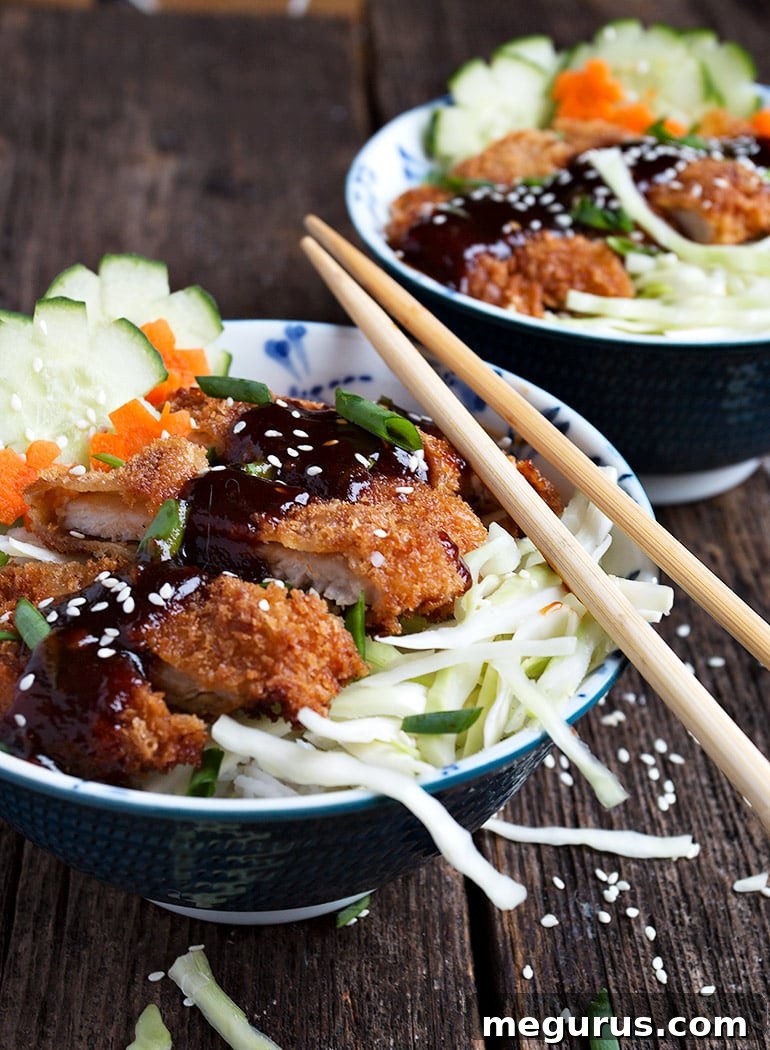
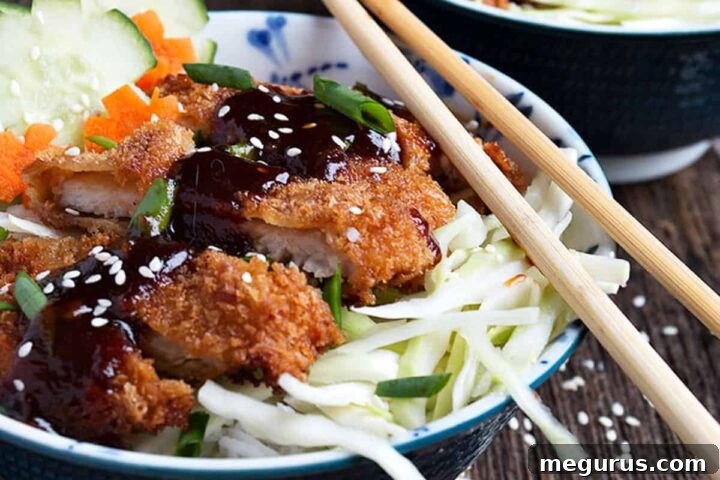
To assemble the bowls, fill each with a generous portion of hot cooked rice. Arrange the decorative cucumber and carrot slices on one side of the rice, and place a mound of thinly shredded cabbage on the other side. Once the Tonkatsu has cooled slightly (making it easier to cut), slice each cooked pork piece crosswise into approximately 3/4-inch wide strips. Neatly arrange these crispy pork slices in the center of each bowl. Drizzle generously with the warm Tonkatsu sauce and, for a final flourish, garnish with a sprinkle of sesame seeds and a scattering of fresh sliced green onion. Serve immediately and enjoy your homemade Japanese feast!