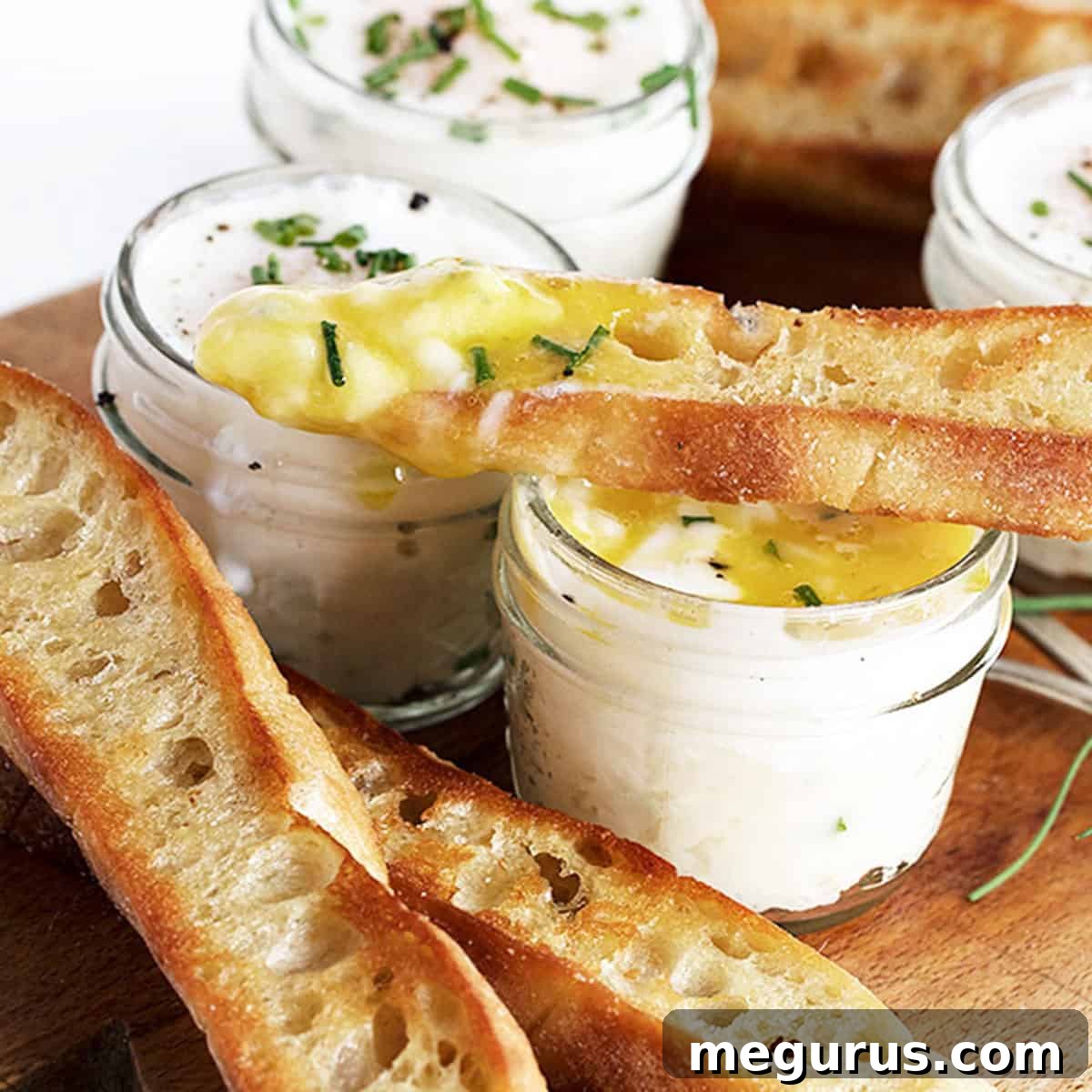
Indulge in the ultimate breakfast or brunch delight with our exquisite recipe for Coddled Eggs with Creamy Mashed Potatoes and Buttery Toast Sticks. This unique dish takes a perfectly cooked, gently coddled egg and nestles it atop a bed of rich, velvety mashed potatoes, then serves it alongside golden, butter-toasted bread for dipping. It’s a symphony of textures and flavors – the luxurious runny yolk blending seamlessly with the smooth potatoes, all scooped up with crusty, savory toast. Prepare to elevate your morning meal into an unforgettable culinary experience.
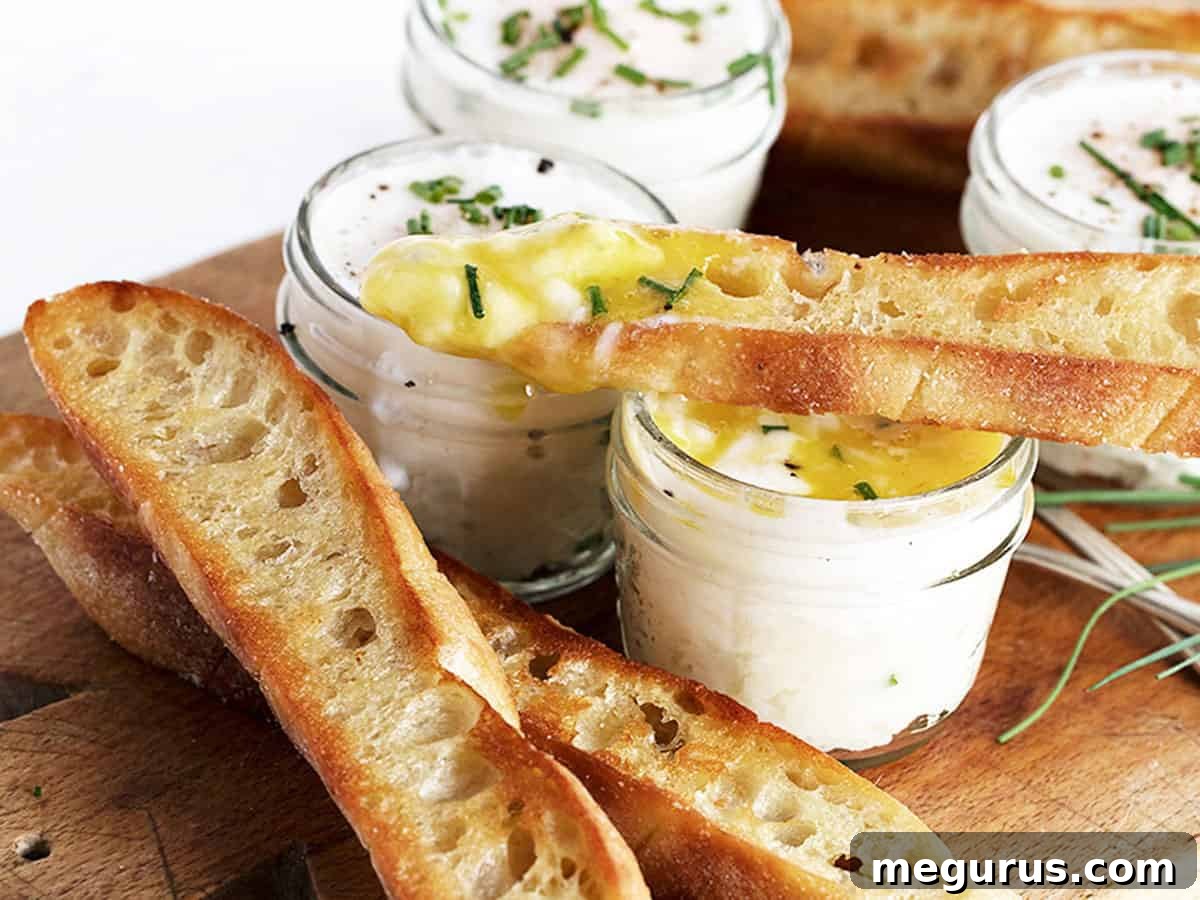
For those who cherish eggs in their most comforting forms, especially with luscious, barely set whites and a gloriously runny yolk, this dish is an absolute dream. If the thought of a soft, molten yolk spreading into creamy potatoes sends shivers of delight down your spine, then you’ve found your new favorite comfort food. This recipe is designed to celebrate the pure, unadulterated pleasure of a perfectly cooked egg, transformed into a truly decadent meal. What’s even better? You don’t need any specialized kitchen gadgets. Just a few small 4 oz (or ½ cup capacity) jars or ramekins, a saucepan with a lid, and a willingness to embrace the simple elegance of this dish.
The Art of Coddling: What Exactly is a Coddled Egg?
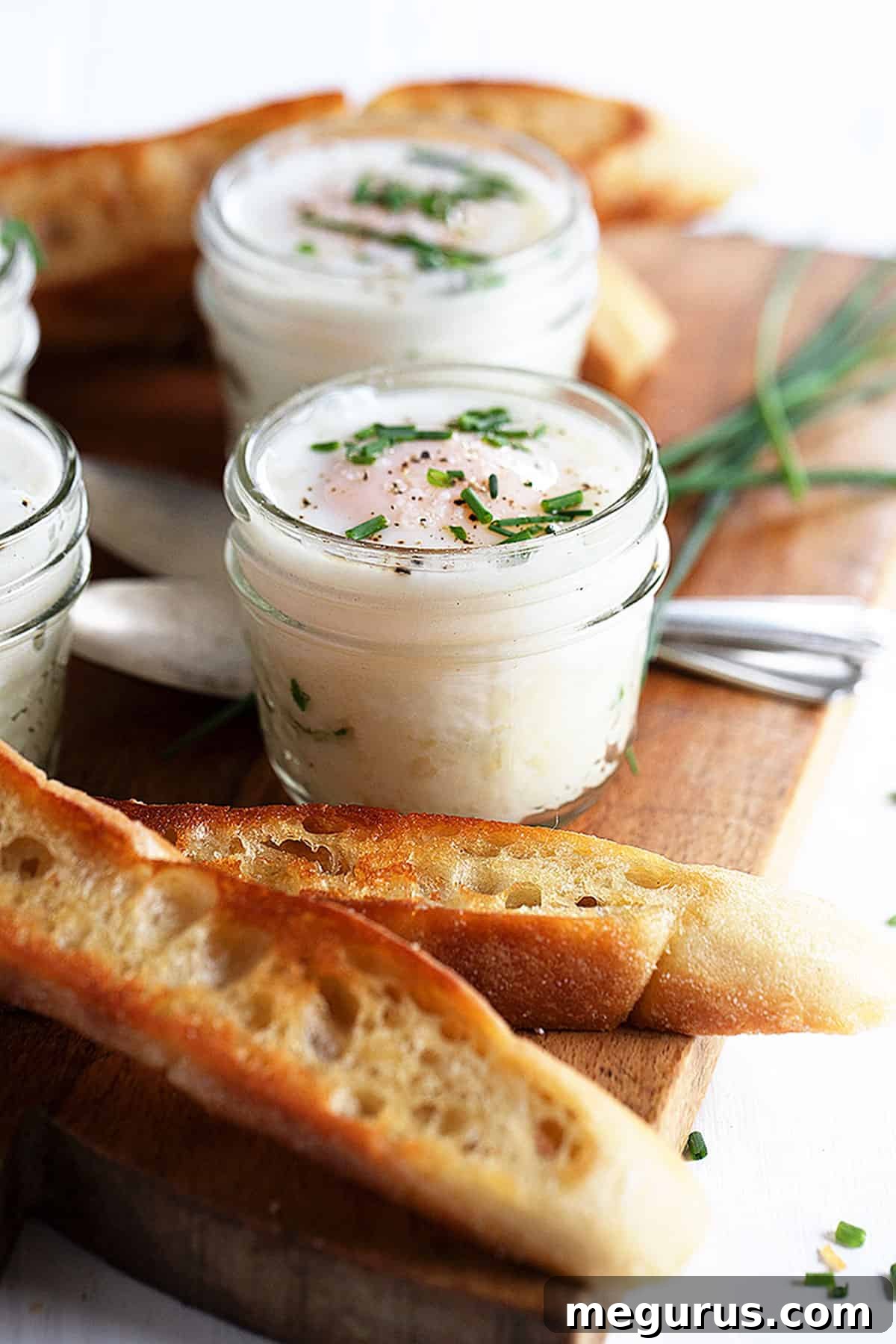
A coddled egg is an egg that has been gently cooked, usually in its shell or in a small container, in water kept just below boiling point. The beauty of coddling lies in its controlled, delicate heat, which allows for a wide range of doneness, from barely warmed to almost fully set. Unlike a poached egg, which is cooked directly in water, or a soft-boiled egg, which maintains its shell throughout cooking, a coddled egg offers a unique texture profile. For this particular dish, we aim for the most tender coddle: whites that are just firm enough to hold their shape, and a yolk that remains exquisitely runny, like a golden river waiting to burst forth.
The gentle simmering process ensures that the egg whites become incredibly tender and custard-like, avoiding the rubbery texture sometimes associated with overcooked eggs. Our goal here is precision – achieving that perfect moment when the whites are barely set, yet the yolk maintains its liquid gold consistency. This preparation method is central to the dish’s allure, as the runny yolk acts as a natural, rich sauce, beautifully mingling with the creamy mashed potatoes and providing a luxurious coating for the buttery toast sticks. It transforms a simple egg into a sophisticated yet profoundly comforting culinary experience.
Why This Dish is Pure Comfort Food Perfection
There’s something inherently comforting about the combination of warm, creamy mashed potatoes and a perfectly cooked egg. This dish elevates that comfort to a new level. It’s a breakfast or brunch masterpiece that feels both indulgent and incredibly simple. The process of dipping the crisp, buttery toast into the rich blend of egg yolk and mashed potatoes is a sensory delight, creating a harmonious mouthful with every bite. It’s a versatile dish that can serve as a luxurious weekend breakfast, a hearty brunch, or even a light, satisfying dinner. Its simplicity belies its profound ability to soothe the soul and tantalize the taste buds.
Key Ingredients for Your Perfect Coddled Egg Dish
Crafting the perfect Coddled Eggs with Mashed Potatoes relies on selecting quality ingredients and understanding how each component contributes to the overall harmony of the dish. Here’s a closer look at what you’ll need and some helpful tips for substitutions and preparation.
Eggs: The Star of the Show (And Safety First!)
As we are minimally cooking the eggs, **it is absolutely crucial to use fresh, pasteurized eggs.** Pasteurization significantly reduces the risk of salmonella, making them safe for recipes where eggs are not fully cooked. Beyond this essential safety measure, choose large-sized eggs from your preferred brand. The size ensures a good yolk-to-white ratio for optimal presentation and taste. Look for eggs with intact shells and check their freshness date. The quality of your eggs will directly impact the flavor and texture of your finished dish, so don’t compromise here.
Creamy Mashed Potatoes: The Foundation of Flavor
For this recipe, instant mashed potatoes are recommended for their convenience and ability to consistently produce a wonderfully creamy, slightly thinner consistency that pairs exceptionally well with the coddled egg. Brands like Idahoan or Bob’s Red Mill (known for its “Potato Flakes”) are excellent choices if available in your area. Simply follow the package directions to prepare them. Typically, a two-serving instant mashed potato mix will yield enough for four 4-oz egg cups. This thinner consistency is vital, as it allows the runny yolk to mix more easily and creates a smoother, more integrated flavor profile.
If you prefer to make your mashed potatoes from scratch, aim for a creamier consistency than you might typically prepare. Using starchy potatoes like Russets or Yukon Golds will yield the best results. Boil them until very tender, then mash them with plenty of butter, warm milk or cream, and a touch of salt and pepper. Don’t be afraid to add extra milk until they reach a luxuriously smooth, almost pourable consistency. If you have leftover mashed potatoes that are a bit too stiff, simply warm them gently and stir in a little extra milk until they become soft and pliable.
Buttery Toast Sticks: The Perfect Dipper
The bread component is essential for scooping up every last bit of the delicious egg and potato mixture. A flat ciabatta loaf is highly recommended due to its rustic texture, excellent absorption, and a profile that fits perfectly into the serving jars. Slice it diagonally into long, thin strips to create ideal dipping sticks. The slight chewiness of ciabatta, combined with a crispy exterior from toasting, provides a delightful contrast to the creamy elements of the dish. For convenience, you can slice and freeze ciabatta, then simply thaw and toast as needed.
While ciabatta is ideal, other good options include sourdough, artisan baguettes, or even thick-cut brioche for a richer flavor. The key is a bread that toasts well, offering a good balance of crispness and chew. The toasting process itself is straightforward: melt butter in a skillet over medium-high heat, then toast the bread slices until golden brown on both sides. This creates a rich, buttery crust that enhances the overall experience.
Finishing Touches: Fresh Chives, Salt, and Butter
Fresh chives are a non-negotiable addition to this dish. Their delicate oniony flavor and vibrant green color add a fresh, aromatic counterpoint to the richness of the eggs and potatoes. Finely chop them and sprinkle generously just before serving. A small dab of butter placed under the egg before cooking melts into the potatoes, adding another layer of richness. Finally, a generous sprinkling of gourmet salt – such as Fleur de Sel or any coarse, flaky salt you enjoy – on top of the cooked egg enhances its natural flavors and adds a pleasant textural crunch. Freshly ground black pepper is also a must for a well-rounded taste.
Mastering the Coddled Egg: Essential Tips for Success
Achieving the perfect coddled egg is simpler than you might think, but a few key techniques can make all the difference. Follow these tips to ensure a consistent and delightful outcome every time.
- **The Gentle Simmer:** When placing your jars or ramekins into the saucepan, the water should be just below boiling, producing a very gentle simmer. Your jars should rattle slightly, indicating a consistent, low heat. If they are banging vigorously against the bottom of the pan, the heat is too high. Reduce the heat to medium-low to maintain a delicate simmer, ensuring the eggs cook evenly without becoming tough.
- **Monitoring Doneness:** On most stovetops, the ideal cooking time for barely set whites is between 5 to 5.5 minutes. However, cooking times can vary depending on your stove and the exact temperature of the water. Don’t hesitate to lift the lid and peek after the 4-minute mark to check the egg’s progress. The whites should be opaque and just firm, while the yolk should still be visibly liquid and shimmering. Practice makes perfect, and a quick check can prevent overcooking.
- **Prioritizing Food Safety:** As previously emphasized, because coddled eggs are minimally cooked, **always use fresh, pasteurized eggs.** This is a critical food safety measure. For an abundance of caution, individuals with compromised immune systems, the very young, the very old, and pregnant women should avoid consuming undercooked eggs. When in doubt, ensure the whites are fully set.
- **Why This Method Works Best:** You might wonder if boiling mason jars with lids directly in water could achieve a similar result. While technically possible, this method is less efficient and more cumbersome for this specific dish. It typically requires around 15 minutes of simmering, and then you’d need to carefully fish out the hot jars, unseal them, and check the egg’s status. The open-jar, gentle simmer method we use is quicker, easier to monitor, and delivers the same perfectly tender results without the extra fuss or extended cooking time.
How to Savor Your Coddled Eggs and Mashed Potatoes
The beauty of this dish lies not only in its taste but also in the delightful ways it can be enjoyed. You have two primary options for savoring your coddled eggs and mashed potatoes, each offering a unique experience:
First, the classic dipping method: gently stab a buttery toast stick into the jar, breaking the luscious yolk and allowing it to mingle with the creamy mashed potatoes below. Give it a gentle stir to combine the flavors, then remove the bread, now coated in a rich, savory mixture, and enjoy. Continue dipping as needed, allowing each piece of toast to become a vessel for this ultimate comfort food blend.
Alternatively, for a more integrated experience, you can take a spoon and stir the entire contents of the jar together, thoroughly mixing the runny egg with the mashed potatoes. This creates a homogenous, incredibly creamy concoction that can then be eaten directly with a spoon, using the toasted bread sticks as a delightful side for occasional bites or to scoop up any remaining goodness. Whichever method you choose, prepare for a comforting and utterly delicious meal.
Coddled Eggs with Mashed Potatoes Recipe
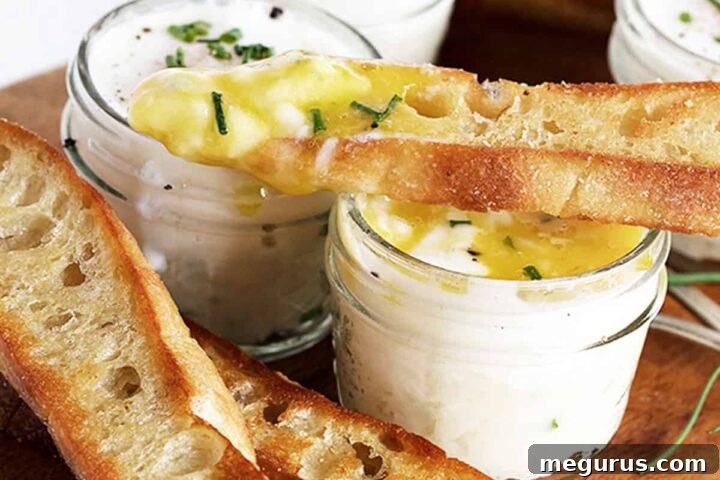
Get the Recipe: Coddled Eggs with Mashed Potatoes
Coddled eggs, gently cooked on top of creamy mashed potatoes and served with buttery, toasted bread slices. A delightful and comforting dish perfect for breakfast or brunch.
Pin This
Ingredients
- 4 large eggs, pasteurized
- 2 servings prepared instant mashed potatoes, prepared per package instructions
- Salt and freshly ground pepper, to taste
- 1 Tablespoon butter, divided
- Chopped fresh chives, for garnish
For the bread slices:
- 8 slices bread, ciabatta recommended, sliced diagonally into long pieces
- 3 Tablespoons butter
Equipment
- Four 4-oz mason jars or ramekins (1/2 cup capacity)
- Saucepan with a lid
- Large skillet
Instructions
- Prepare the instant mashed potatoes according to the package directions. Allow them to cool slightly to a warm temperature, not hot.
- In a saucepan large enough to comfortably hold your four jars or ramekins, bring enough water to a gentle boil to come about two-thirds up the sides of the jars. Once boiling, reduce heat to a simmer.
- While the water is heating, prepare your bread slices. Melt 2 tablespoons of butter in a large skillet over medium-high heat. Add the bread slices and toast until golden brown. Add the remaining 1 tablespoon of butter, flip the bread, and toast the other side until golden and buttery. Turn off the heat and let the bread sit in the skillet until the eggs are ready to serve.
- Divide the prepared mashed potatoes evenly among the four 4-oz jars or ramekins, filling each about two-thirds full. Top the potatoes in each jar with a small pat of butter. Using the back of a spoon, gently press the butter into the potatoes, creating a small dent in the center. Carefully crack an egg into each jar, centering the yolk over the dented area.
- Gently place the filled jars into the simmering water in the saucepan. Immediately reduce the heat to medium-low and cover the pot with a lid. Simmer gently for 5 to 5.5 minutes, or until the egg whites are just set and opaque, but the yolks are still wonderfully runny.
- Carefully remove the jars from the hot water. Season each coddled egg with salt and freshly ground pepper to taste, then sprinkle generously with chopped fresh chives. Serve immediately with the warm, buttery toasted bread slices for dipping.
Notes
As coddled eggs are minimally cooked, always use fresh, pasteurized eggs. Out of an abundance of caution, the very young, the very old, pregnant women, and anyone with a compromised immune system should avoid eating coddled eggs.
When simmering the egg cups, ensure the water maintains a gentle simmer. Your cups should rattle just slightly; if they are banging vigorously against the bottom of the pan, reduce the heat further to medium-low.
Cooking times may vary slightly. On my stove, the whites typically set between 5-5.5 minutes. Feel free to lift the lid and check the eggs’ progress after about 4 minutes to ensure they reach your desired doneness.
Serving: 1 serving,
Calories: 334 kcal,
Carbohydrates: 29 g,
Protein: 13 g,
Fat: 19 g,
Saturated Fat: 9 g,
Cholesterol: 241 mg,
Sodium: 472 mg,
Potassium: 180 mg,
Fiber: 2 g,
Sugar: 4 g,
Vitamin A: 656 IU,
Vitamin C: 1 mg,
Calcium: 112 mg,
Iron: 3 mg